
How to Wear Jeans Over 40 (Cuts and Rises)


You pull on jeans that fit fine a few years ago. Now the back of the waist gaps, the front digs into your stomach when you sit, and nothing you tuck in looks right. Your body isn’t the problem. Your shape changed, and your jeans didn’t. Learning how to wear jeans over 40 starts with that fact, not with this season’s trends.
This guide starts with numbers instead of guesswork. You’ll measure yourself at home and find the rise that fits your torso. Then you’ll pick a cut that balances your hips and legs and test the fit before you pay. After that, you’ll get the hem and waist fixed and style one pair three different ways.
This method works because most fit problems come from the rise and the cut, not from the size on the tag. Once you know your rise number, you can rule out half the jeans on the rack before you try anything on.
Here’s the honest time breakdown. Measuring takes about 15 minutes. Shopping and trying on take an hour or more. A tailor needs a few days. Grab a tape measure and your favorite old jeans, and let’s find a pair you’ll reach for every week.
Measure your waist, hips, and inseam at home
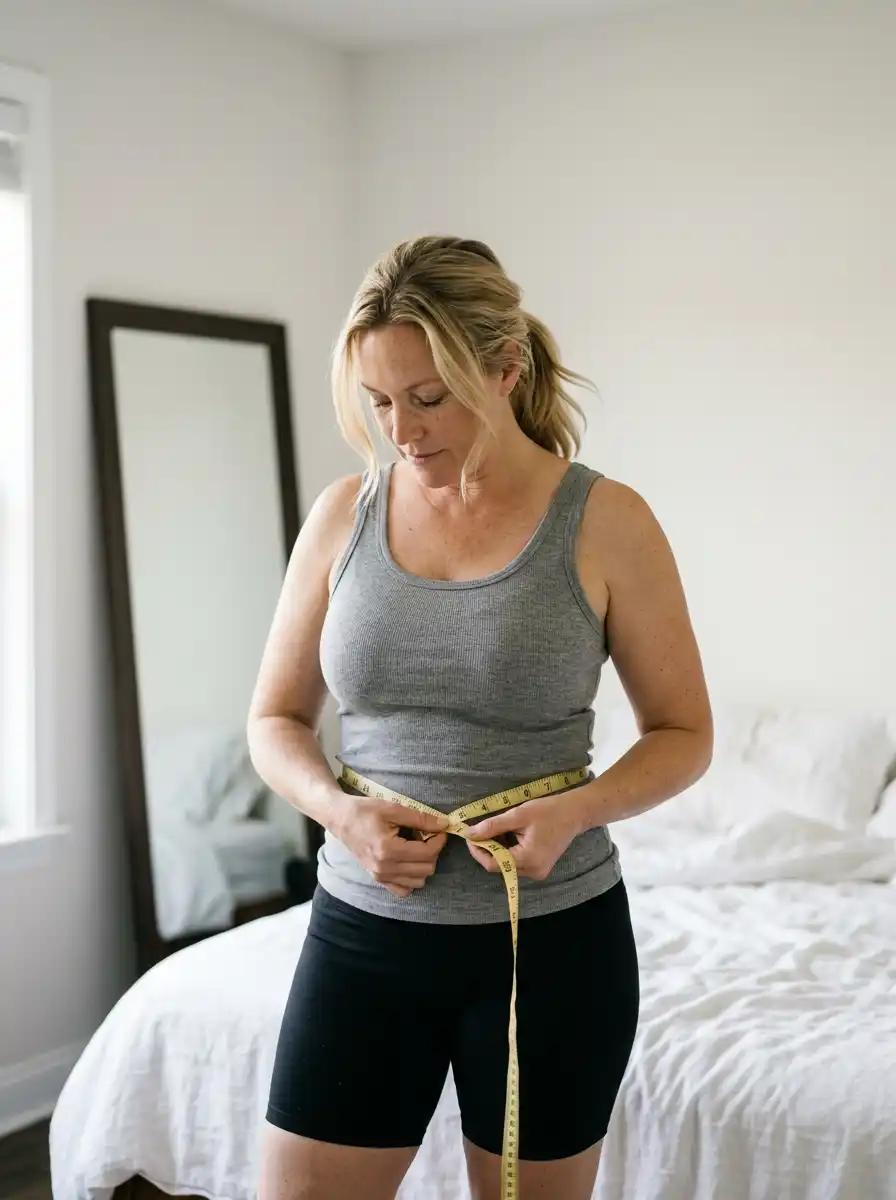
Size tags change from brand to brand, but your numbers don’t. Stand in front of a mirror in thin clothes. Keep the tape snug against your body, never tight.
- Waist: around the narrowest part, about 1 inch above your belly button
- Hips: around the fullest part of your seat, with your feet together
- Inseam: lay pants that are a good length flat, then measure from the crotch seam to the hem
Save all three numbers in your phone. No soft tape? Wrap a piece of string around yourself, pinch the spot where it meets, and lay it against a ruler.
Measure the front rise on jeans you already own
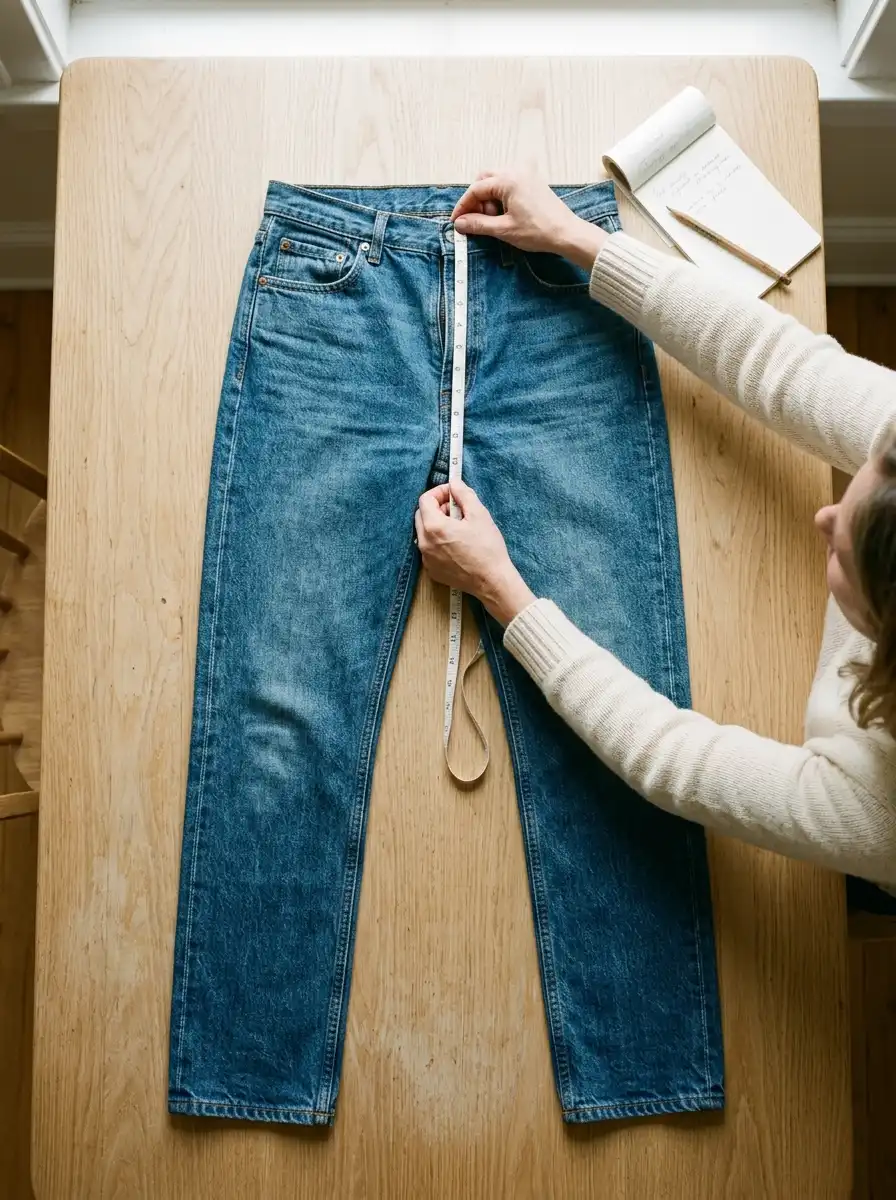
Lay your best-fitting old jeans flat on a table, zipped and buttoned. Find the spot between the legs where the four seams meet. Measure from there straight up to the top of the front waistband, and write it down to the nearest ¼ inch.
That number is your starting point. If those jeans felt too low when you bent over, add 1 inch. If they cut into your stomach when you sat, take off ½ inch.
Pick a rise that matches your torso length

Two finger widths can tell you a lot. Sit up tall and lay your fingers flat and sideways in the gap between your bottom rib and the top of your hip bone.
Two fingers or fewer usually means a short torso, so mid-rise will feel better. Three or more means high-rise will sit comfortably.
Add one more rule on top of that. A waistband digs in wherever it lands, so choose a rise that sits above or below the softest part of your stomach, never right on it.
Steps 1–3 opened with an observation, a one-word verb, and a number, and they all ran 75–90 words. This batch opens with a condition, a location, and a number, and the lengths run short, medium, and long.
Choose a cut that balances your hips and thighs

If your hips are wider than your shoulders, look for a leg that widens a little below the knee.
That extra width at the hem evens out the width at the top, so your whole outline looks balanced. If your shoulders are wider, a straight or slightly wide leg adds weight to the lower half.
Not sure? Start with a straight leg. It works on almost every shape and goes with almost every shoe, so it’s the safest first pair to buy before you try anything trendier.
| Cut | How It Fits | Best If You… | Pair With |
|---|---|---|---|
| Straight Leg | Same width from hip to hem | Want one pair for everything | Loafers, sneakers, ankle boots |
| Bootcut | Slight flare from the knee | Have fuller hips or thighs | Heeled boots, wedges |
| Wide Leg | Loose from the hip down | Have a longer torso or want comfort | Platform sneakers, block heels |
| Slim Straight | Narrow, not skin-tight | Have slimmer legs and miss skinnies | Ballet flats, ankle boots |
Check the label for 1–2% stretch

The care tag hides inside the left side seam, near the waistband. Look for cotton with 1–2% elastane, which some labels call spandex or Lycra.
That small amount lets you sit and bend while the jeans still hold their shape all day. Jeans that are 100% cotton work too, but they need a few wears to soften.
Try on two sizes and sit down in each
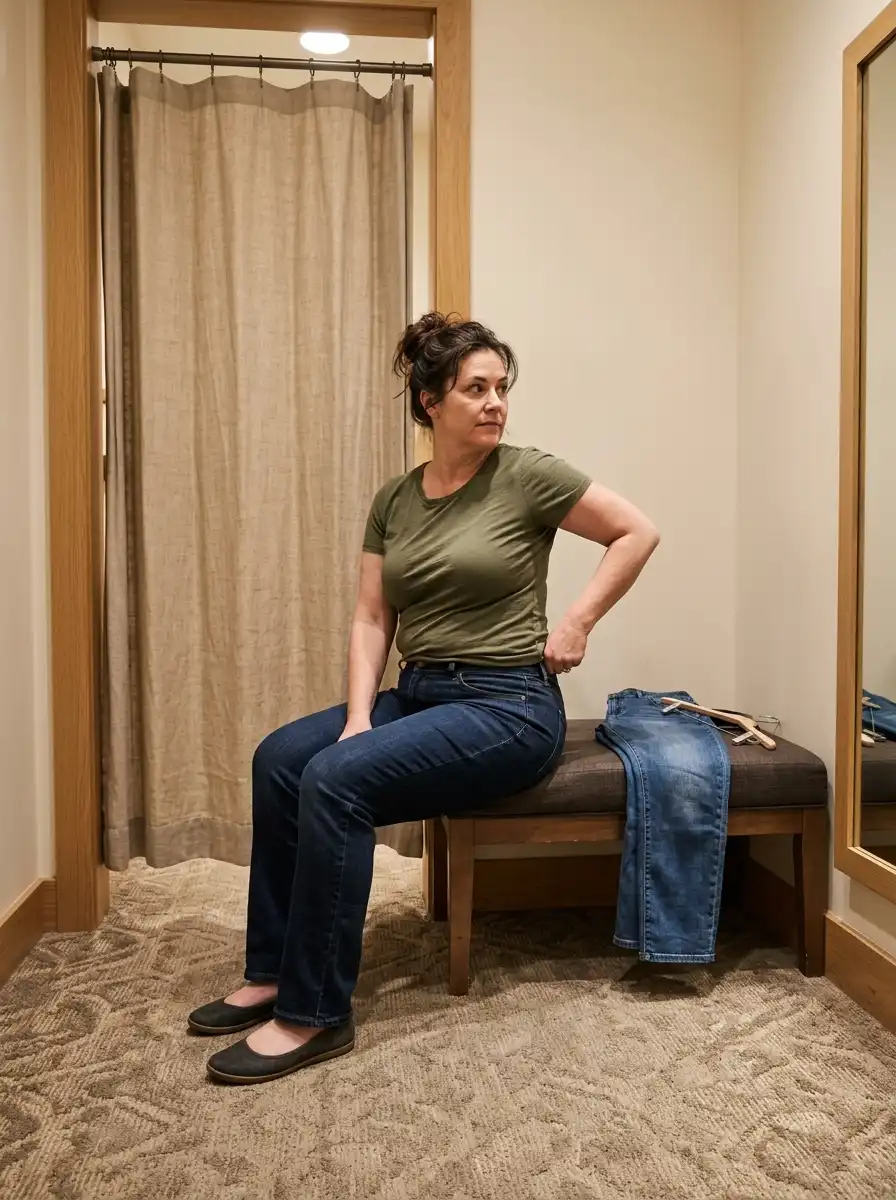
Take two sizes into the fitting room: the one that matches your measurements and the one below it. Most women over 40 are surprised to find the smaller size fits better once they sit down.
Sit on the bench for 30 seconds in each pair. Then slide your fingers into the back waistband. A gap wider than two fingers means that pair is too big in the waist.
Next, check the front. If the waistband pinches your stomach, the rise is too short or the size is too small. Stand up and look at your thighs in the mirror.
Sideways pull lines mean the jeans are too tight there, and loose fabric under your seat means they’re too big.
Check the back pockets in a mirror

Back pockets shape how your seat looks more than any other detail. Turn around in the mirror, or prop up your phone on a timer and take a photo from behind.
Medium pockets that sit close to the center and tilt slightly inward give a lifted look. Small or wide-set pockets make the seat look wider.
If the bottom edge of a pocket sags below the crease where your seat meets your thigh, that pair will flatten you. Put it back.
Put on your everyday shoes to set the hem length
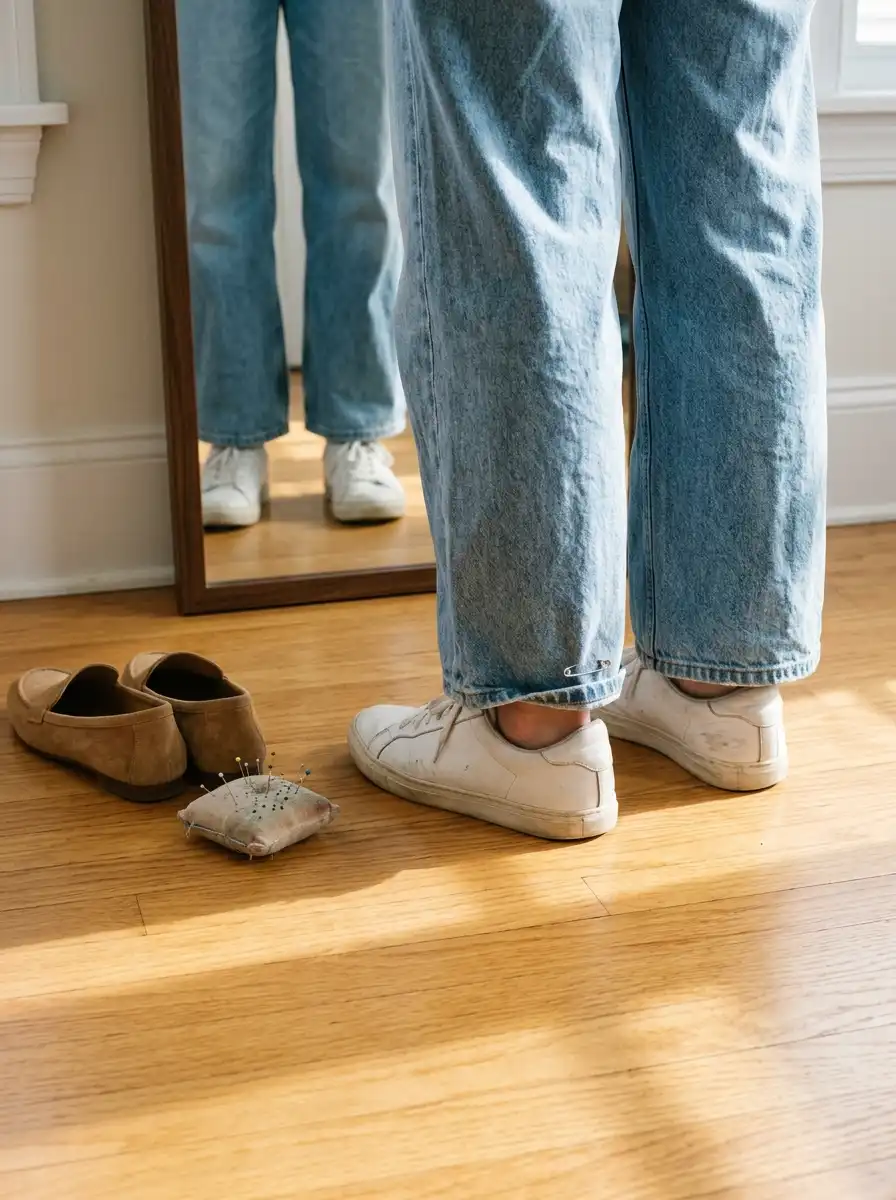
With the tags still on, put on the shoes you wear most and stand at a full-length mirror. A hem that looks right with sneakers can drag under flats.
For straight and slim cuts, fold the fabric under until it lands at your ankle bone, or 1 inch above it for a cropped look.
For bootcut and wide leg, let it fall to about ½ inch off the floor at the back of your heel. Mark each leg with a safety pin. No pins? A small binder clip holds the fold too.
Take your jeans to a tailor for the hem and waist gap
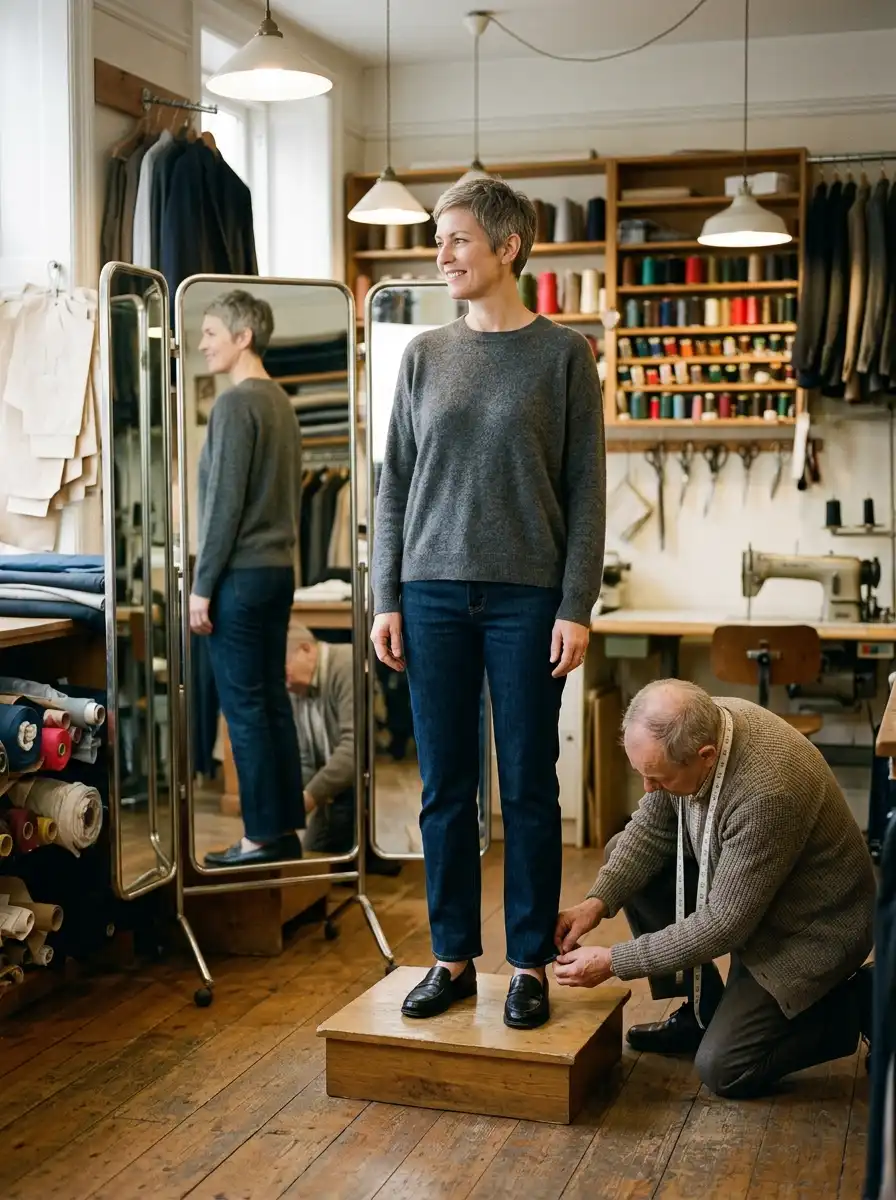
For $30 or less, a tailor can make a nearly-right pair look made for you. Bring the pinned jeans and the shoes you pinned them with.
- Ask for an original hem, which keeps the faded factory edge (about $15–$25)
- Ask them to take in the back waist at the center seam if it gaps
- Try the jeans on there with your shoes so they can confirm the length
Steps 7–9 opened with an observation, a phrase, and a price. One ended with a list and one with a Heads Up. This batch opens with a cause-and-effect line and a challenge, and uses tables instead of a list, since step 9 already had one.
Tuck your top to show where the rise sits
Where your top ends tells the eye where your legs begin. With high-rise jeans, tuck only the front 3–4 inches of your top into the waistband and let the sides and back hang loose.
That shows the rise and makes your legs look longer without clinging to your middle. Mid-rise usually looks better with the top left out, as long as the hem stops above or below the widest part of your hips, not across it.
Thin knits tuck flat. Chunky sweaters bulk up, so tuck only the center.
Test how to wear jeans over 40 with three go-to outfits
A good pair of jeans should work three different ways. Tonight, lay out the three outfits below on your bed, put each one on, and take a mirror photo.
If one feels off, change only the shoes first. Shoes fix most problems faster than a new top.
| Outfit | Top | Layer | Shoes | Finish With |
|---|---|---|---|---|
| Weekend | Striped long-sleeve tee, front tuck | Utility jacket | White leather sneakers | Crossbody bag |
| Work | Silky blouse, full tuck | Camel blazer | Pointed loafers or block heels | Leather belt, structured tote |
| Evening | Black fitted knit or bodysuit | Faux-leather jacket | Heeled ankle boots | Gold hoops |
You Did It
You now own a pair of jeans that fits when you sit, stand, and walk, and you have four numbers that make every future shopping trip faster.
That’s how to wear jeans over 40: start with the rise, pick a cut for your shape, and let a tailor handle the last inch.
For your next pair, run the same steps on a second cut, like a wide leg in a lighter wash. Save this pin to your style board so it’s ready the next time you’re in a fitting room.