
How to Dress Over 40 for an Apple Shape


You’re standing in a fitting room. The top fits fine at your shoulders. It fits fine at your chest. Then you look down and it’s pulling tight across your middle. Sound familiar?
Most style advice about “apple shapes” was written for a twenty five year old body. But your body at 40 or 50 is not the same. Your waist may sit in a new spot. Your skin may feel hot flashes you never had before. And the old rules just don’t fit anymore, literally.
This guide is different. It won’t tell you to hide your body. It will show you how to work with it. You’ll learn how to check if you really have an apple shape, what necklines and cuts actually help, what to skip, and why your body has changed the way it has after 40.
By the end, getting dressed should feel a lot less like guesswork.
How to Tell If You Have an Apple Shape
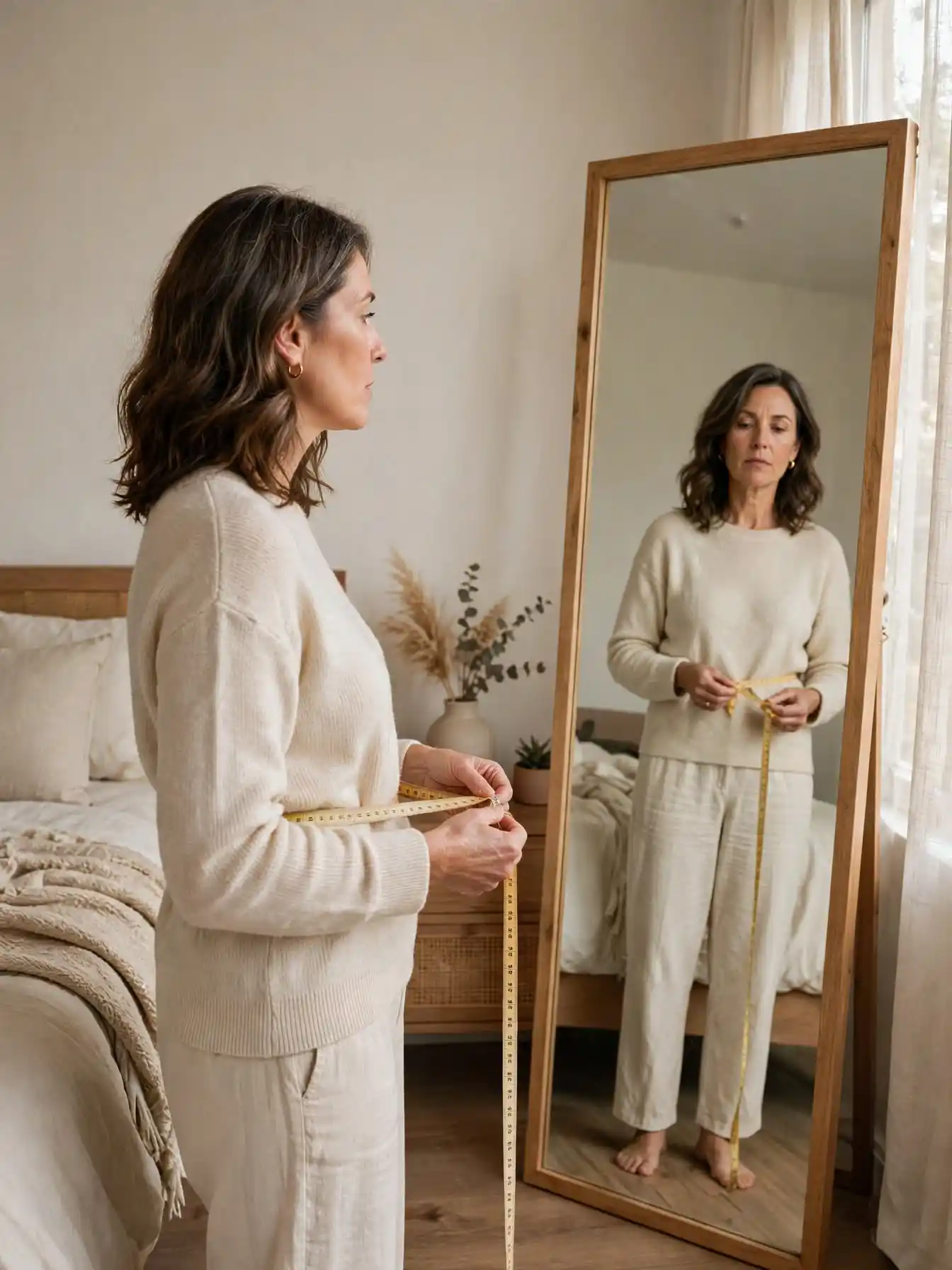
Before you change your closet, check that you’re solving the right problem. Many women think they have “a bit of a tummy” when really their whole shape has shifted.
An apple shape usually means:
- A fuller bust and midsection
- A waist that isn’t very defined
- Hips and legs that stay fairly slim
Here’s a simple test. Measure your waist at its widest point, and your hips at their widest point. Divide your waist number by your hip number. If the result is close to 0.80 or higher, you likely lean apple shaped. A pear or hourglass shape usually lands closer to 0.75.
Why does this matter more after 40? As your body moves through perimenopause and menopause, hormone levels change. That shift often pushes fat away from the hips and thighs and toward the belly.
So some women who were never apple shaped before become apple shaped in midlife. That’s not something you did wrong. It’s just biology doing its thing.
One more thing before you move on: most women guess their own body shape wrong. So don’t skip this step just because you’re sure. Take five minutes with a tape measure first. It will save you money and frustration later.
Three Simple Rules That Make Everything Easier
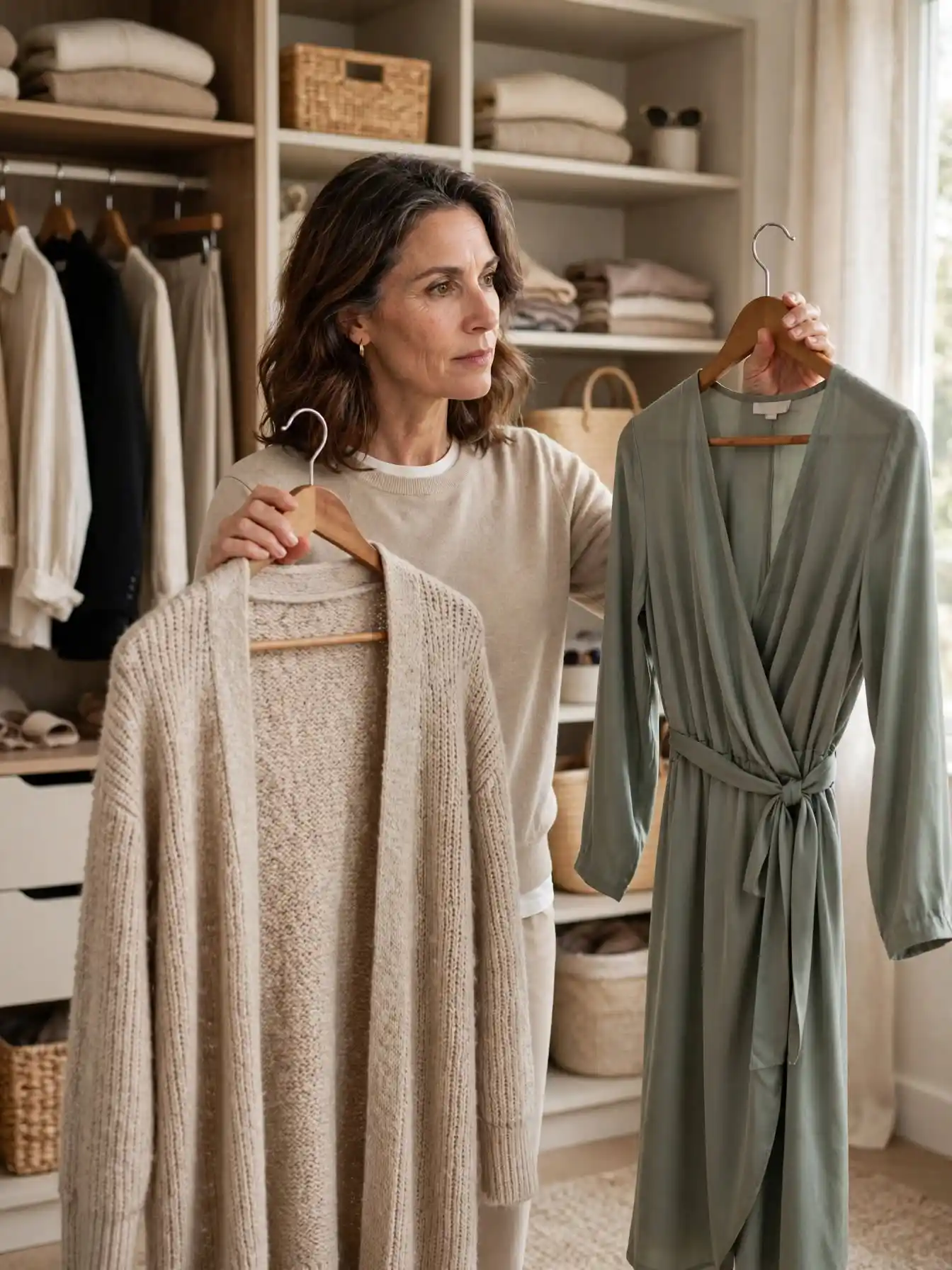
Once you know your shape, you don’t need a hundred rules. You need three.
1. Go for length, not a defined waist.
Instead of trying to create a tiny waist, aim for long, smooth vertical lines. An open jacket, a long scarf, or a column of one color all make your whole body look longer and leaner.
2. Skim, don’t cling or hide.
Fabric that clings shows every curve you don’t want shown. Fabric that’s too loose adds bulk and can make you look bigger, not smaller. The sweet spot is fabric that skims your body and moves with you.
3. Move your “waist” up.
Your natural waistline might not be your narrowest point anymore. For many apple shapes, the slimmest spot is a bit higher, right under the bust. So when you belt something or pick a dress with a seam, look for one that sits higher than you’d expect. It will feel more comfortable, and it will look more balanced.
Keep these three rules in your head. Everything else in this guide is just these rules applied to real clothes.
Tops, Necklines, and Layers That Work

Your top is doing most of the visual work in any outfit, so start here.
Necklines that help:
- V neck
- Wrap front
- Scoop neck
- Open collar
All of these draw the eye up and make your neck and shoulders look longer.
Necklines to skip:
- Round or crew neck
- High turtleneck or polo neck
These sit right at your fullest point and can make your midsection look wider, not smaller.
Top shapes that work well:
- Wrap tops
- Loose tunics that skim (not cling)
- Structured blouses with some shape
- Long, open blazers or cardigans
A quick trick many stylists use: half tuck your top in front, then layer a long, open blazer over it. This creates a straight vertical line down the front of your body, which makes you look taller and slimmer without squeezing anything in.
One thing to avoid: heavy pleats or gathered fabric right at your stomach. It looks like extra fabric bunching up, and that adds visual bulk exactly where you don’t want it.
Jeans, Pants, and Skirts That Work
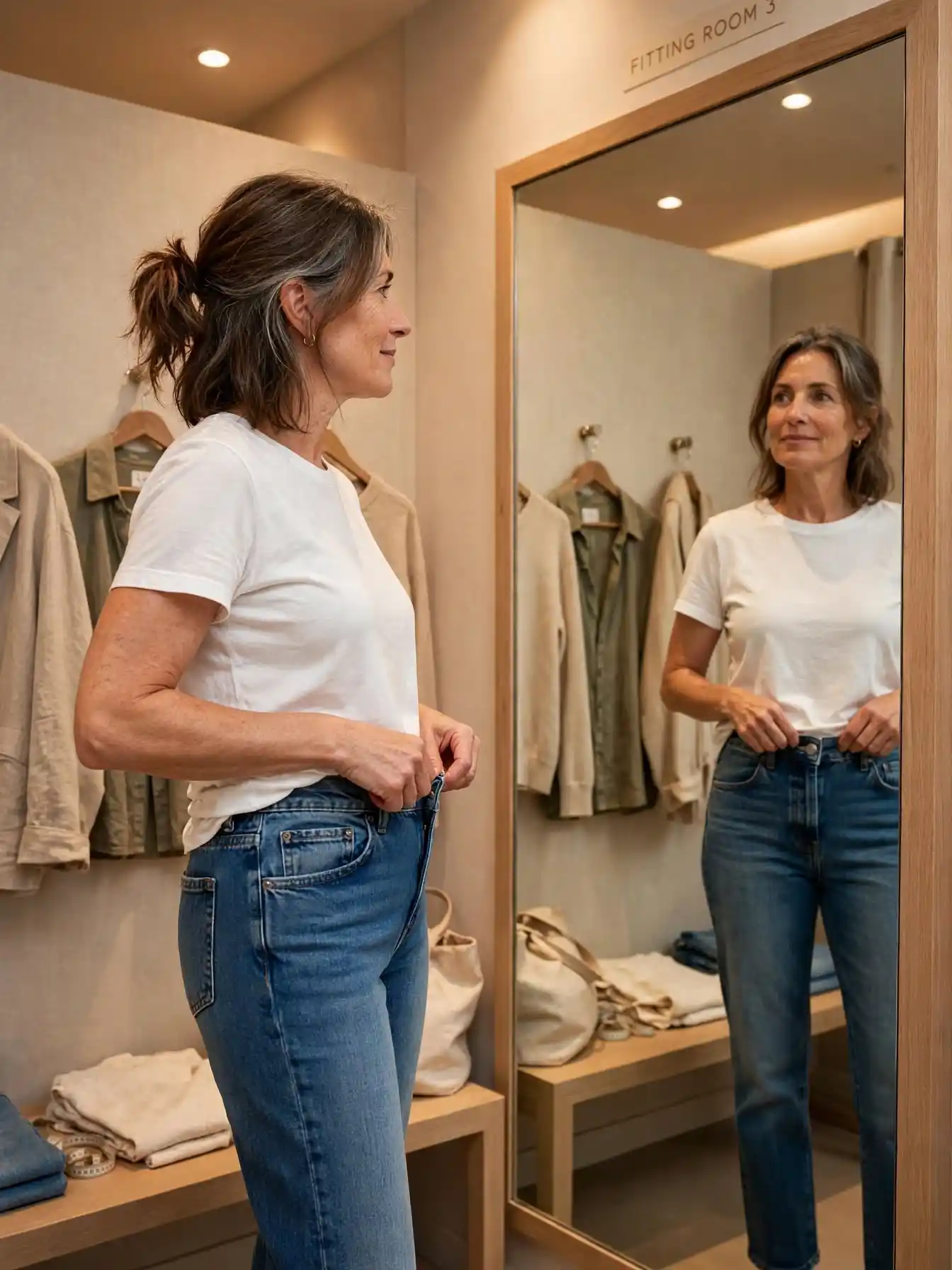
Bottoms trip a lot of apple shaped women up, mostly because of one word: rise.
| What to choose | What to skip |
|---|---|
| High or mid rise | Low rise |
| Straight leg, bootcut, or wide leg | Super skinny with no stretch |
| Some stretch in the fabric | Stiff denim with no give |
| Dark, even wash | Heavy front pocket detail |
Low rise pants sit right below your belly, so any fullness spills over the top. That’s the “muffin top” look most women want to avoid.
A higher rise holds everything in place and stays comfortable when you sit down, which a low rise simply can’t do.
If you want extra smoothing, look for jeans with a built in tummy panel. Several major denim brands, including Levi’s and Spanx, now make jeans with this feature sewn right into the fabric, so it’s not something you have to add on top.
NYDJ and Paige are two other brands known for cuts that flatter a fuller midsection while still holding their shape wear after wear.
Straight and wide leg styles keep your leg line long and clean, which balances out a fuller top half. Skirts work the same way.
A straight or A line skirt that sits at your natural waistline (or a bit higher) will do more for you than a super tight pencil skirt.
Dresses That Work For You
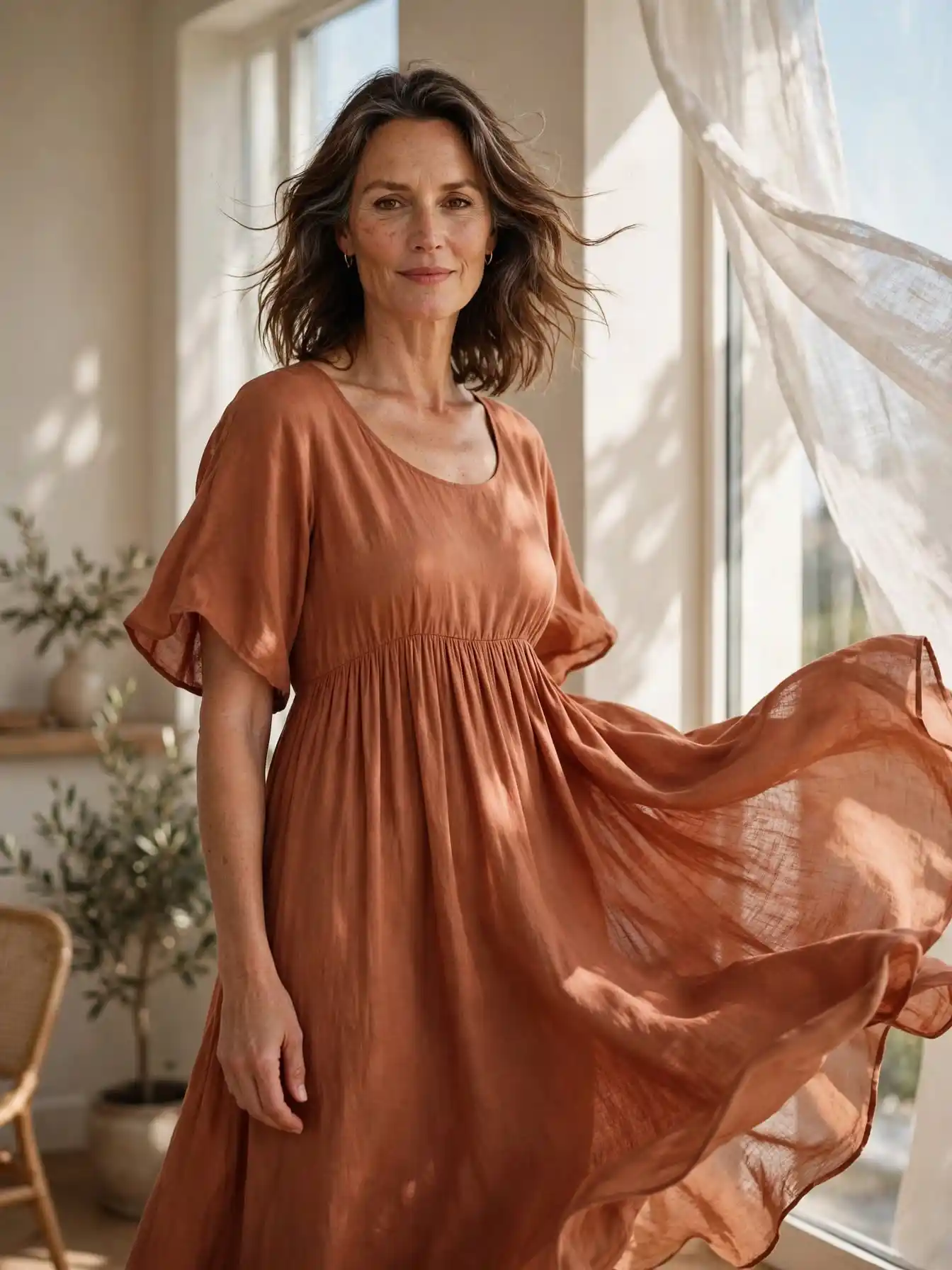
Dresses can be the easiest piece in your closet once you know what to look for.
Go for:
- Wrap dresses. The V neck lengthens your torso, and the tie lets you adjust the waist without pinching.
- Empire waist dresses. The seam sits above your natural waist, so the skirt just flows past your middle.
- A line dresses. Fitted through the top, then loose and flowing from the waist down.
- Dresses with soft draping fabric that skims rather than clings.
Skip:
- Shapeless shift dresses with no waist seam at all. Without any shape built in, these can actually make your middle look bigger, not smaller.
- Tight jersey dresses with no structure. They cling right where you don’t want clinging.
If you love pattern, put it near your chest or shoulders, not around your stomach. A patterned top with a solid, dark skirt or bottom does more flattering work than one busy print head to toe.
Your Body After 40: What Changed, and What to Do

This section matters, and most guides skip it. Your body at 40 or 50 isn’t just “a bit softer.” Hormones are doing real, measurable work behind the scenes.
Here’s what’s actually happening. As estrogen drops during perimenopause and menopause, your body tends to store more fat around your belly and less around your hips. That’s a normal, well documented shift, not a sign you’re doing something wrong.
It also explains why clothes that fit perfectly at 40 might not sit the same way ten years later. Your waist may have physically moved.
A few things that make a real difference at this stage of life:
Pick your fabric first, then the cut
Hot flashes and night sweats are part of daily life for many women in this stage. Man made fabrics that don’t breathe will trap heat right against your skin, and often right against the area you’re trying to skim. Natural, breathable fabrics like cotton, linen, silk, and bamboo blends will feel far more comfortable through the day.
Re measure instead of guessing
If your old size doesn’t feel right anymore, that’s not failure, that’s just your body changing. Take five minutes with a tape measure every year or so, especially through this stage of life.
Dress the body you have now
Trying to squeeze into clothes cut for your body ten years ago will only leave you frustrated. Build your closet around who you are today. It will fit better, feel better, and honestly, you’ll enjoy getting dressed a lot more.
What to Skip, and What to Buy First

Here’s a fast reference so you don’t have to reread the whole guide every time you shop.
Skip these, and here’s why:
- Boxy, oversized tops: they add width exactly where you don’t need it
- Thin belts worn at your natural waist: they highlight your middle instead of balancing it
- Low rise bottoms: they create an uncomfortable overlap and don’t sit smoothly when you sit down
- Stiff shift dresses with no waist shape: they remove all structure, which can make you look bigger
- Big horizontal details at your stomach (wide waistbands, large patch pockets, bold stripes)
Buy these first, if you’re starting fresh:
- One wrap or empire waist dress
- One pair of high rise straight or wide leg jeans, with some stretch
- One long, open blazer or cardigan
- Two or three V neck or wrap tops in a breathable fabric
- One pair of heels or pointed flats, to lengthen your leg line
Start with these five pieces. They mix and match with almost anything else in your closet, and they follow all three rules from earlier in this guide. Once these fit right, everything else gets easier.
Final Thoughts
You don’t need a hundred rules to dress an apple shape well after 40. You need three: go for length, let fabric skim instead of cling, and move your waist point up.
Everything else, the necklines, the jeans, the dresses, is just those three rules applied to real clothing.
Start small. Pick one thing from your closet right now and try belting it higher than usual. See how it feels. Then build from there, one piece at a time, until your whole closet works for the body you actually have today.
FAQs
Am I actually an apple shape, or do I just have a bit of extra weight around my middle?
Check your waist to hip ratio. Measure your waist at its widest point and your hips at their widest point, then divide waist by hips. A result of 0.80 or higher usually points to an apple shape. If you’re not sure, try the tape measure test before buying anything new.
What’s the single most important change to make first?
Rise. Switching from low rise to high or mid rise pants and jeans makes an instant difference in comfort and how smooth your outfit looks, especially when you sit down.
Can I still wear belts if I’m apple shaped?
Yes, just move the belt up. Your narrowest point is often above your natural waist, closer to right under your bust. A medium or wide belt worn there gives you shape without digging in.
Why did my body shape change after 40 if it never used to be like this?
Hormone shifts during perimenopause and menopause often move fat storage from your hips toward your belly. This is a common, normal change. It’s not something you caused, and your wardrobe just needs to catch up with it.
Do I need to buy shapewear to dress an apple shape well?
No, but it’s a fine option if you want it. Many jeans now come with built in smoothing panels, so you don’t have to layer separate shapewear underneath if you’d rather not.