
How to Style Ankle Boots Over 40


A boot that hits your leg in the wrong spot can throw off an entire outfit. That has nothing to do with your age. It is a proportion problem, and it has a simple fix.
If you own ankle boots, or you are thinking about buying a pair, you have probably wondered about heel height, whether your jeans go over the boot or inside it, and whether certain styles look too young or too trendy on you.
None of those questions are really about age. They are about fit and proportion. Once you understand the rules, you can wear almost any ankle boot with confidence.
In this guide, you will learn how to pick the right heel and shaft height, how to wear ankle boots with jeans, how they work with skirts and wide leg pants, and which boot styles are worth adding to your closet right now.
Why Ankle Boots Still Work After 40
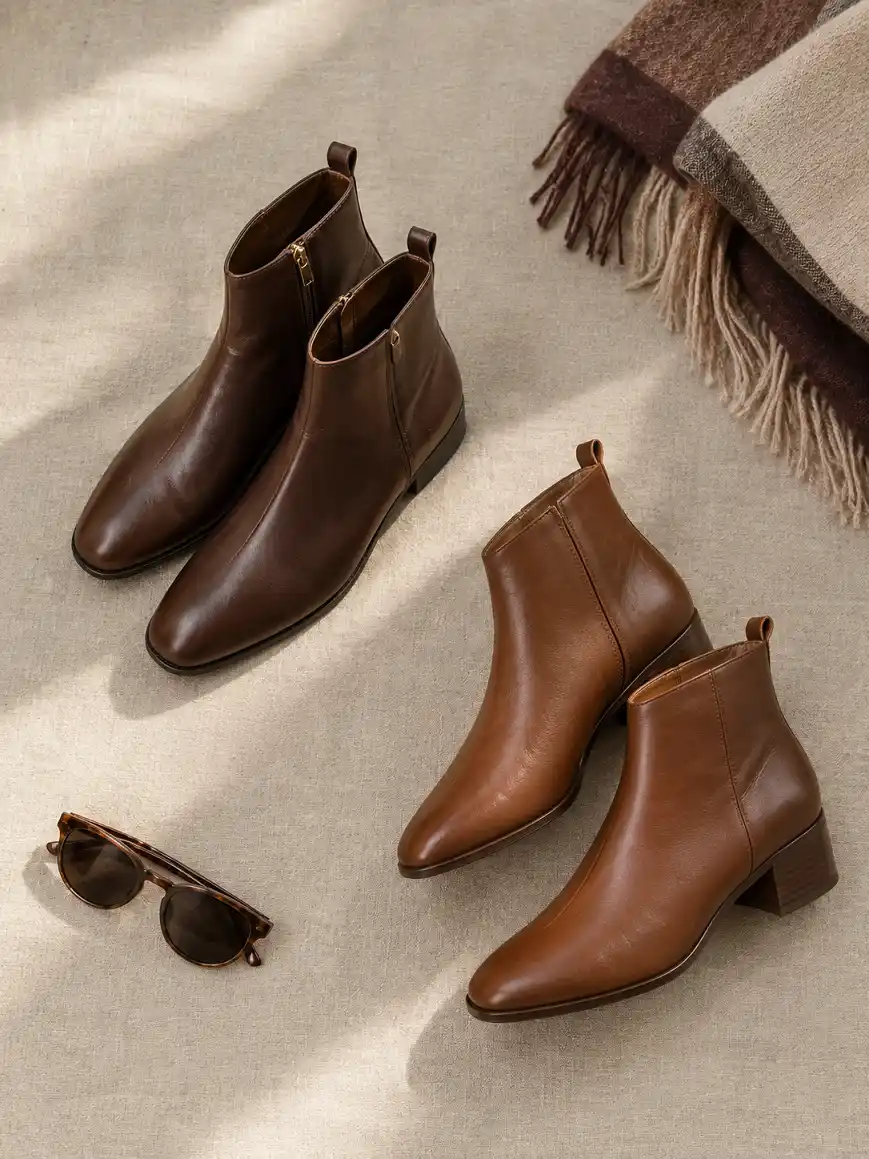
Forget the idea that ankle boots are a young person’s shoe. That rule does not exist. What actually matters is how the boot fits your leg and how it pairs with the rest of your outfit.
Flat or heeled is a personal choice, not an age rule. Flat ankle boots give you a relaxed, easy feel. A low block heel adds polish without sacrificing comfort. Pick whichever matches your day.
If you already own a pair of ankle boots from a few years back, you do not need to throw them out. Most classic shapes, especially anything in leather or suede with a clean line, still work today. Update the outfit around them instead of replacing the boots.
The real theme for boots right now is versatility. A single well chosen pair should work with jeans, skirts, and trousers. That makes it worth spending a bit more on one good pair instead of several cheap ones.
How to Choose the Right Ankle Boots
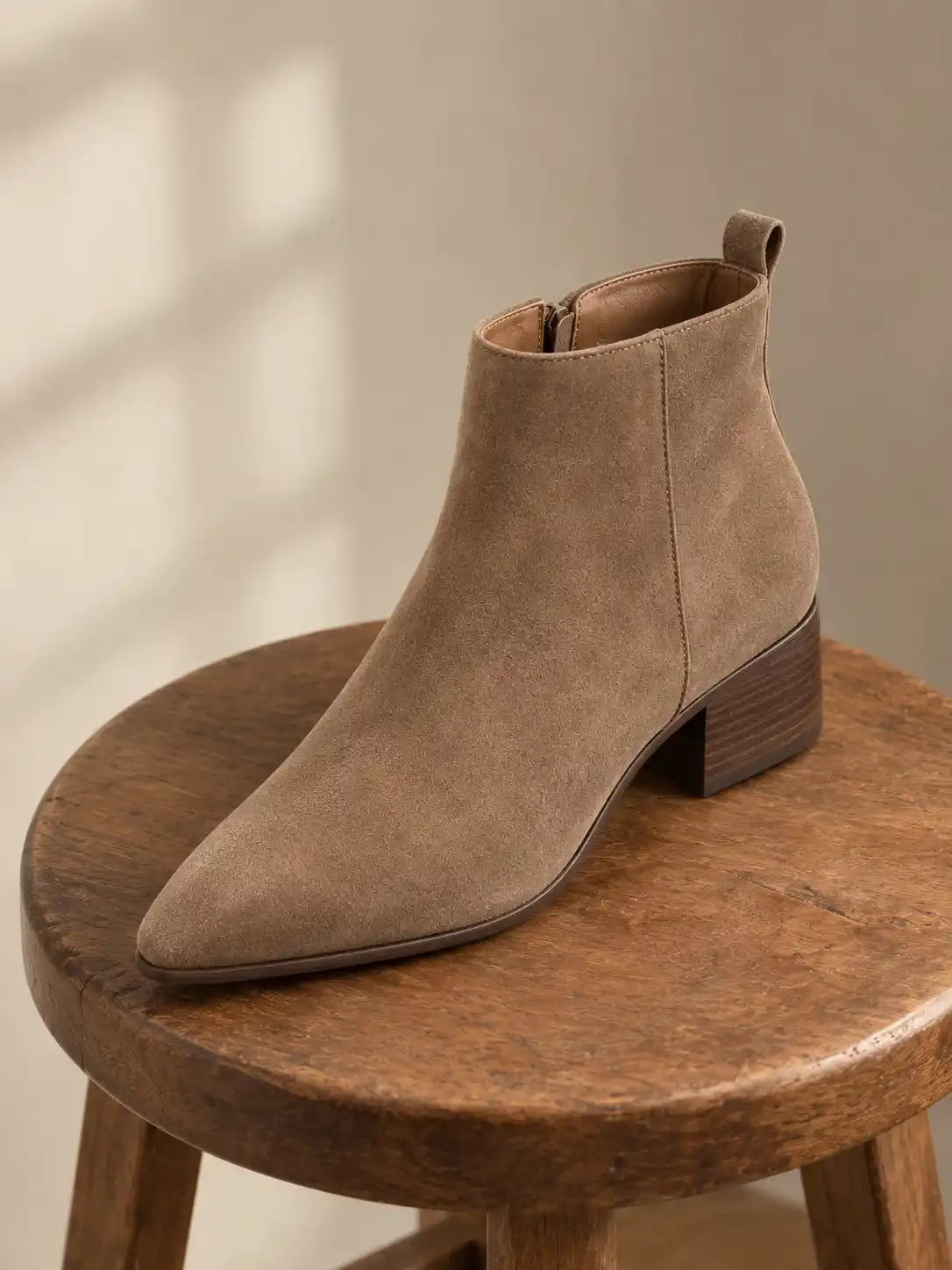
Before you buy, or before you pull an old pair back out, check them against these four points.
- Heel height. A block heel or a low heel around 1 to 2 inches gives you stability and comfort for a full day on your feet, without giving up style.
- Material. Leather or suede holds its shape and softens over time. It also wears better than cheaper materials.
- Color. Black, brown, tan, and burgundy all work with almost everything already in your closet. A neutral pair earns its price back fast because you will wear it constantly.
- Toe shape. A pointed or almond toe makes your leg look longer. A round or square toe reads more casual and works better with relaxed outfits.
Once you have the right pair, the next question is where it should hit your leg. That is where most outfits actually go wrong.
The Boot Height Problem (And How to Fix It)
Here is the one detail that trips up more outfits than anything else: the point where your boot ends on your leg.
When a boot ends at the widest or most awkward part of your ankle, it creates a hard break in the leg line. Instead of your eye moving smoothly down your leg, it stops at the boot. That break is what reads as off, not your age, not the boot style, not the heel height.
The fix is simple. Look for a boot that hits right at your ankle bone, or a couple of inches higher. Avoid a shaft that lands in the middle of your calf unless you are wearing it with a longer hem that covers that spot.
Try this before you leave the house: stand in front of a mirror wearing the boots with the pants or skirt you plan to wear. Look at where the boot meets your leg.
If you see a visible gap or bulge right at the ankle, roll your pants a little, or pick a different length. This one check will save nearly every outfit you build around ankle boots.
Ankle Boots and Jeans: Over, Tucked, or Skimming?
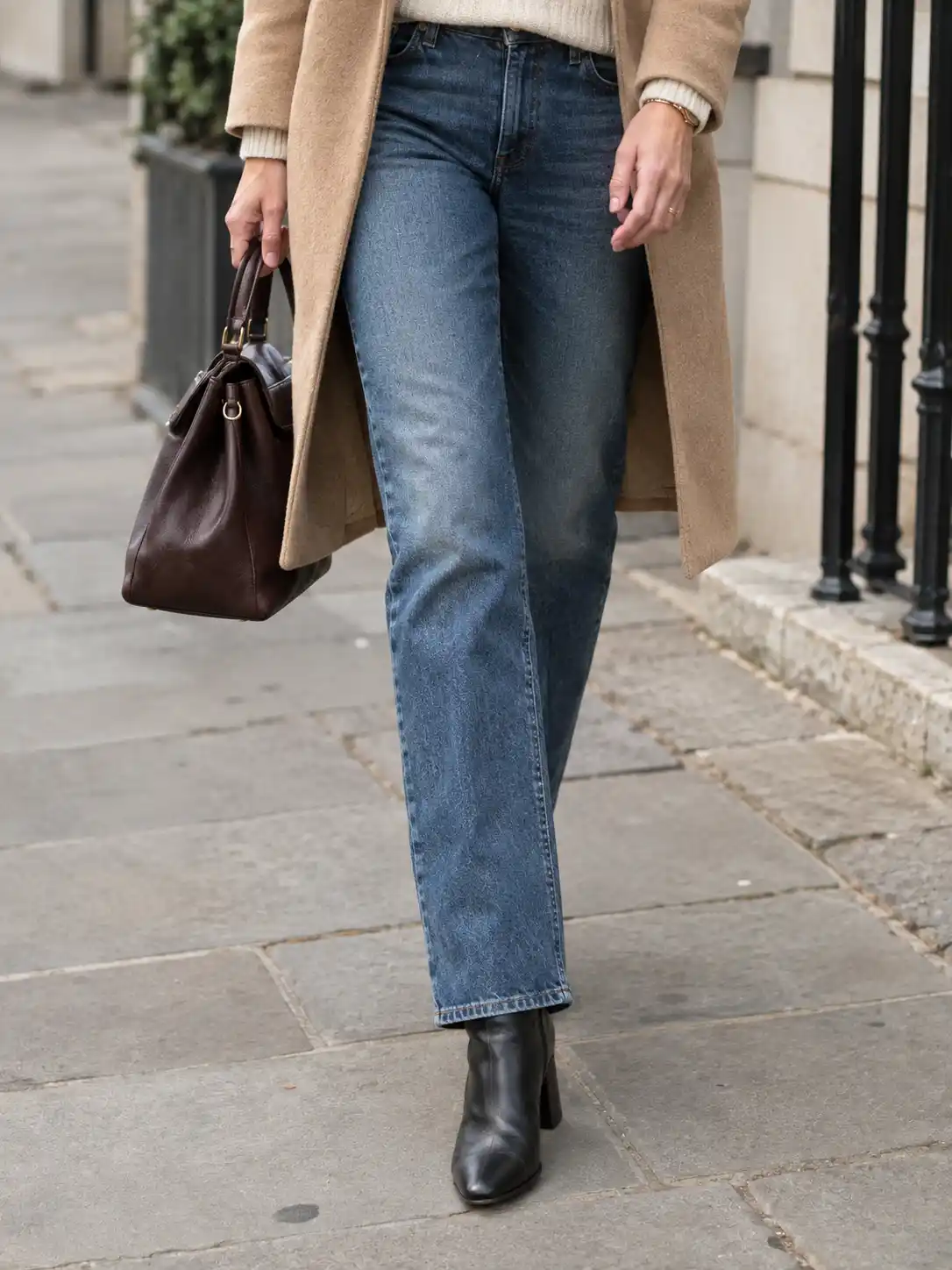
The jeans and boots question is not about your age either. It is about proportion.
The cleanest look happens when your jeans meet the boot smoothly, either resting right at the top of the boot or tucked neatly inside it.
What you want to avoid is bunching or bulging fabric right where the jean hem meets the boot. That extra bulk is what makes the whole leg look shorter and heavier.
Straight leg and slim jeans usually skim the top of the boot on their own, so they need little adjustment.
Skinny jeans tend to bunch at the boot opening, so roll them once or twice and leave about half an inch of ankle showing. That small gap keeps the line clean instead of letting the denim pool.
One more trick: match the color of your boot close to the color of your jeans or pants. A boot and pant in similar tones read as one long line, which makes your leg look longer without any other changes.
Styling Ankle Boots with Skirts and Dresses
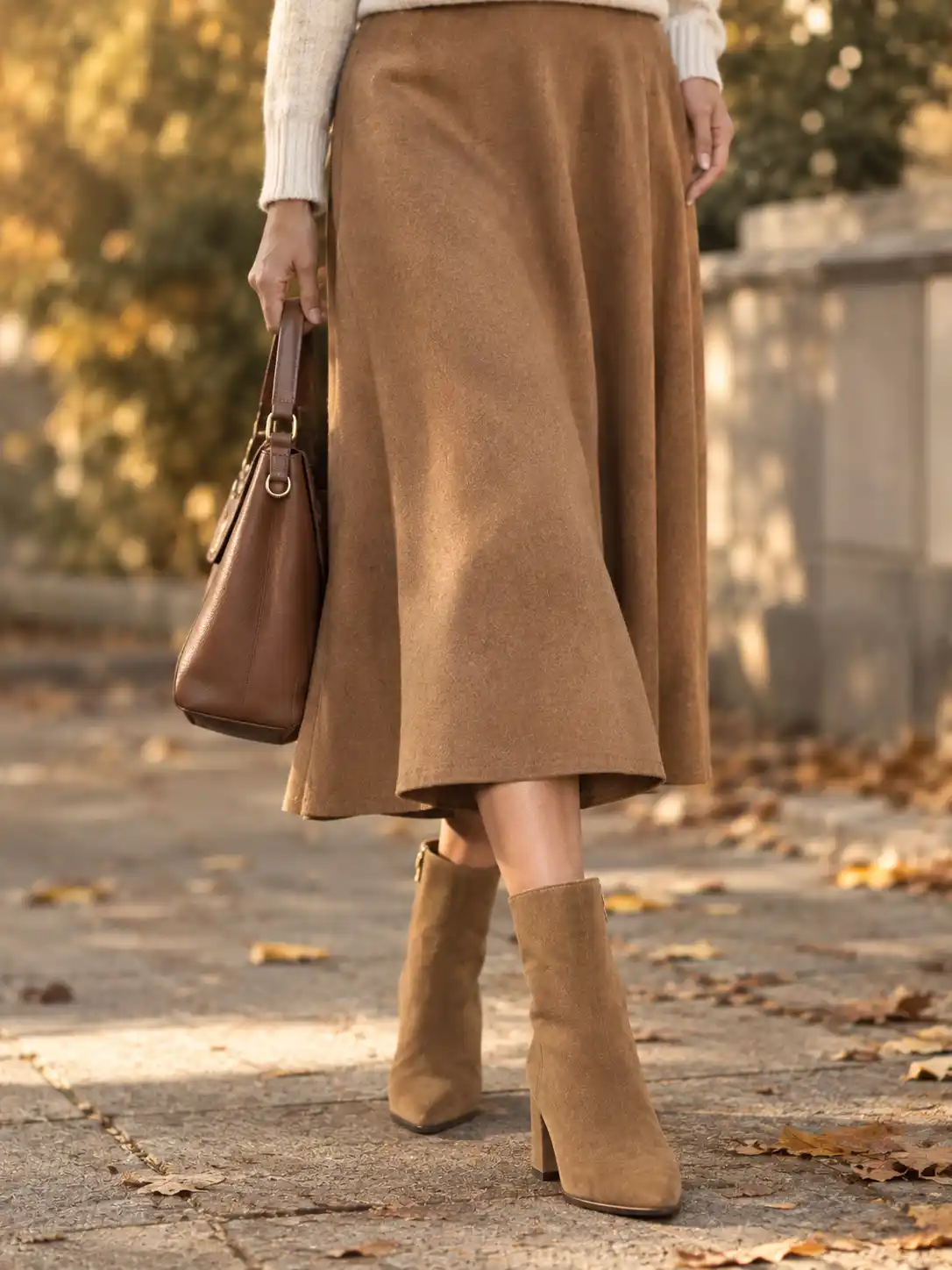
The same proportion rule from your jeans applies to hemlines too.
A midi skirt or dress works well with ankle boots when there is a small gap of visible leg between the hem and the top of the boot.
That gap keeps the leg line unbroken. If the hem lands at the exact same spot as the top of the boot, you get the same awkward break you would get from bunched jeans.
Matching your boot color to your tights creates one continuous line from hip to foot, which is one of the easiest ways to look taller and leaner without changing a thing about your body.
A heeled ankle boot or a Chelsea boot also dresses up a simple fitted top and skirt in seconds, no extra accessories needed.
Ankle Boots with Wide Leg and Cropped Pants
Ankle boots and cropped or wide leg pants are one of the easiest pairings to get right, because the proportions naturally work together.
Cropped, straight leg, and wide leg trousers all show a bit of the boot, which keeps the whole outfit balanced. This pairing works especially well with cropped denim right now.
What does not work as well: ankle boots under a full length flared or maxi wide pant. The pant swallows the boot completely, and you lose the whole point of wearing one.
The simple rule to remember: let the shape of your boot guide how wide or long your pants should be. Taller boots pair better with shorter hems.
Ankle length boots pair better with cropped or straight styles that show a bit of the boot itself.
Boot Styles Worth Trying Right Now
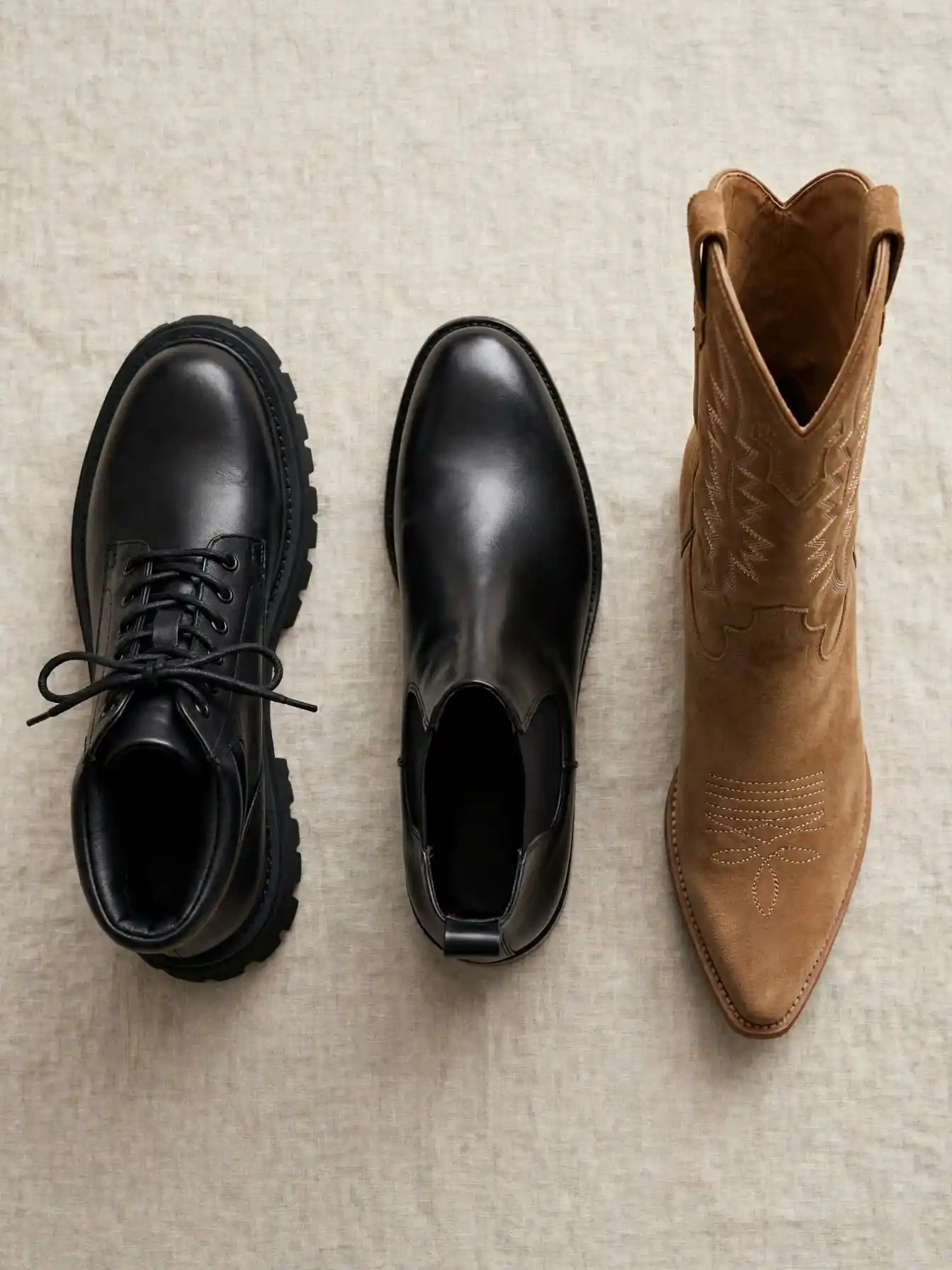
A few boot shapes are especially worth having in your closet at the moment.
Chunky sole boots are still going strong. They add a bit of edge to an outfit, but they work best when the rest of your outfit has some structure to balance out the bulkier sole. Think a fitted jacket or a slim pant rather than something equally loose.
Chelsea boots remain one of the most flexible options in this category. The clean, low profile shape works with nearly everything from jeans to dress trousers, and it never looks overdone.
If you want something with a bit more personality, a western style ankle boot brings a relaxed edge without feeling costume like, especially with straight leg jeans or a simple dress.
And if comfort is your main concern, look for soft leather boots with a rounder, moccasin inspired toe.
They give you the boot silhouette without the stiffness of a structured pair, which matters if you are on your feet most of the day.
Common Ankle Boot Mistakes to Avoid
A quick recap of what actually goes wrong, so you can check your own outfit against it:
- Wearing a boot that hits your leg at the wrong point for your hemline, the boot height problem from earlier.
- Letting skinny jeans bunch over a bulky boot shaft instead of rolling them.
- Buying trend only boots instead of one solid neutral pair you will actually wear often.
- Assuming heel height is somehow tied to your age instead of your comfort and your day’s plans.
None of these are hard to fix. They just take one extra look in the mirror before you walk out the door.
Building a Simple Boot Wardrobe

You do not need a closet full of boots. Three solid pairs will cover almost everything.
Start with one flat neutral pair for everyday wear: jeans, errands, casual days. Add one low block heel pair for anything slightly more polished: work, dinners, days you want a bit more height without sacrificing comfort.
Round it out with one statement pair, a Chelsea boot, a western style, or a chunky sole, for when you want your outfit to do a little more talking.
Buy leather or suede when you can. These materials cost more upfront but last for years, which makes them a better value than a handful of cheaper pairs that wear out in one season.
Ankle Boots, Answered
The four questions readers ask most
Are ankle boots too young for women over 40?
No. There is no age rule for ankle boots. What matters is fit and proportion, not how old you are.
Should my jeans go over or into my ankle boots?
Either works if the line stays clean. Let straight jeans meet the boot smoothly, or roll skinny jeans once or twice.
What heel height is best for everyday wear?
A block heel or low heel around 1 to 2 inches gives the most comfort and stability, with a bit of polish added on.
Can I still wear my old ankle boots?
Yes, especially leather or suede with a clean shape. Update the outfit around them instead of replacing them.
The Bottom Line
Styling ankle boots after 40 comes down to two things: getting the boot height right for your hemline, and keeping a clean line between your boot and your pants or skirt. Neither has anything to do with your age.
This week, try the mirror check from earlier on every pair of ankle boots you own. You will probably find one small adjustment, a cuff, a different pant length, that instantly makes an outfit you already own look sharper.