
The Best Colors to Wear Over 40

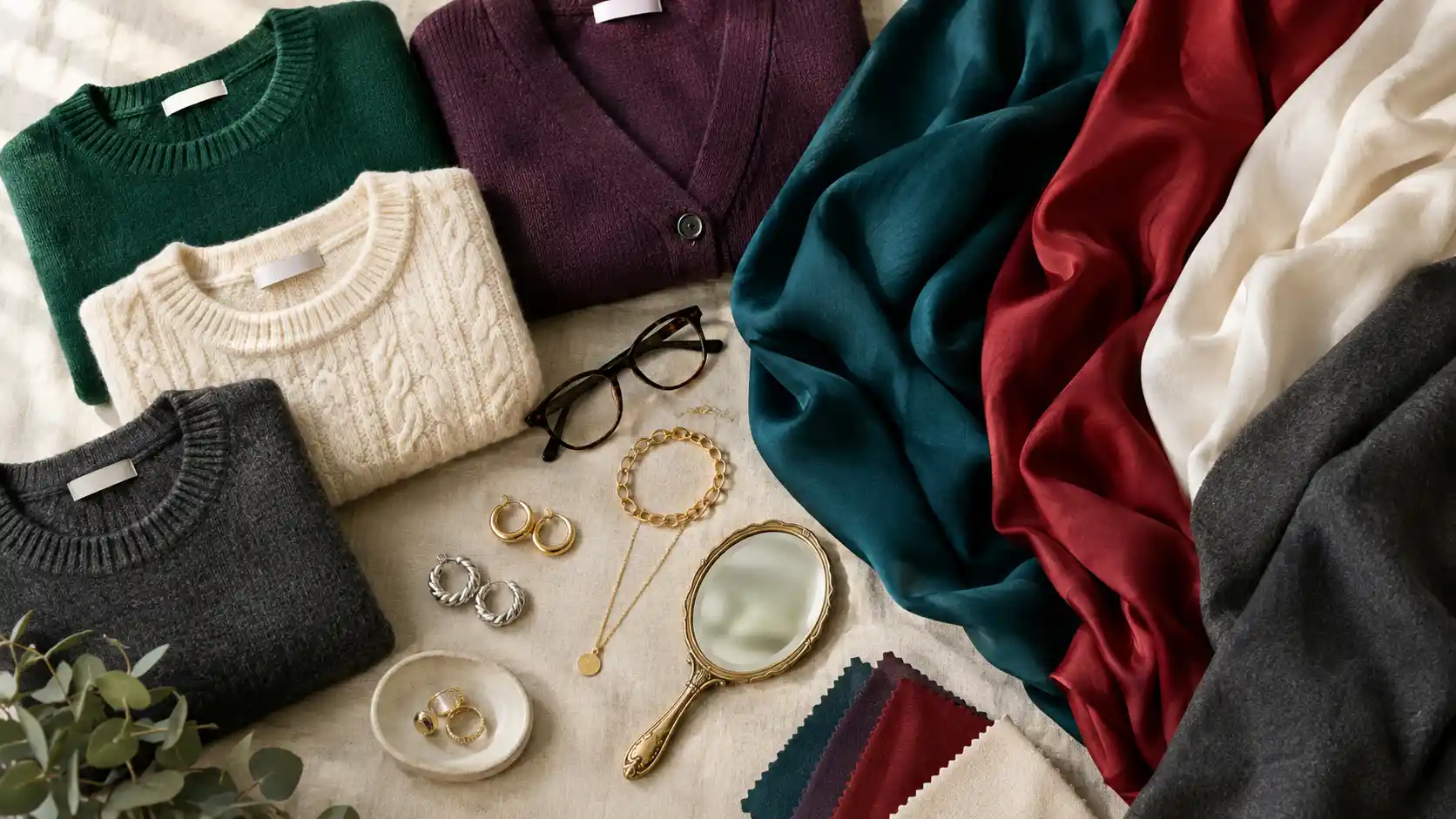
The best colors to wear over 40 are clear, medium to deep shades worn close to your face, like true red, teal, emerald, and plum. They add contrast and warmth back to skin that has started to look duller. Once you know your undertone (warm, cool, or neutral) and how much contrast suits you, choosing colors gets easy again.
You reach for the black top that always looked sharp, or the camel sweater you have loved for years. But today the mirror shows a tired, washed out face. Sound familiar? Here is the good news. The best colors to wear over 40 are still out there for you. Your taste did not change. Your coloring did.
As your skin and hair shift with age, a few old favorites stop lifting your face the way they used to. Many women decide they “can’t wear color anymore” and quietly blame themselves.
That is not it at all. The real reason is physical, and it is fixable. In this guide you will learn why your palette changes, how to find your undertone at home in about five minutes, and which flattering colors for mature skin make you look rested.
Why the Colors That Suited You at 30 Don’t Work at 50
Here is what is actually happening. Starting in your mid twenties, your skin loses a little collagen every year, around 1% annually, and it slowly loses the light reflecting quality that makes skin look luminous. As collagen drops, skin starts to absorb light instead of returning it, so the face can read flat.
There is a name for this. Dermatologists call it sallow skin. It looks dull and slightly yellow or gray, and it happens because skin cells renew more slowly, blood flow drops, and sugars bind to collagen in a process called glycation that leaves it stiffer and yellower.
Certified dermatologists Dr. Tanya Kormeili and Dr. Hadley King point out that these changes stack up over time. Your skin also loses its youthful rosy glow as circulation slows, so the soft pink that once warmed your face fades, and skin can read more yellow or gray than before.
Then there is your hair. Gray and silver hair is basically colorless. It reflects light instead of adding pigment, which changes how every clothing color interacts with your face. Warm earth tones that once matched your brown or blonde hair can suddenly look muddy.
Put it all together and the takeaway is simple. The color near your face now has a job to do. It has to add back the brightness and contrast your skin and hair used to provide on their own. That is why the right shade can take years off your face.
Find Your Undertone in Five Minutes
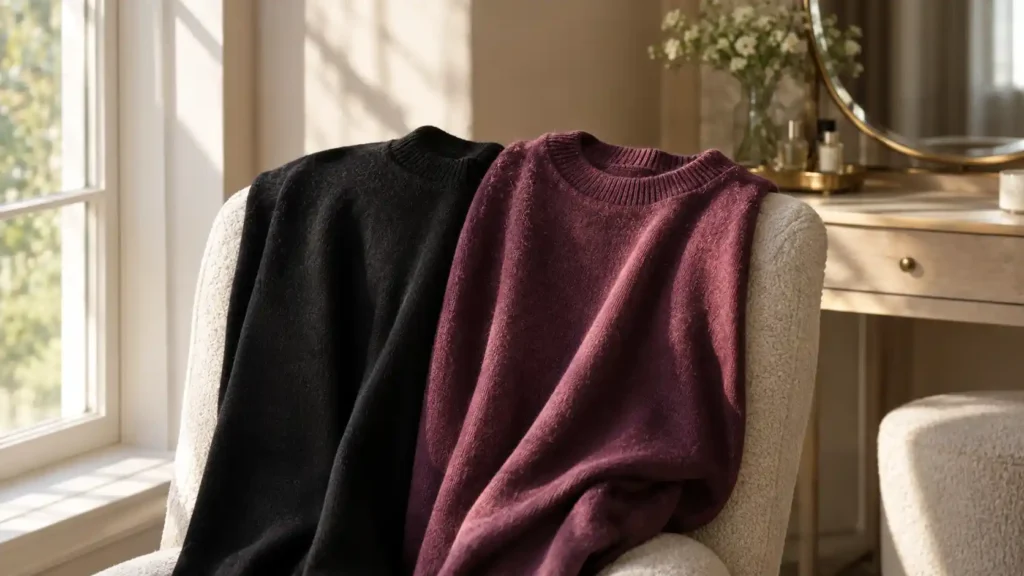
Before any color list, you need one piece of information about yourself: your undertone.
Your overtone is the surface color you see, and it shifts with a tan and with lighting. Your undertone is the steady hue underneath, and it stays the same your whole life.
It comes in three types: warm (a golden or peach base), cool (a pink or blue base), and neutral (a mix of both).
Here are the quick tests you can do at home. Some are more reliable than others, and I will tell you which.
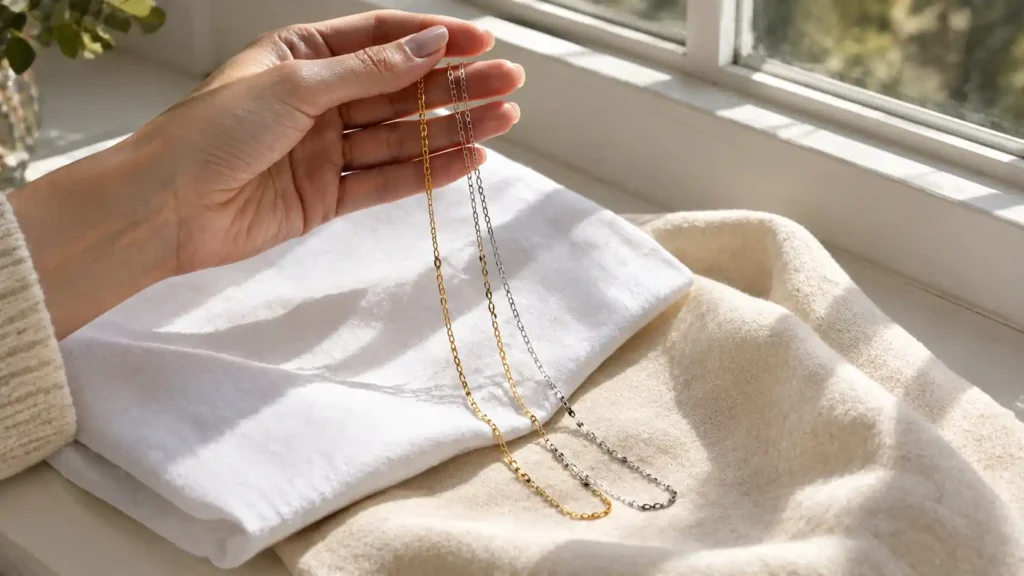
- Jewelry test. Hold gold and silver near your face in daylight. If gold makes you glow, you lean warm. If silver looks better, you lean cool. Both work? You are likely neutral.
- White versus cream test. Cool undertones look fresh next to crisp white. Warm undertones look healthier next to cream.
- Vein test. Greenish veins point to warm, bluish to cool. But go easy on this one. Veins read differently by skin depth and lighting, so use it only as a supporting clue.
The method the pros trust is called draping. You hold different colors up near your face in natural daylight and watch what happens. The right colors make dark circles fade and brighten your eyes. The wrong colors make you look tired. That is the real test, and you can do it with clothes from your own closet.
Two quick warnings. Turn off overhead LEDs and warm lamps first, because they change how your undertone reads. And do not trust selfies, since phone cameras shift the white balance.
One more thing, in case you think this is a passing fad. The coloranalysis hashtag has passed 749.9 million views on TikTok, but the method is old and trusted. Color houses like Color Me Beautiful have used draping since 1982. Got your result? Warm, cool, or neutral. Hold onto it.
The Best Colors to Wear Over 40, by Undertone
Now the payoff. Here is what to actually reach for.
If you have warm undertones: camel, warm ivory and cream, olive, coral, peach, teal, terracotta, warm reds, and golden brown.
If you have cool undertones: navy, emerald, sapphire, cobalt, true red, fuchsia, plum, berry, soft rose, cool gray, and icy pastels.
Here is a helpful shortcut. A few colors flatter almost everyone over 40, whatever your undertone. Treat these as your power shades: soft or true red, teal, emerald, and plum.
These are clear, medium to deep, jewel like colors. They add contrast right back to your face, which is exactly what mature skin needs.
One rule matters more than any list: the color closest to your face wins. That means your top, your scarf, or your collar. Put your best shade there, even if the rest of the outfit is plain.
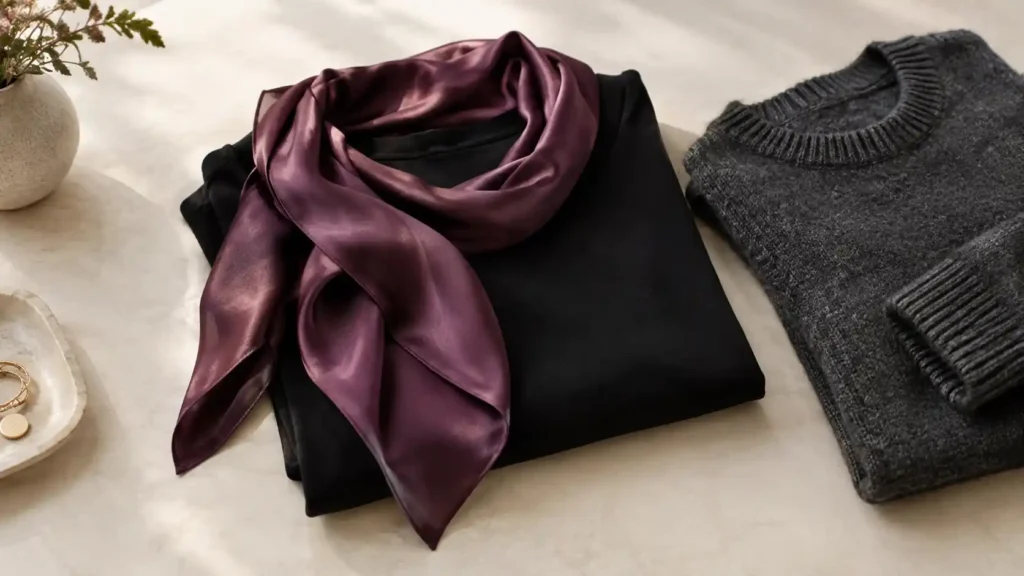
That is also why your neutrals matter. Instead of building everything on stark black, lean on softer, longer lasting neutrals like ivory, cream, soft gray, navy, and charcoal.
Save your bold power color for the layer near your chin, and let the neutrals carry the rest. Start with one flattering shade near your face this week and watch what it does.
Colors to Wear With Care (and the Easy Fix)
A few colors need a little strategy after 40. None are off limits. It comes down to where you wear them and which version you pick.
| Color to watch | Why it can flatten your face | The easy fix |
|---|---|---|
| Pure black at the neckline | Black absorbs light, so it can emphasize dark circles, fine lines, and any sallowness in the face | Switch to a softer charcoal, or keep the black and break it up with a scarf or necklace in a color you love |
| Washed out pastels | Powdery pinks, pale blues, and washed out lavenders can make mature skin look dull rather than fresh | Pick the clear version of the same color, like a clean rose or a bright periwinkle |
| Muddy beige or camel (with gray hair) | Muted beige, tan, and warm camel can blend into gray tones and leave the face looking drained | Swap for crisp navy, ivory, or charcoal, or add one saturated color |
Notice the pattern. You do not have to give up a single color. You just move it away from your face, or choose a clearer version. It is about where and which version, not never.
How Gray Hair Changes Your Best Colors
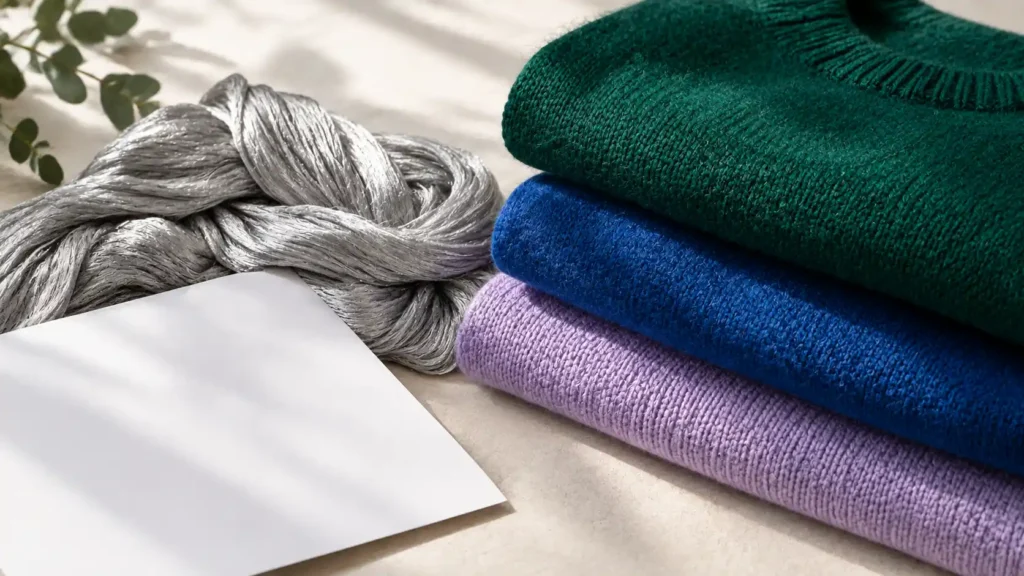
If you are going gray, the rules shift again, in a good way.
As your hair loses pigment, your best palette often moves toward cooler, softer colors. A former Warm Autumn may now suit Soft Summer shades.
Here is the key idea. Silver hair acts as a cool neutral. It does not compete with your clothes, it amplifies them, making saturated shades look more vivid and crisp neutrals look sharper.
Your power palette for gray or silver hair: emerald, sapphire, cobalt, ruby red, rich plum, and, surprisingly, violet and lavender, which echo the cool shimmer of silver.
And here is the part that surprises people. Gray hair calls for more color, not less. Retreating into safe beiges and soft grays feels cohesive, but those mid tones read as flat and faded on silver hair.
One bold color near your face brings you right back to life. Want a quick check? Hold your hair against a plain white sheet of paper in daylight.
Blue white means you are cool, so lean into clear colors. Faintly warm means you are a warm gray, so choose gently muted shades.
How to Wear Bold Colors Without Trying Too Hard
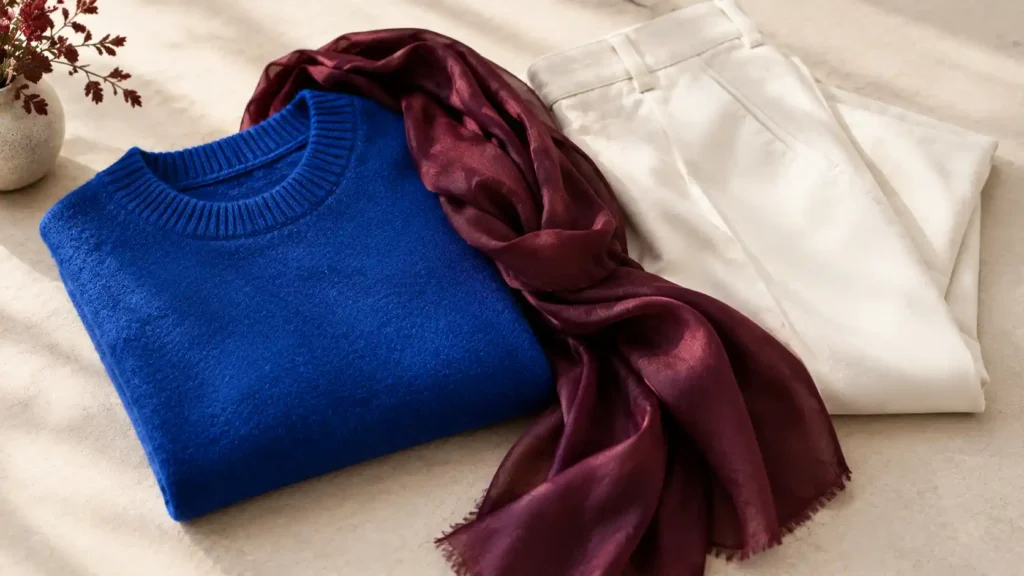
Want to feel current? Bold color is having a moment, and you can absolutely wear it. Some shades turning heads right now include butter yellow, cobalt blue, peony pink, fresh greens, burnt orange, rich purple, wine, berry, and a confident red.
The trick is to skip wearing these head to toe. One rule keeps any bold color easy and grown up: anchor one bold piece with one classic neutral. A cobalt sweater with ivory trousers. A wine top with charcoal pants.
One more smart move when you shop. Buy the bold color as a single hero piece or an accessory, then make sure it works with at least three items you already own.
If it does, it earns a spot in your closet. Pick one bold shade that plays nicely with your undertone. That is all it takes.
Your Questions, Answered
Tap each card to open it
What color makes you look younger over 40?
The Bottom Line
Your colors changed because your skin and hair changed. That is biology, not a style mistake, and it is not your fault.
The best part? Once you know your undertone and how much contrast suits you, choosing colors gets easier, not harder. You stop guessing and start reaching for shades that make your face look rested.
So try one small thing today. Pull two colors from your closet and hold them up to your face in daylight. Watch which one lifts you and which one dulls you down.
The best colors to wear over 40 are not a fixed list on a chart. They are simply the shades that make you look like the best version of you, and now you know how to find them.