
How to Layer Outfits Over 40 for Fall and Winter

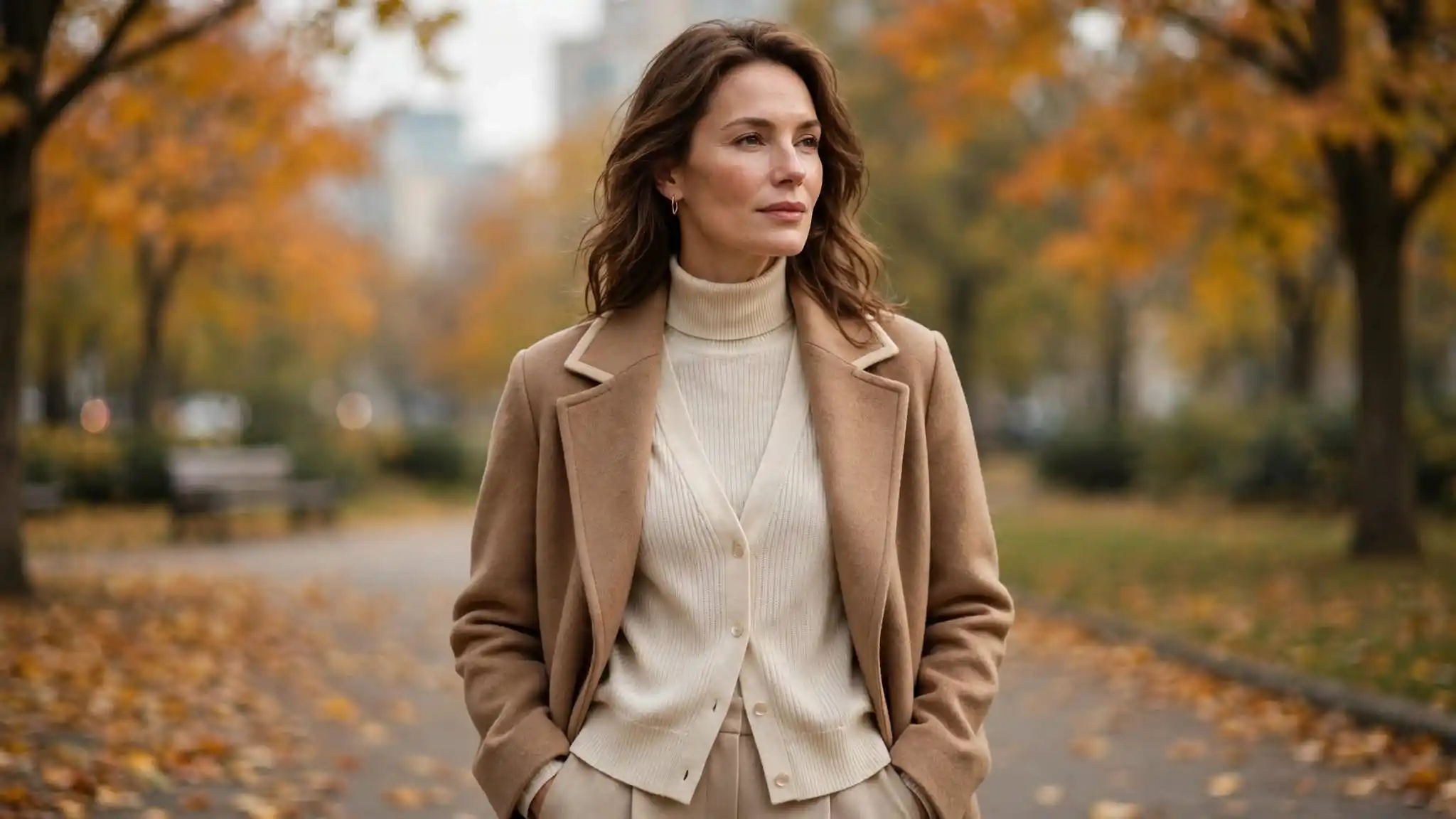
Layering used to be simple. Throw on a cardigan, and you were done. After 40, it gets trickier. What keeps you warm at nine in the morning can have you peeling off layers by eleven.
Most layering advice out there was written for someone whose body and temperature don’t shift much from one hour to the next. It skips two real problems: clothes that add bulk instead of shape, and heat that comes and goes without warning.
If you’ve ever built an outfit that looked great in the mirror and felt wrong by noon, you already know what I mean.
This guide covers layering outfits over 40 the way it actually works in real life. You’ll learn the three layer system behind every good outfit, how to layer without looking bulky, how to dress through hot flashes, how to build a small wardrobe that makes mornings easier, and five outfit formulas you can copy today.
Why Does Layering Get Harder After 40?

Your body changes shape and proportion over time. That alone changes how clothes sit and how layers stack on top of each other. A shirt that used to lie flat under a sweater might sit differently now, and that’s normal.
Temperature is the bigger shift. Most women going through perimenopause or menopause deal with hot flashes at some point, often several times a day, with almost no warning. An outfit that felt warm and cozy at breakfast can feel like a wool blanket by ten.
Your personal style has probably changed too. You likely chase fewer trends and repeat what works more often. That’s not a loss. It means you already know your own rules better than any list of tips could teach you.
Put those two things together and the old advice, more layers means warmer, stops working. The goal now isn’t warmth alone. It’s layers you can adjust as your body changes through the day.
The 3 Layer System That Actually Works
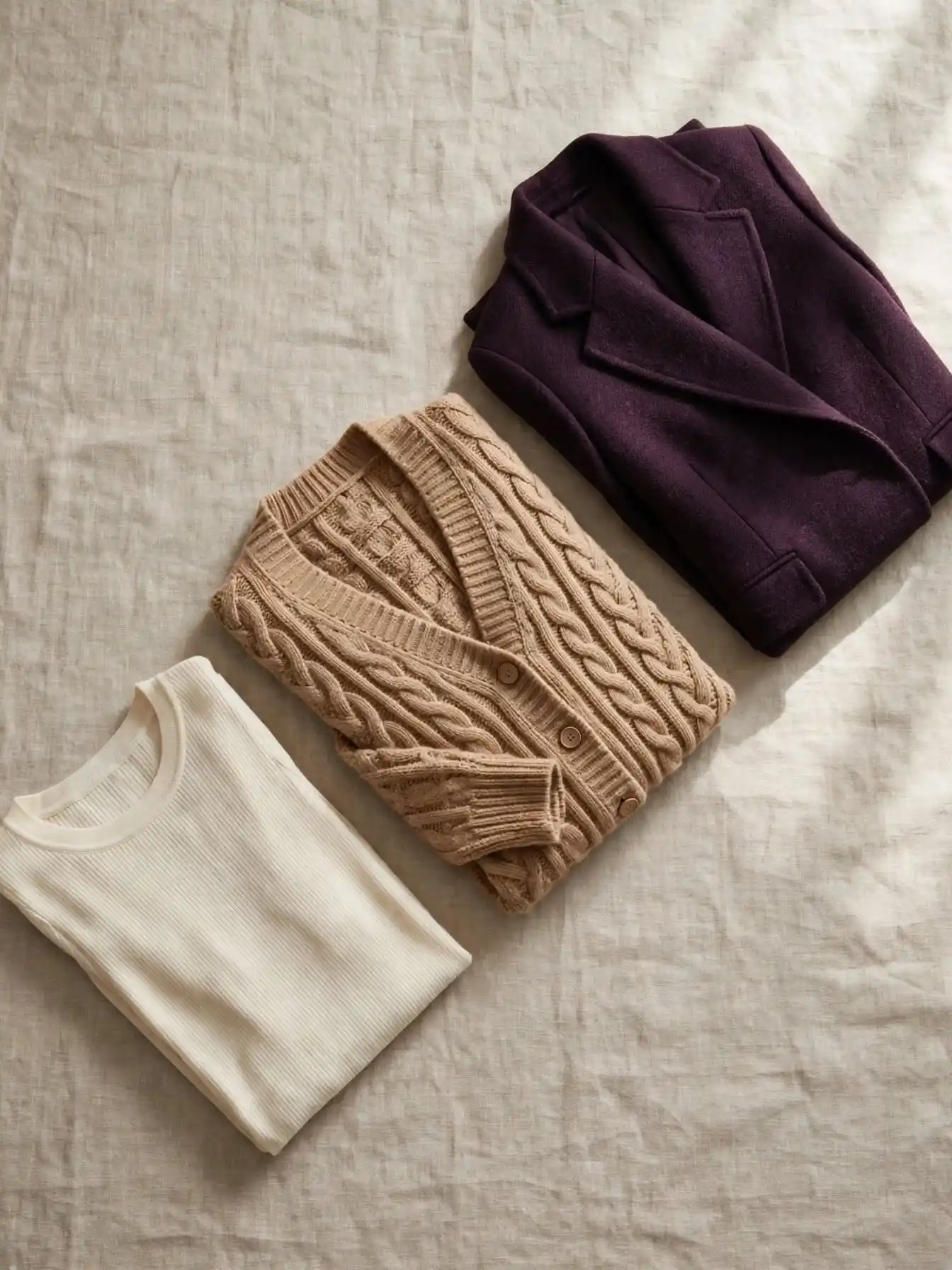
Every layered outfit that works is built on the same three part structure, whether it’s a parka on a mountain or a sweater on a Tuesday.
| Layer | Its job | Everyday pieces |
|---|---|---|
| Base | Sits close to your skin and keeps you comfortable | Fitted long sleeve top, silk cami, thin turtleneck |
| Mid | Adds the actual warmth | Cardigan, lightweight sweater, vest |
| Outer | Blocks wind and cold, sets the shape of the outfit | Wool coat, structured jacket, trench |
The base layer matters more than people think. It should be thin and fit close to your body. Plain cotton holds onto sweat instead of moving it away from your skin, so if you tend to run warm, a fine wool or blended fabric will feel more comfortable against you than a heavy cotton tee.
The mid layer is where warmth lives. This is your cardigan, your sweater, your vest. Pick one mid layer piece, not three, or you’ll end up wearing your whole closet at once.
The outer layer is what people see first. A good coat or jacket does two jobs at once. It blocks the cold, and it gives your whole outfit its shape. This is worth spending a little more on, since you’ll wear it over almost everything else.
In practice, this might look like a thin turtleneck, a soft cardigan, and a wool coat on top. Three pieces, three jobs, one outfit that adjusts as the day changes.
How to Layer Without Looking Bulky
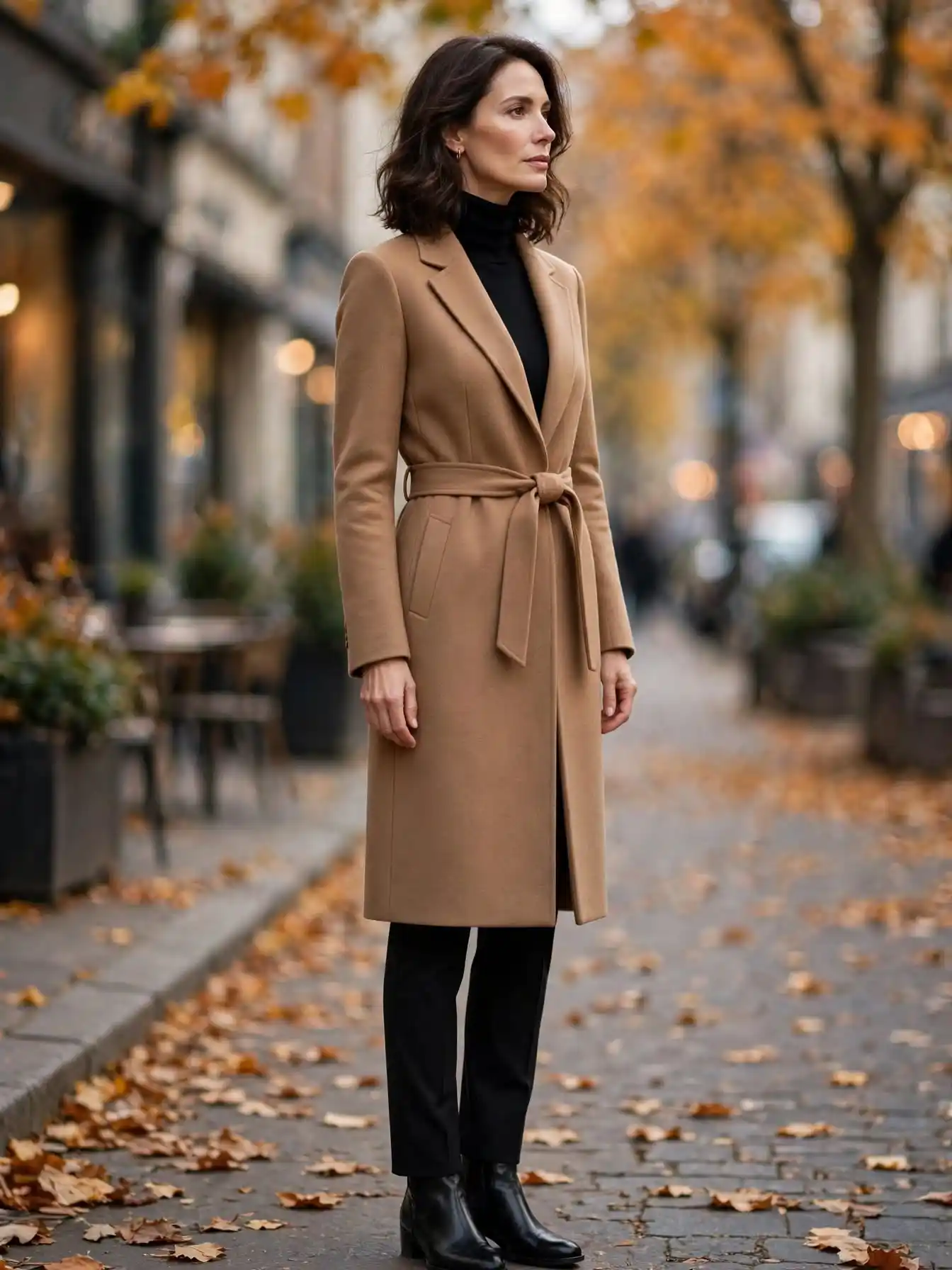
The number one complaint about layering isn’t feeling too cold or too warm. It’s looking wider than you want to. The fix comes down to a few simple rules.
- Start thin and fitted at the skin. Everything you add after that has room to work with.
- Let only one layer add real volume. If your sweater is chunky, keep your coat closer to the body, and the other way around.
- Match your hem lengths, or let them step down gradually. When every layer stops at the same point on your body, it reads as one big block instead of separate pieces.
- Mix fabric weights instead of stacking three thick pieces together. A thin base under a medium sweater under a structured coat looks cleaner than three heavy layers piled up.
- Add shape somewhere. A belt, a fitted blazer, or a defined waist gives the eye something to land on, so the outfit reads as put together instead of just piled on.
A few specific mistakes are worth naming. A thick turtleneck worn tight under a heavy coat often looks stiff at the neck. A bulky sweater paired with a bulky bottom, like wide fleece pants, doubles the volume instead of balancing it. A boxy puffer jacket with no shape at the waist can swallow a whole outfit, no matter what’s underneath it.
None of this means smaller or tighter is better. It means giving each layer a clear job, so they work as a team instead of competing for space.
How to Layer Through Hot Flashes

Traditional layering advice assumes you only get colder as the day goes on. That’s not how it works once hot flashes are part of your life, so the system needs one more rule.
Always build in one layer you can take off fast. A cardigan, an open wrap, or an unbuttoned overshirt all work. The goal is an outfit that still looks finished with that piece removed, not one that falls apart the second you take off your coat.
A few more things help:
- Pick natural fibers, like cotton, wool, or silk, for whatever sits closest to your skin. They tend to breathe better than many synthetic fabrics.
- Skip tight, high necklines when you can. They trap heat right where a hot flash hits hardest.
- Keep your removable layer easy to reach, not zipped up or buttoned to the top.
- Treat your outer layer as optional at any moment, and dress the layers underneath it so they can stand alone.
This is less about buying special clothes and more about building outfits that flex with you. A hot flash should mean removing one piece, not changing your whole outfit in a bathroom stall.
Build a Small Wardrobe That Makes Layering Easy
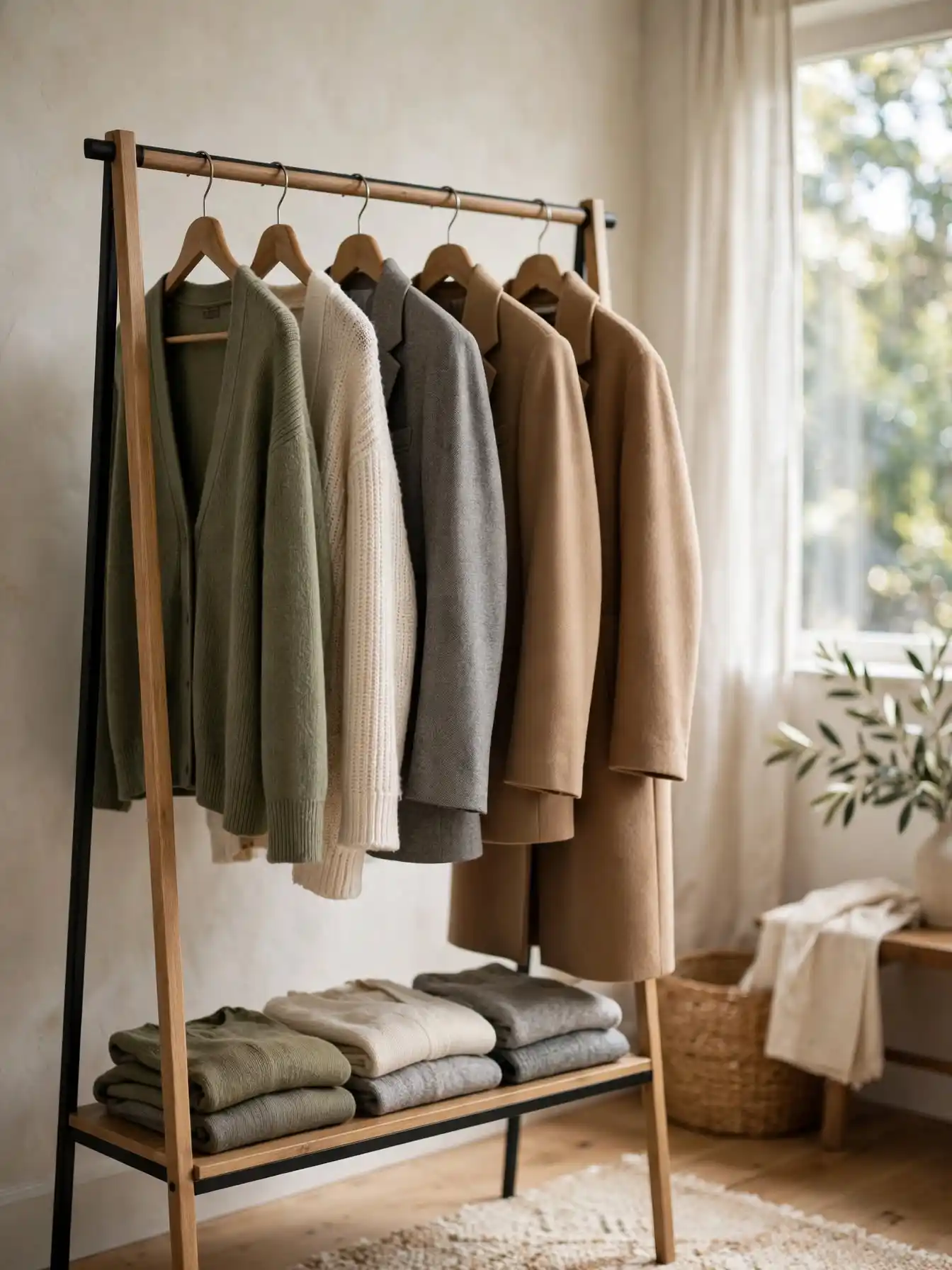
A closet full of clothes doesn’t make mornings easier. A small, well chosen wardrobe does.
You don’t need dozens of pieces. A workable core usually includes a handful of tops, a few bottoms, one or two dresses, some shoes, and a set of layering pieces, cardigans, blazers, and coats, that connect everything else together.
When your pieces are chosen to work together, you spend less time deciding and more time getting dressed and moving on.
Put your biggest budget into the layering pieces themselves. A cardigan, a blazer, and a good coat get worn far more often than any single top or pair of pants, since they sit on top of most of your outfits all season. Buy those well, and they’ll earn their cost many times over.
For color, lean on warm neutrals, camel, chocolate, olive, and cream, plus one or two cooler tones like soft grey or ice blue for contrast. Soft knits in these colors layer easily with almost anything else in your closet.
A well made wool coat, one you can layer things under without it feeling tight, is worth treating as a long term piece rather than something you replace every season.
Fit matters as much as color. A blazer or coat that’s slightly loose through the shoulders gives your layers room to sit properly underneath, without adding bulk anywhere else.
5 Layering Formulas You Can Copy This Week
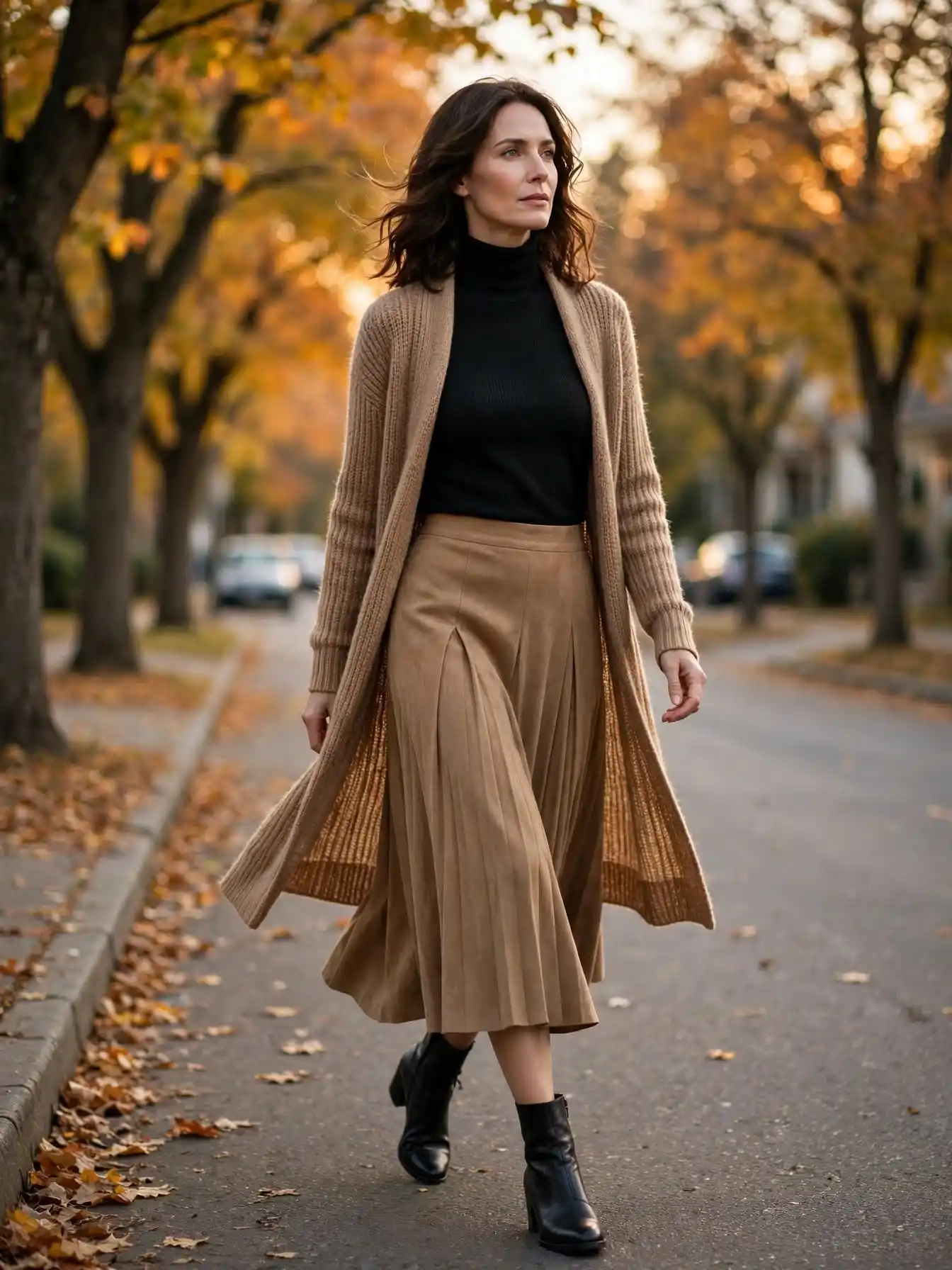
Skip the guesswork. Here are five combinations built from the layers above.
- Fitted turtleneck, midi skirt, long cardigan, ankle boots. Easy for errands or a casual lunch. Simple to adjust if you warm up, just open the cardigan.
- Silk cami, blazer, wide leg trouser, trench coat. A clean office outfit where every piece can come off in order as the day heats up.
- Fitted knit top, wide leg denim, structured blazer in camel, olive, or navy. This one formula alone can create a dozen different outfits just by swapping the top or the blazer color.
- Base layer tee, flannel or overshirt worn open, wool coat or puffer, boots or sneakers. Built for travel days or weekends, since you can shed the outer layer and the overshirt separately.
- Knit dress, thin turtleneck underneath, tall boots, long coat. Good for a day that starts cold and ends warmer. The turtleneck comes off first, and the dress still works on its own.
Treat these as starting points, not rules. Swap in your own colors and pieces, and the formula still holds.
Layering Questions, Answered
Quick answers for staying warm, cool, and put together this season.
Do I need special fabric to layer well?
Not really. Pick a thin, fitted first layer, a soft knit for warmth, and a structured coat on top. Natural fibers like cotton, wool, and silk tend to breathe better than heavy synthetics.
Thin and fitted first. A sweater or cardigan next for warmth. A coat or jacket last, to hold the shape and block the wind. Three layers is usually enough.
What if I get too warm partway through the day?
Always wear one piece you can slip off fast, like a cardigan or an open wrap. Leave it unbuttoned so you can shed it in seconds without the rest of the outfit falling apart.
Conclusion
Layering over 40 isn’t about adding more clothes. It’s about giving each piece one clear job: a base that keeps you comfortable, a mid layer that adds warmth, and an outer layer that holds the shape and blocks the cold.
Keep at least one layer you can remove without your outfit falling apart, and let a smaller, better chosen wardrobe do the heavy lifting.
Pick one formula from this guide and wear it this week. Once you feel how a well built layered outfit adjusts with you instead of against you, layering outfits over 40 stops feeling like a puzzle and starts feeling like second nature.
Quick Answers to Your Layering Questions
How many layers is too many?
Three is usually the sweet spot: a base, a mid layer, and an outer layer. A fourth or fifth piece is usually adding bulk, not warmth.
What fabrics work best if I run hot and cold?
Natural fibers close to your skin, cotton, wool, or silk, tend to handle temperature swings better than heavy synthetics. Save thicker fabrics for your outer layer, where they matter most.
Can I layer with dresses, or is layering just for pants and tops?
Dresses layer well too. A thin turtleneck under a knit dress, or a cardigan over a slip dress, works the same way as layering separates. The three layer rule still applies.
My coat feels too tight once I add layers underneath. What should I do?
Try the coat on over the layers you actually plan to wear, not on its own. A coat with a little extra room through the shoulders and sleeves will fit your whole outfit, not just you.