
How to Wear a Maxi Dress Over 40 (5 Ways)

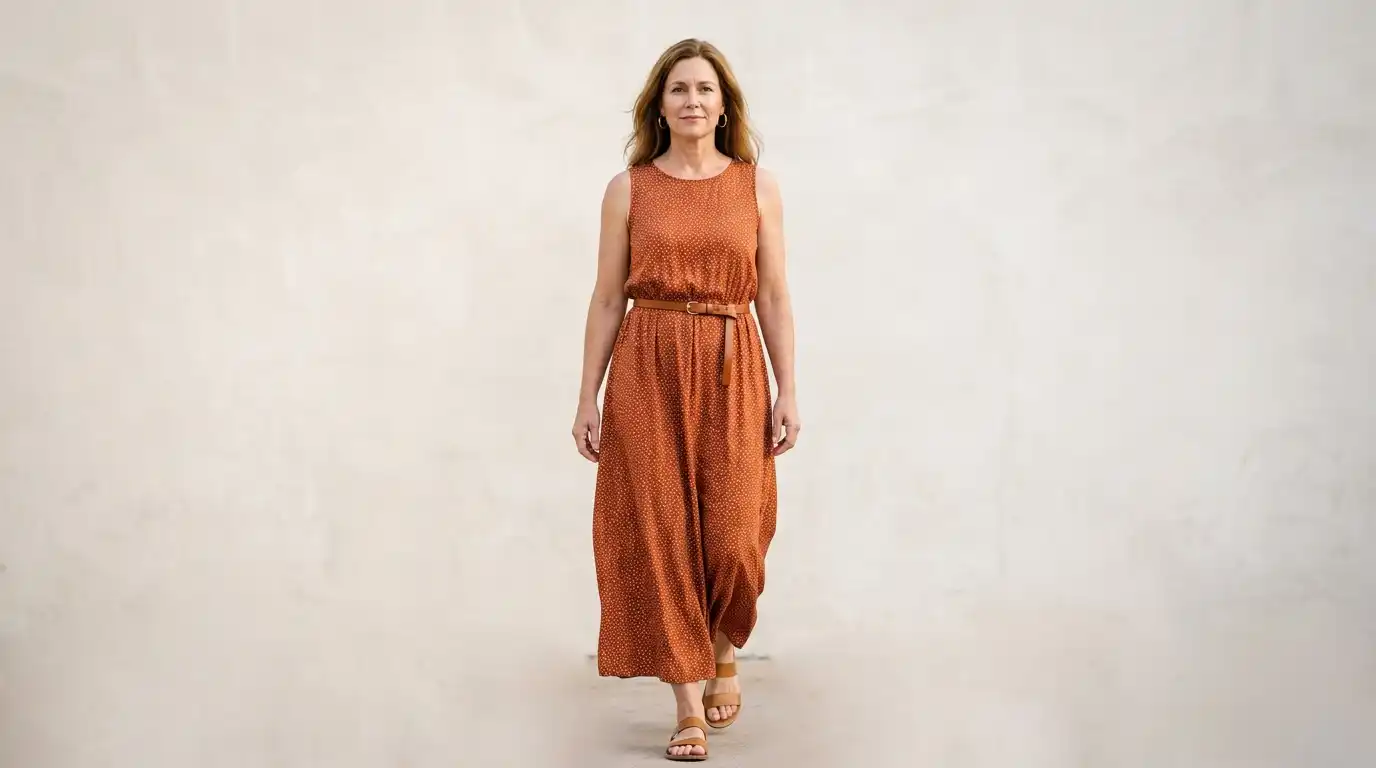
There’s an old rule that says a maxi dress swallows a woman once she passes 40. I believed it for years. Then I took a dress I had given up on, raised the hem ¾ inch, and belted it two inches higher than before. It was the same dress on the same body, and it looked like a different outfit.
That is the real secret to how to wear a maxi dress over 40. The dress isn’t too young or too much. It’s usually a little too long, and the waist sits in the wrong spot.
This guide fixes those two things first. Then you’ll build five full outfits from that one dress: a dinner look, a weekend look, an office look, a skirt look, and a cold-weather look. You’ll use pieces you most likely own already.
The fit steps take about 30 minutes, plus sewing time if you hem by hand. Each outfit after that takes 5 to 10 minutes to put together. Pick a solid or small-print dress in a fabric that falls straight, like jersey, crepe or rayon. Stiff cotton tiers are harder to style five ways.
Before Step 1
Pull These Six Pieces Before You Start
The six styling pieces
- A 1-inch leather belt
- A cropped denim jacket
- A blazer that ends at mid-thigh
- A fitted fine-knit sweater
- Knee-high boots
- A trench coat or long cardigan
For the fit fix
- Your maxi dress, washed and dried
- The flats or sandals you wear most
- About 15 safety pins
- A skin-tone slip
- A full-length mirror
- Needle and thread, or iron-on hem tape
No belt? A thin silk scarf tied in a flat knot works for Step 3.
Test the maxi dress hem in flats so it lands ½ inch above the floor
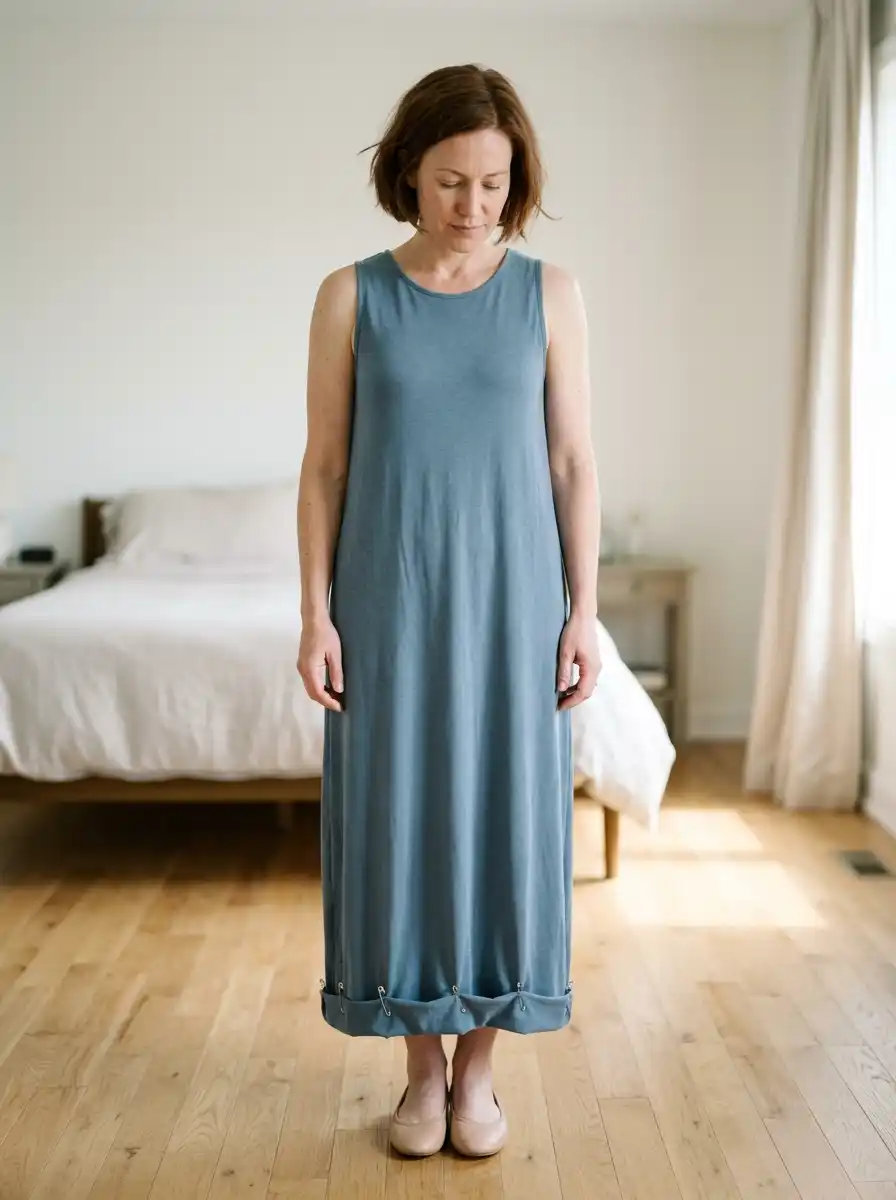
Half an inch is the target. That small gap lets the toe of your shoe peek out. It also keeps the dress from dragging, and dragging is what makes a maxi look heavy and older.
Put on the flats or sandals you wear most. Shoes set the length, so test in the pair you’ll reach for every week. Stand on a hard floor, not carpet, because carpet hides an extra inch.
- Fold the hem up until it sits ½ inch above the floor at the front.
- Hold the fold with safety pins every 4 to 5 inches.
- Check the back and sides, since the back often hangs lower.
- Walk 10 steps across the room.
If your foot catches the hem as you walk, raise it another ¼ inch. If you don’t have safety pins, binder clips or tape on the inside will hold the fold for testing.
To keep the new length, sew the hem, press on iron-on hem tape, or take the dress to a tailor.
⚠ Before You Cut a Single Inch
Rayon and cotton can shrink in the first wash. Wash and dry the dress the way you always will before you pin or cut. If you skip this, a hem that looked right today can sit an inch too short next month.
Smooth the line with a skin-tone slip

Thin jersey and rayon cling to whatever is underneath. A seam in your underwear, a bit of static, or the curve of a hip is enough for the fabric to catch and stop falling straight.
A slip fixes that. It gives the dress a smooth surface to slide over, so the skirt hangs in clean lines from hip to hem.
Pick a slip close to your skin tone, not white, because white shows through light colors in sunlight. A knee-length slip is enough for most dresses.
To test, stand by a sunny window and look in the mirror. If you can see the outline of your legs, keep the slip on for every look in this guide. If you don’t own a slip, seamless bike shorts stop cling and thigh rub, though they won’t fix see-through fabric.
Cinch a 1-inch belt at your narrowest point for dinner out

If your dress has no seam at the waist, it’s waiting for you to give it one. Without that line, a loose maxi falls straight from your bust to the floor and hides your shape.
Turn sideways to the mirror. Place your hands on the sides of your body and slide them up and down until they meet the narrowest spot. For most women, it sits 1 to 2 inches above the belly button. Buckle the belt there.
A 1-inch belt is the right width. Thinner belts get lost in the fabric, and belts 2 inches or wider can cut a short torso in half.
If your waist is less defined, buckle the belt 2 inches below your bust instead. The skirt then floats away from your middle instead of hugging it.
Pull about 1 inch of fabric up over the belt so the top relaxes. Add block-heel sandals around 2 inches high and small gold earrings, and the dress is ready for dinner.
✦ The Belt-Hole Trick for Dresses Without a Waist
Buckle the belt one hole looser than feels right, then sit in a chair for 30 seconds. If the fabric pulls across your stomach, loosen it one more hole. The fabric you pulled up over the belt hides the extra room.
Layer a cropped denim jacket that ends at your natural waist

Think of the jacket as a belt with sleeves. It draws a line at your smallest point, and the skirt swings free below it.
Length is what makes this work. A jacket that ends at your hips cuts the dress at its widest point and makes the outfit look boxy. Hold the jacket against your body in the mirror. The hem should land no more than 2 inches below where the belt sat in Step 3.
Leave it unbuttoned and push the sleeves to mid-forearm. A bit of bare wrist keeps the denim from feeling heavy.
Take the belt off for this look. Add white leather sneakers and you’re set for errands or a farmers’ market. If you don’t have a cropped jacket, tie the front ends of a chambray shirt in a knot at your waist.
Drape an unbuttoned blazer over it — the 9-to-5 version
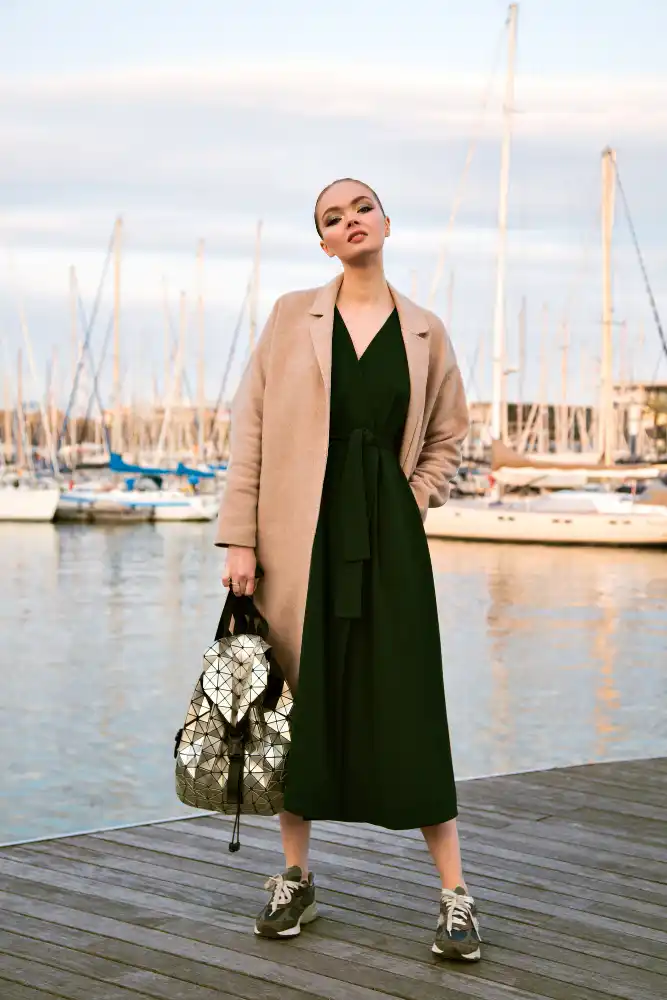
Picture yourself walking into a meeting. From the doorway, people see one long column of color with a strip of dress running down the middle. That strip is the point: it draws the eye up and down and makes you look taller.
Leave every button open so the strip stays visible. Pick a blazer that ends at mid-thigh, about halfway between your hip and your knee. A shorter blazer chops the column in two.
Fit matters more here than in any other look. Before you leave, check four things in the mirror:
- The shoulder seam sits on your shoulder bone, not past it.
- The sleeves end at your wrist bone.
- The blazer hem lands at mid-thigh.
- Every button is open.
If the dress has a deep V-neck, wear a skin-tone camisole under it for work. Pointed-toe flats or loafers finish the look. Leave the denim jacket’s sneakers at home, because they pull this outfit back toward the weekend.
✦ Match the Blazer to the Smallest Color in the Print
Is your dress patterned? Find the color that shows up least, like a thin navy line or a tiny cream dot, and pick a blazer in that shade. The outfit looks planned, and the print stays the star.
Turn it into a skirt with a fitted sweater on top

From across the room, no one can tell there’s a dress under there. All they see is a knit top and a long skirt, which is a whole new outfit for the cost of one sweater.
Choose a fine-knit sweater in merino, cotton or thin cashmere. Chunky knits add bulk right where the dress fabric is already doubled up.
Pull the sweater on over the dress. Smooth the dress bodice flat underneath with your hands so nothing bunches at the sides.
Then fold the bottom 3 to 4 inches of the sweater up and under itself so the new edge sits at your natural waist. The fold stays put better than a tuck, since the dress has no waistband to grab.
If the fold keeps slipping, put your 1-inch belt over it. Loafers or ankle boots finish the look for a cool fall afternoon.
⚠ Skip This Look If Your Dress Has Puffy Sleeves
Ruffles, collars and gathered sleeves bunch under a sweater and show as lumps at the shoulders. This look works best with sleeveless, strappy or cap-sleeve dresses. Check the side view in the mirror before you go.
Swap sandals for knee boots when it drops below 55°F
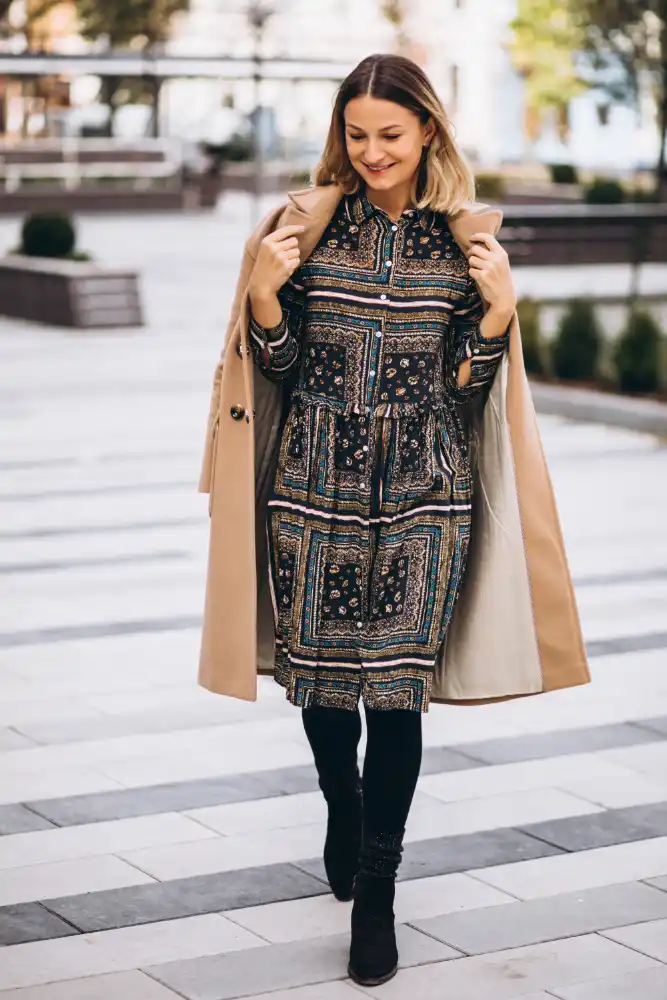
At 55°F, bare ankles under a long skirt start to feel chilly. Knee-high boots fix that, and the long hem hides almost all of the boot. Only the toe and a little leather show when you walk.
Pick boots with a slim shaft. A wide shaft catches the skirt and pushes it out at the calf.
Keep the heel under 1½ inches. You set the hem in flats back in Step 1, and a taller heel lifts the dress and shows a gap of leg above the boot.
Dark brown or black boots go with almost any dress color. For a longer, taller look, match the boots to the darkest shade in the dress.
Add your trench coat or long cardigan on top. It should end at least 6 inches above the dress hem so a band of skirt still shows. A coat that covers the whole dress hides all the work you did on the fit. Leave it open, or tie the trench belt loosely at your waist for shape.
When it drops below 45°F, wear fleece-lined tights under everything.
Troubleshooting Table
Quick Fixes
When the Dress Won’t Behave
| What You See in the Mirror | What Fixes It |
|---|---|
| The skirt sticks to your hips when you walk | That’s static. Wear the slip from Step 2 and rub a dryer sheet over the inside of the skirt. |
| The back of the hem drags while the front looks right | Pin the back on its own and raise it ¼ to ½ inch more than the front. |
| The belt creeps up toward your bust after you sit | Pull up only ½ inch of fabric over the belt, not a full inch. Put a strip of double-sided fashion tape under the belt at the back. |
| The denim jacket makes the whole outfit look boxy | The jacket is too long. Its hem should end no more than 2 inches below your waist. Try the knotted chambray shirt instead. |
| The sweater fold keeps rolling down | Fold a full 4 inches under, then hold it in place with your 1-inch belt. |
| A strip of bare leg shows above your boots | Lower the heel to 1½ inches or less, or wear tights in the same color as the boots so the gap disappears. |
Conclusion
Your dress now hangs ½ inch off the floor and has a waist where you’re narrowest. That one fix is most of how to wear a maxi dress over 40.
Here’s your challenge for this week: wear all five versions in the next seven days. Notice which two you reach for again without thinking. Those two are your new fall go-tos.
Once they feel natural, try the same five looks with a long skirt already in your closet.
Pin this card to your fall outfits board so it’s on your phone the next time you stand at the closet wondering what to wear.
FAQs
Maxi Dress Questions Readers Over 40 Send Us Most
I’m under 5’4″. Will a maxi dress make me look shorter?
Not if the hem sits ½ inch off the floor. On a shorter frame, the hem matters even more than usual. Pick a solid or small print, skip tiered skirts, and lean on the blazer and knee boot looks, which both add height.
My dress is sleeveless, and I’d rather cover my upper arms. Which looks still work?
The denim jacket, blazer and sweater looks all cover your arms. They also work best with sleeveless dresses, so a sleeveless dress is the better pick for this guide.
My dress already has an elastic waist. Where does the belt go?
Put the belt right over the elastic so it hides the gathers. If the elastic sits lower than your narrowest point, wear the belt there instead and let the fabric blouse over the elastic.
How high can the side slit go?
A slit up to the knee helps you walk and climb stairs. If it opens above the knee when you sit, close the top 1 to 2 inches with a small safety pin on the inside.
Which fabric works for all five looks?
Jersey, crepe and rayon in a solid color. They fall straight under a jacket and fold flat under a sweater. Stiff cotton and heavy linen bunch up and wrinkle under layers.