
How to Dress for Winter Over 40

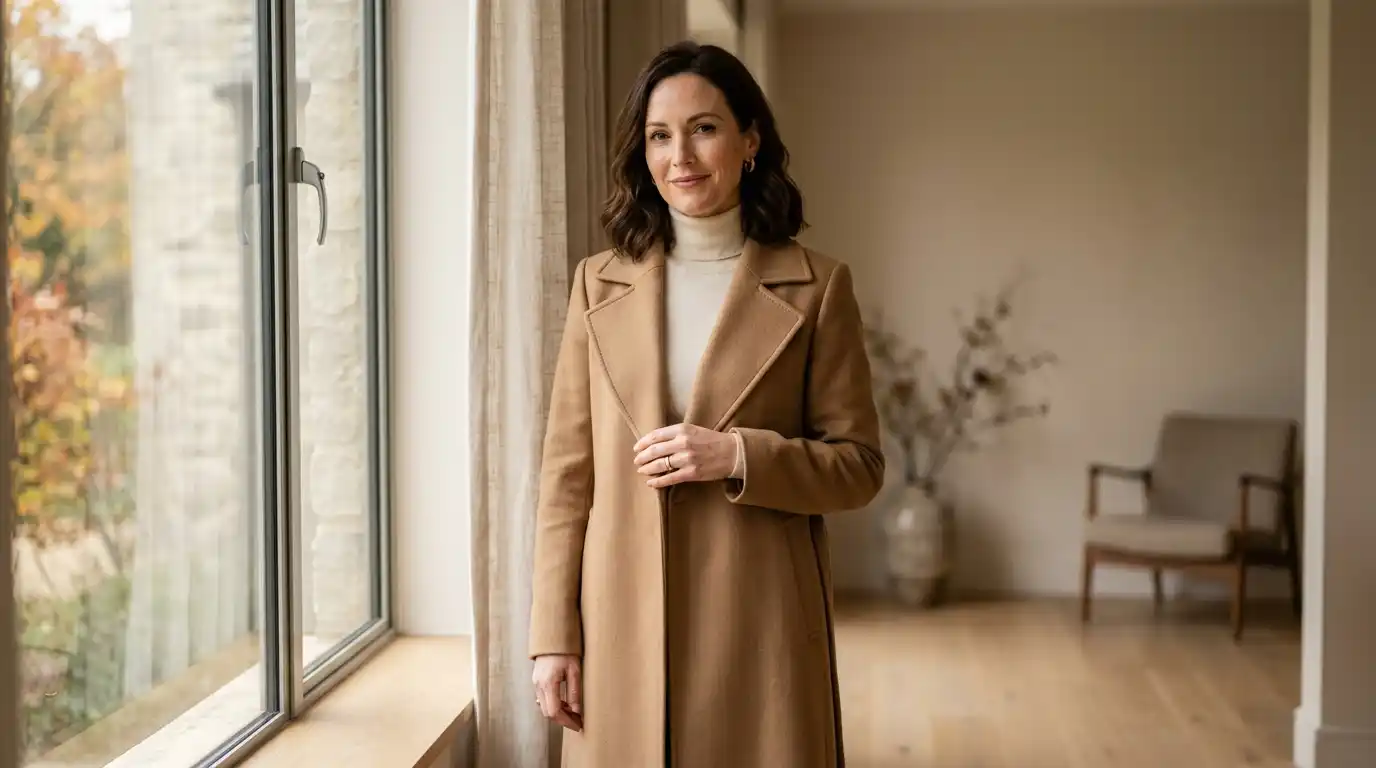
You open your closet. Every coat either swallows you whole or doesn’t keep you warm at all. Ten minutes later you’re sweating through a wool sweater at your desk, even though it’s freezing outside.
Sound familiar? Learning how to dress for winter over 40 means solving two problems at once: staying warm, and staying true to your own style, while your body runs its own weather system now.
Most winter style advice online misses this. It’s built for 20 somethings chasing trends, or it skips style completely and just tells you to bundle up. Neither one fits a woman who still works, still wants to feel good walking into a room, and whose temperature can swing without warning.
This guide gives you a real plan. You’ll learn a simple layering trick, the exact pieces worth buying for your winter capsule wardrobe, which colors and fabrics are worth your money this season, and five outfit formulas you can wear on repeat without thinking twice.
Why Your Old Winter Clothes Stopped Working

Your body handles temperature differently now than it did at 30. Blood flow and body composition shift with age, so a coat that felt warm a decade ago might leave you cold today. At the same time, many women in their 40s and 50s deal with hormone shifts that flip the switch the other way.
About three out of four women get hot flashes as estrogen levels change during this stage of life, and it tends to hit at the worst moments: a meeting, a dinner, the middle of the night.
That’s the real reason “just wear a big coat” stops working. One minute you’re cold. Ten minutes later you’re peeling off a sweater in a warm room. Your clothes need to keep up with that, not fight it.
There’s a money side to this too. Many women over 40 have moved away from buying a pile of cheap trend pieces every season. They’d rather own fewer things that fit well, feel good, and last more than one winter.
So this isn’t about dressing your age. It’s about dressing the body you actually have right now, one that runs hot and cold on its own schedule. Once your wardrobe respects that, winter gets a lot easier.
The 3 Layer Trick That Keeps You Warm, Not Bulky
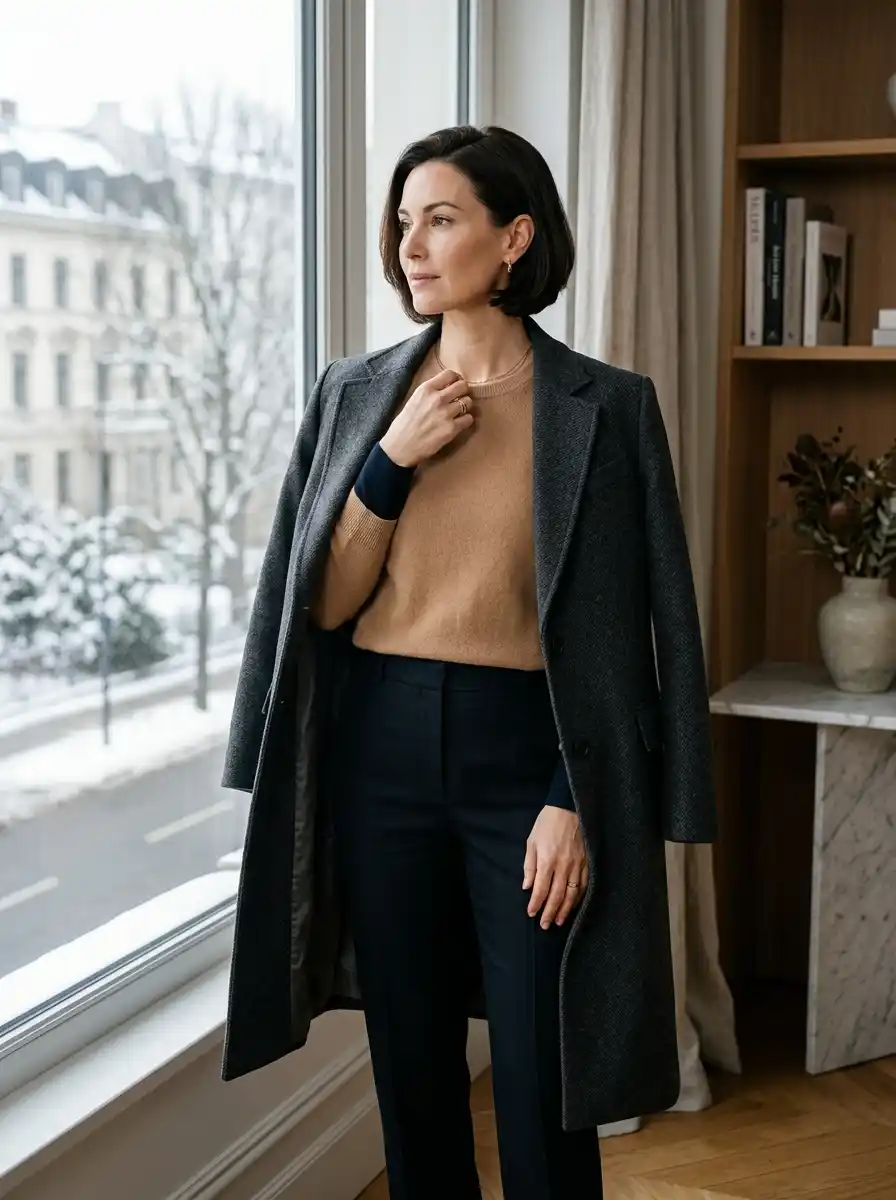
Real warmth doesn’t come from one giant coat. It comes from three layers working together: a base layer, a mid layer, and an outer layer. Get this right and you can add or remove pieces all day without changing your whole outfit.
Base Layer
This sits right against your skin. Its job is to pull sweat away from your body so you don’t end up cold and damp. Skip cotton here. It soaks up moisture and holds onto it.
A thin, fitted top in merino wool or a moisture wicking fabric works much better, especially if hot flashes are part of your life. This is usually the first thing you’ll want to remove, so pick one that looks good on its own too.
Mid Layer
This is where your actual warmth comes from, not the coat. A fine knit sweater in merino wool or cashmere traps heat without adding bulk.
Skip the thick hoodie under your coat. It adds inches to your frame and doesn’t breathe well. A slim, well made sweater does more work in less space, and it looks better doing it.
Outer Layer
This blocks wind and cold air. One structured coat, cut to fit your shoulders, will do more for your look than five casual jackets stacked in your closet. Think a wool coat with a defined shape, not a shapeless puffer three sizes too big.
Here’s a simple test before you leave the house: can you remove one layer right now without ruining the outfit? If a hot flash hits, or you walk into an overheated store, you need an easy way to cool down without changing your whole look.
Build every winter outfit around that idea and you’ll stay comfortable no matter what your body decides to do that day.
The Only Pieces Your Winter Closet Actually Needs
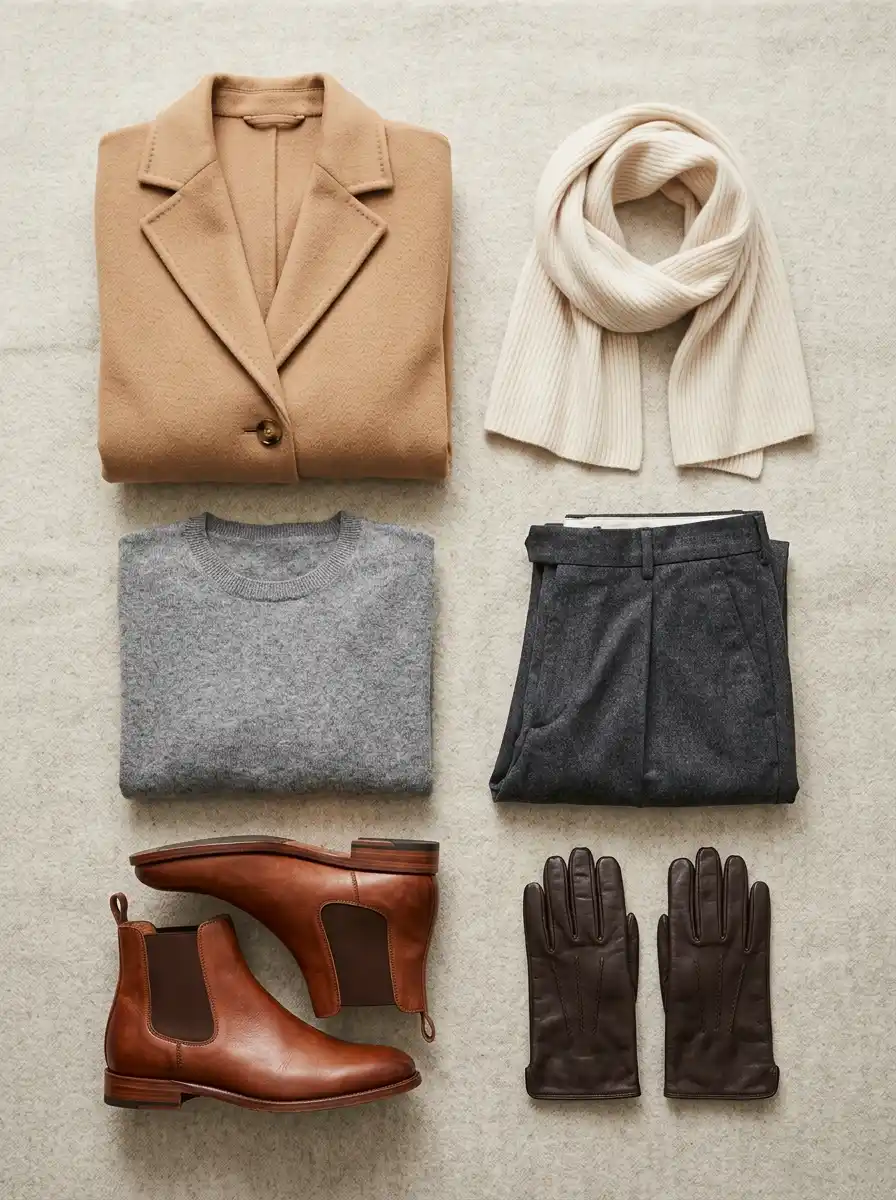
You don’t need forty pieces to get dressed well all winter. A small, well chosen set of around twelve to thirteen pieces can mix into dozens of outfits, and it’s a lot easier to manage than a packed closet full of things you never wear.
Outerwear
- One structured wool or wool blend coat, in a neutral color you’ll reach for constantly
Knits
- A fine merino or cashmere crewneck
- A turtleneck in the same fabric family
- One cardigan you can layer over anything
Bottoms
- A structured trouser (straight or wide leg) for polish
- A pair of well fitting jeans for everyday wear
One versatile dress
- A knit or wool blend dress you can dress up with boots or down with a cardigan
Shoes
- A tall or ankle boot with a heel you can actually walk in
- A flat, comfortable shoe for long days on your feet
Accessories
- A warm scarf in a color that works with everything
- Gloves you’ll actually wear, not just carry
- One bag that can go from day to night
When you shop, think about cost per wear instead of the price tag alone. Divide the price by how many times you’ll realistically wear something.
A coat that costs a bit more but gets worn three times a week all winter is a far better deal than a cheap one that sits in the back of your closet by the new year.
The Colors and Fabrics Worth Buying This Season

Forget chasing one single “it” color. This season’s colors lean warm and grounded: clay and terracotta, chocolate brown, soft grey, and deep jewel tones like forest green and burgundy.
These aren’t loud or trendy. They’re the kind of colors that work in a blazer, a coat, or a sweater, and they mix easily with the neutrals you probably already own.
A few ways to try them: swap your usual black coat for one in camel or clay. Add a burgundy sweater under a grey blazer. If you’re not ready to buy new outerwear, add a deep green scarf to the black coat you already have.
On fabric, look past the label and feel the material. Merino wool and cashmere blends manage temperature far better than stiff synthetic fabrics, which trap heat and make you sweat.
They’re also lighter, so you get warmth without bulk. If a sweater feels heavy and stiff, it will probably feel that way all day. If it feels soft with a little give, that’s usually a sign it will move with you and regulate your temperature better.
5 Outfit Formulas You Can Wear on Repeat
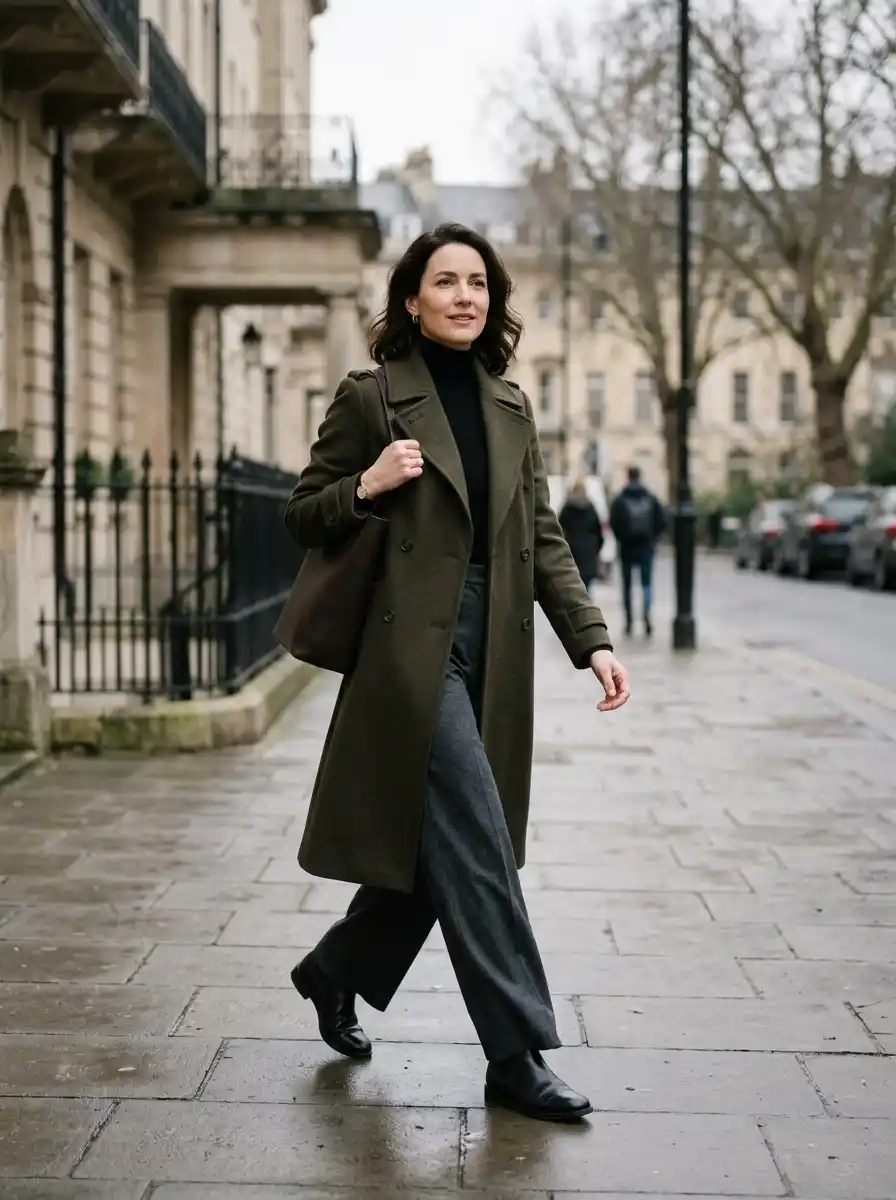
Once you have your pieces, stop reinventing your outfit every single morning. Use these five formulas instead. Pick two or three you actually like and repeat them all winter.
- Coat, wide leg trouser, turtleneck. Your reliable work or errand outfit. Structured and warm without trying too hard.
- Cashmere crewneck, midi skirt, tall boot. Dinner or date night ready in under five minutes.
- Blazer over a knit, jeans. Layer a blazer over a sweater instead of a shirt. It looks like you put thought into it, even on a day you didn’t.
- Monochrome layers, one texture per layer. A wool coat, knit sweater, and flannel trouser, all in the same color family. This reads as expensive every single time.
- Puffer vest over a knit, straight jeans. A warm core without bulky arms. Great for weekend errands or a cold school run.
You don’t need five different looks in rotation every week. Master two of these and getting dressed on a cold morning stops being a decision at all.
The Biggest Mistake That Ages Your Winter Look
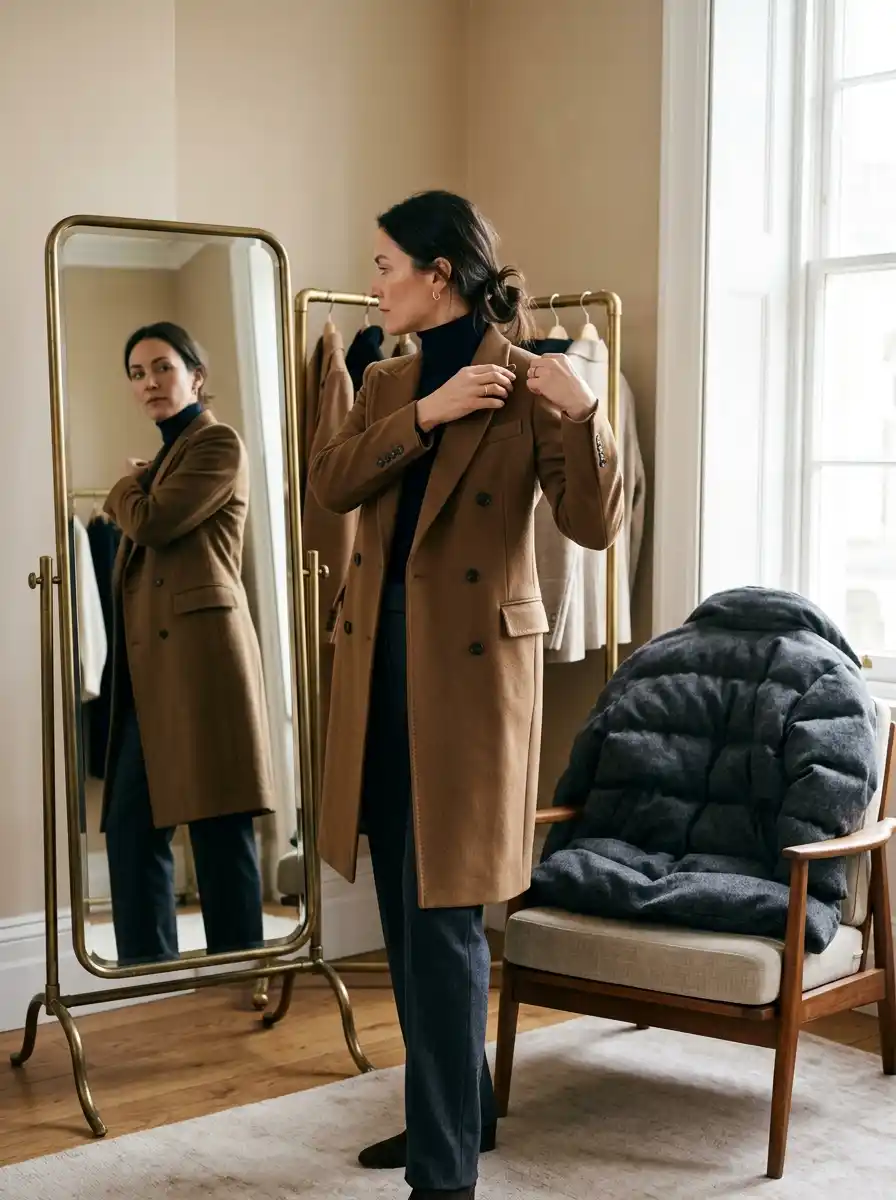
The number one mistake in winter dressing has nothing to do with your age. It’s bulk. Oversized layers piled on for warmth end up hiding your shape completely, which reads as older and heavier than a fitted coat and a slim sweater ever would.
The fix isn’t less warmth. It’s smarter layers, the kind covered above, that add heat without adding inches.
A few other habits worth dropping: wearing all black every day out of habit rather than choice (fine once in a while, flat as a default), and skipping alterations on your coat.
A coat that’s too big in the shoulders or too long in the sleeve will make even great fabric look sloppy. A quick trip to a local alterations shop often makes more difference than buying an entirely new coat.
Small changes like these add up fast. You don’t need a full closet overhaul to notice the difference.
Pick One Thing and Start Here
Dressing well for winter after 40 isn’t about hiding under bulky layers or chasing every new color each season.
It’s a system: the right layers, a small set of pieces that actually work together, and a few outfit formulas you can repeat without thinking. Your body runs its own temperature now, and once your wardrobe respects that, winter gets a lot less stressful.
You don’t have to fix everything this week. Pick one thing: build your three layer base, or finally buy that one great coat. That single change is often what makes learning how to dress for winter over 40 click into place.
Quick Questions About Winter Dressing After 40
What’s the warmest fabric that isn’t bulky?
Merino wool and cashmere blends. They trap heat without adding the bulk a thick fleece or heavy cotton sweater does.
How many coats do I actually need?
One great structured coat covers most days. If your budget allows a second, add a warm puffer or parka for very cold or wet weather.
What should I wear if hot flashes make layering tricky?
Start with a moisture wicking base layer you can keep on all day, then add pieces you can remove fast, like a cardigan or vest, instead of one bulky sweater you’re stuck in.
Do I need to avoid bright colors after 40?
No. Bright colors work fine in small doses, like a scarf or bag. Fit and fabric matter far more than how loud a color is.
How do I know if a coat actually fits?
The shoulder seam should sit right at the edge of your shoulder, not droop past it, and you should be able to raise your arms and layer a sweater underneath without the coat pulling tight.