
How to Layer for Winter Over 40 (Without the Bulk)


You leave the house freezing. You sweat through your sweater on the train. Then you shiver again at your desk. Sound familiar? Your coat isn’t the problem. Your layers are.
Learning how to layer for winter over 40 fixes both sides of this problem. Many people feel the cold faster after 40. At the same time, hot flashes often start in the 40s, sometimes before any other sign of perimenopause shows up. So one thick sweater can leave you too hot and too cold in the same hour.
This guide gives you a simple three layer system you can use every day. You’ll learn which fabrics actually keep you warm and how to dress for hot flashes when it’s freezing outside.
You’ll also learn how to keep cold hands and feet warm, and you’ll get five outfit formulas you can copy tomorrow morning. This is winter layering for women over 40 made simple, and most of it works just as well for men.
Why Do You Feel Colder After 40?

It’s not all in your head. But age isn’t the whole story either. Several small changes add up, and most of them are things you can work with.
Your body’s cold response slows down. When you get cold, your body tightens the blood vessels near your skin to hold heat in. It also burns more fuel to make heat. With age, both of these can kick in a little later and a little weaker. The big changes usually show up in later decades, though. People who stay active and healthy keep most of their cold tolerance. So moving your body matters as much as the clothes on it.
You may have less muscle. Muscle is your body’s heater. After 30, you can lose around 3 to 5% of your muscle each decade, and inactive people lose the most. Less muscle means less heat. Two short strength sessions a week can slow this down.
Your hormones are changing. Perimenopause can throw off your inner thermostat. About 3 in 4 women get hot flashes during menopause. A hot flash is often followed by chills, so you go from boiling to freezing in minutes.
Your health plays a part. Thyroid problems, diabetes, poor circulation, and some medicines can all make it harder to stay warm.
Quick tip: If you feel cold all the time, even indoors, mention it at your next checkup. A simple blood test can rule out a thyroid problem.
You can’t change your birthday. But you can change your layers.
How to Layer for Winter Over 40: The Three Layer System
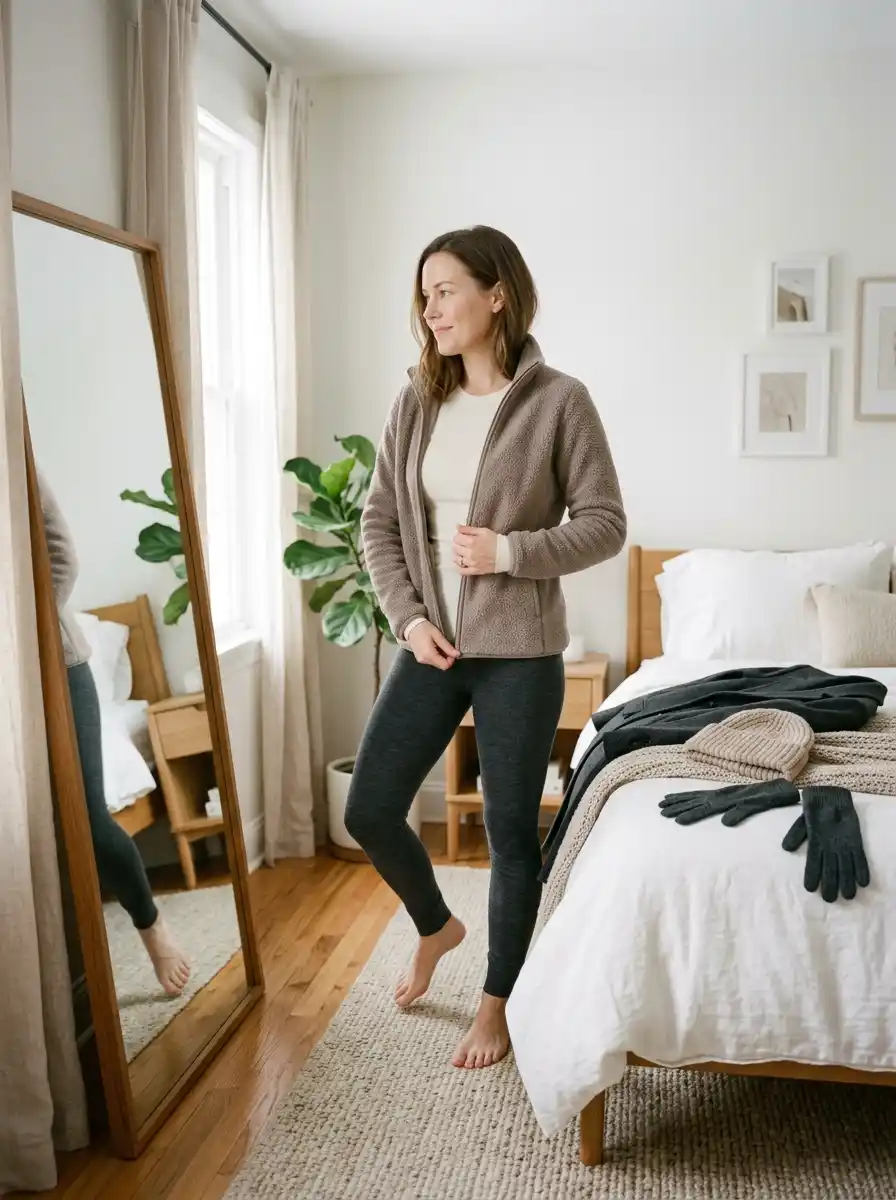
Think of your clothes like a house. You need something to handle moisture next to your skin, then insulation to hold heat, then a roof to keep out the weather. Each layer has one job.
| Layer | Its job | Good choices |
|---|---|---|
| 1. Base layer | Moves sweat away from your skin | Merino wool or synthetic long sleeve tops and leggings |
| 2. Mid layer | Traps warm air to hold your heat | Fleece, wool sweater, cardigan, puffy vest |
| 3. Outer layer | Blocks wind, rain, and snow | Wool coat, windproof shell, insulated jacket |
Why the base layer matters most. Wet skin loses heat fast. Even a little sweat can chill you once you stop moving. A good base layer “wicks” sweat, which means it pulls moisture off your skin so it can dry.
Base layers come in different weights:
- Lightweight works for active days, like brisk walks or winter hiking.
- Midweight suits cold days with light activity, like errands or slow walks.
- Heavyweight is for very cold days when you’re standing still, like waiting for a bus or watching a game outdoors.
Snug base, loose middle. Your base layer should sit close to your skin, because it can’t pull sweat away if it doesn’t touch you. Your mid and outer layers should be looser. Loose layers trap pockets of warm air, and that air is what keeps you warm. If every layer is tight, you squeeze your circulation and end up colder.
Don’t forget the small stuff. A hat, scarf, and gloves finish the system.
5 Mistakes That Make Good Layers Fail
- Cotton next to your skin. It soaks up sweat and stays wet for hours.
- Waiting too long to adjust. Take off your mid layer as soon as you start to sweat, and add your shell the moment the wind picks up. Staying dry is easier than drying out.
- One heavy coat and nothing under it. You can’t adjust it, so you’re either roasting or freezing.
- Tight socks and boots. They cut off blood flow and make your feet colder.
- No indoor layer. Offices, shops, and trains can be chilly or overheated. Always carry one light layer you can add or remove.
Which Fabrics Keep You Warm (and Which Ones to Skip)?
The right fabric matters more than the number of layers. Three good layers will beat five wrong ones.
Cotton: skip it for cold days outside. Cotton holds water like a sponge. Once it’s damp, it pulls heat from your body. Save your cotton tees for dry, easy days at home.
Merino wool: the best all rounder. Merino is a fine, soft wool. It isn’t itchy like the scratchy sweaters you may remember. It can hold a lot of moisture before it feels wet, and it stays warm even when damp. It also resists odor, so you can wear it more than once between washes. The downsides are honest ones: it costs more, needs a gentle wash, and thin pieces can wear holes over time.
Synthetics: great for active days. Polyester, nylon, and polypropylene are light, dry fast, and cost less. They’re ideal for walks, hikes, and workouts. Some hold odor, and some people find them clammy during a hot flash.
Silk: thin and smooth. Silk base layers slip easily under work clothes. They’re warm for their weight but not as warm as merino, and they don’t handle heavy sweat well.
Fleece: the easy mid layer. It’s light, warm, dries fast, and costs little.
Down: the warmest outer insulation. Down gives the most warmth for its weight, but it loses warmth when wet. For damp or snowy places, a jacket with synthetic fill holds up better.
Use this table to match fabric to your day:
| Your day | Base layer | Mid layer |
|---|---|---|
| Active outdoors | Lightweight synthetic or merino | Fleece |
| Office day | Thin merino or silk | Open front cardigan |
| Prone to hot flashes | Thin merino | Zip front or open front layer |
| Standing still in deep cold | Heavyweight merino | Puffy jacket or vest |
| Sleeping | Light, breathable natural fiber | Light throw you can kick off |
Quick tip: Don’t buy a whole merino wardrobe at once. Start with one long sleeve top. Wear it for a week and see how you feel.
How to Dress for Hot Flashes When It’s Freezing Outside
You’re in a meeting wearing your warmest wool turtleneck. Heat rises from your chest to your face. Your skin gets damp. And there’s nothing you can take off.
This is where most winter advice fails women over 40. It tells you to bundle up. But you need clothes that let you cool down fast, then warm up again.
The five second rule. Your top layer should come off in five seconds or less. A hot flash can last from 30 seconds to a few minutes. You need relief right away, not after a struggle with a pullover.
Good “peelable” pieces include:
- Open front cardigans
- Zip front fleeces
- Half zip base layers you can open at the neck
- Blazers and shackets
- A scarf instead of a turtleneck, so you can loosen your neck in one move
An easy office outfit. Wear a breathable camisole or thin merino tee. Add an open front blazer or cardigan on top. When heat hits, slip off the outer piece. Skip turtlenecks and thick knits on workdays. They trap heat, and you can’t remove them in a meeting.
Plan for the chill after. A hot flash often leaves you sweaty, and that sweat then makes you cold. That’s why a base layer that wicks moisture matters so much. Keep your removed layer close so you can put it back on.
Keep it loose. Tight clothing can make hot flashes feel worse. Your base layer should sit close but never squeeze. Everything on top should move freely.
Watch your triggers. Hot rooms, stress, caffeine, alcohol, and spicy food can all set off hot flashes. Jot down what happened right before a few of them. You may spot a pattern.
At night, choose light, breathable sleepwear. Use two or three thin blankets instead of one heavy duvet, so you can push one off without waking up fully.
If hot flashes are disrupting your work or sleep, talk to your doctor. Treatments exist, and you don’t have to just put up with it.
Hot flashes are only half the problem, though. The other half is often your hands and feet.
How to Keep Cold Hands and Feet Warm
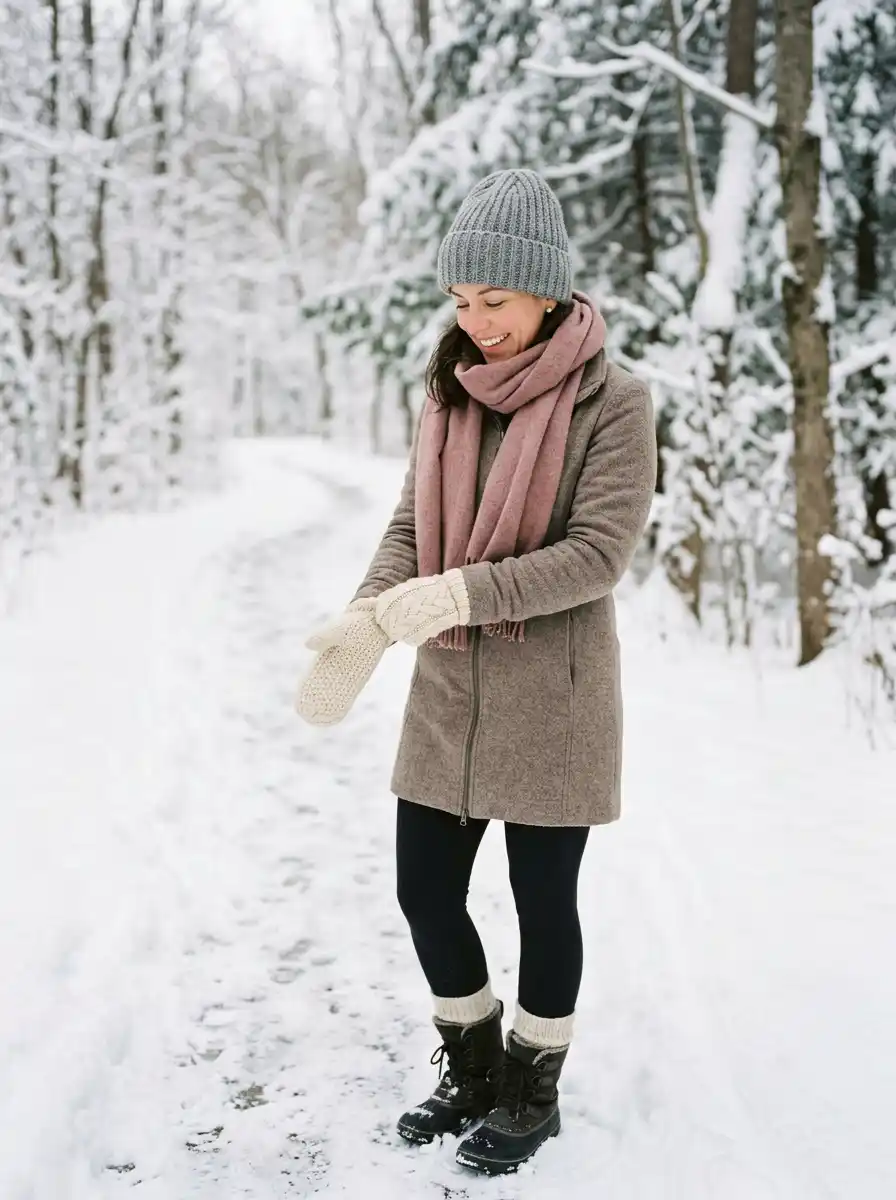
Here’s what surprises most people: warm hands start with a warm core.
When your body’s center gets cold, it pulls blood away from your fingers and toes to protect your organs. So you can wear the best gloves in the shop and still have icy fingers if your torso is cold. A thermal base layer is often the fastest fix for cold hands.
If your fingers turn white or blue in the cold, you may have Raynaud’s. It’s more common in women, and cold is the main trigger. The best advice is to keep your whole body warm, to the point where you feel a tiny bit overdressed. That keeps your circulation open.
Keep things loose. Tight socks, snug boots, tight cuffs, and even a tight watch band can cut off blood flow. Size up your winter boots so you have room for thick socks.
Choose mittens when it’s really cold. Your fingers share heat when they sit together. Wear thin glove liners inside if you need to use your phone.
Warm your gear first. It’s easier to keep hands warm than to warm them back up. Put your gloves and boots near a heater, or blast them with a hair dryer for a few seconds before you go out.
Change wet socks right away. Damp feet lose heat fast.
About that hat. You’ve probably heard that you lose most of your body heat through your head. That’s a myth. When the rest of you is covered, your head accounts for only about 7 to 10% of heat loss. But any bare skin loses heat, and your ears are easy to hurt in the cold. So wear the hat anyway.
Your cold weather accessory checklist:
- Mittens, or gloves with thin liners
- Wool socks, with room to wiggle your toes
- A hat that covers your ears
- A scarf or neck gaiter
- Rechargeable hand and foot warmers
If your fingers or toes change color often, or turn painful and numb, see a doctor. Medicine can help when clothing isn’t enough.
How to Stay Warm Without Looking Bulky: 5 Winter Outfit Formulas

Warm doesn’t have to mean shapeless. The secret is to use thin layers and a few simple style rules.
4 Rules for Layers That Look Sleek
- Thin beats thick. Two thin layers trap more warm air than one chunky sweater. They also fit under your coat without pulling at the shoulders.
- Fitted, relaxed, structured. Wear a close fitting base, one relaxed middle piece, and a structured coat on top. This keeps your shape visible.
- Stick to one color family. Cream, camel, and brown, or gray and navy, worn head to toe create one long, smooth line. Three layers look like one.
- Let one layer peek out. Show a collar, a cuff, or a hem. It looks intentional and adds interest.
Want a fresh look? Fair Isle and textured knits, color block stripes, and pants lined with fleece are all popular right now. They add warmth and style without extra bulk.
Your 5 Grab and Go Formulas
Screenshot this table or print it and stick it inside your closet door.
| Your day | What to wear | Your “peel” layer |
|---|---|---|
| 1. Office commute | Thin merino tee, open cardigan, wool coat, scarf | Cardigan and scarf |
| 2. Winter walk | Synthetic base, fleece, windproof shell, hat, gloves | Fleece |
| 3. Snow shoveling | Light base, thin fleece, shell, gloves, hat | Fleece |
| 4. Cozy day at home | Long underwear under your clothes, cardigan, warm socks, slippers | Cardigan |
| 5. Evening out | Silk or merino base under your dress or shirt, tights lined with fleece, long coat | Coat |
A note on snow shoveling. Dress lighter than you think. You’ll heat up fast, and sweat will chill you later. Cold air plus heavy lifting also puts real strain on your heart. Take breaks, lift small loads, and use a smaller shovel. If you have a heart condition or high blood pressure, or you don’t exercise much, talk to your doctor before the first snowfall. A snow blower or a hired helper may be the smarter move.
A note on staying warm at home. A mildly cool house can slowly drop your body temperature over a long day, especially as you get older. Aim for about 68 to 70°F (20 to 21°C) in the rooms you use. If you want to save on heating, add long underwear and a throw blanket instead of turning the heat way down.
Bonus: keep a car kit. Store a blanket, a spare hat, gloves, and dry socks in your car. If you break down or get stuck in traffic, you’ll be glad you did.
Quick Answers to Common Questions
How many layers should I wear in winter?
Three is the sweet spot for most days: base, mid, and outer. That’s the core of how to layer for winter over 40. On very cold days when you’re standing still, add a second mid layer, like a vest under your coat.
Is merino wool worth the price?
For base layers, yes, for most people. It stays warm when damp, handles hot flashes well, and doesn’t smell after one wear. Start with one top and add more if you love it.
Why am I always cold after 40?
It’s usually a mix of less muscle, less movement, and hormone changes. Health issues like thyroid problems can also play a part. If you’re cold all the time, get checked.
Can I wear thermal leggings to work?
Yes. Thin thermal leggings disappear under wide leg trousers, long skirts, or dresses with boots. No one will know, and you’ll stay warm all day.
Start With One Outfit This Week
Staying comfortable in winter after 40 comes down to a few simple habits. Wear three layers that each do one job. Pick merino or synthetics over cotton. Keep your top layer easy to peel off for hot flashes. And keep your core warm so your hands and feet stay warm too.
You don’t need a new wardrobe to start. Before your next cold morning, pick one formula from this guide and test it for a week. Notice when you feel too hot or too cold, then adjust one piece at a time.
Once you know how to layer for winter over 40, cold mornings and hot offices stop running your day. And if you still feel cold no matter what you wear, talk to your doctor. Your thyroid, your medicines, or your circulation could be part of the picture.