
What to Wear to a Wedding When You’re Over 40

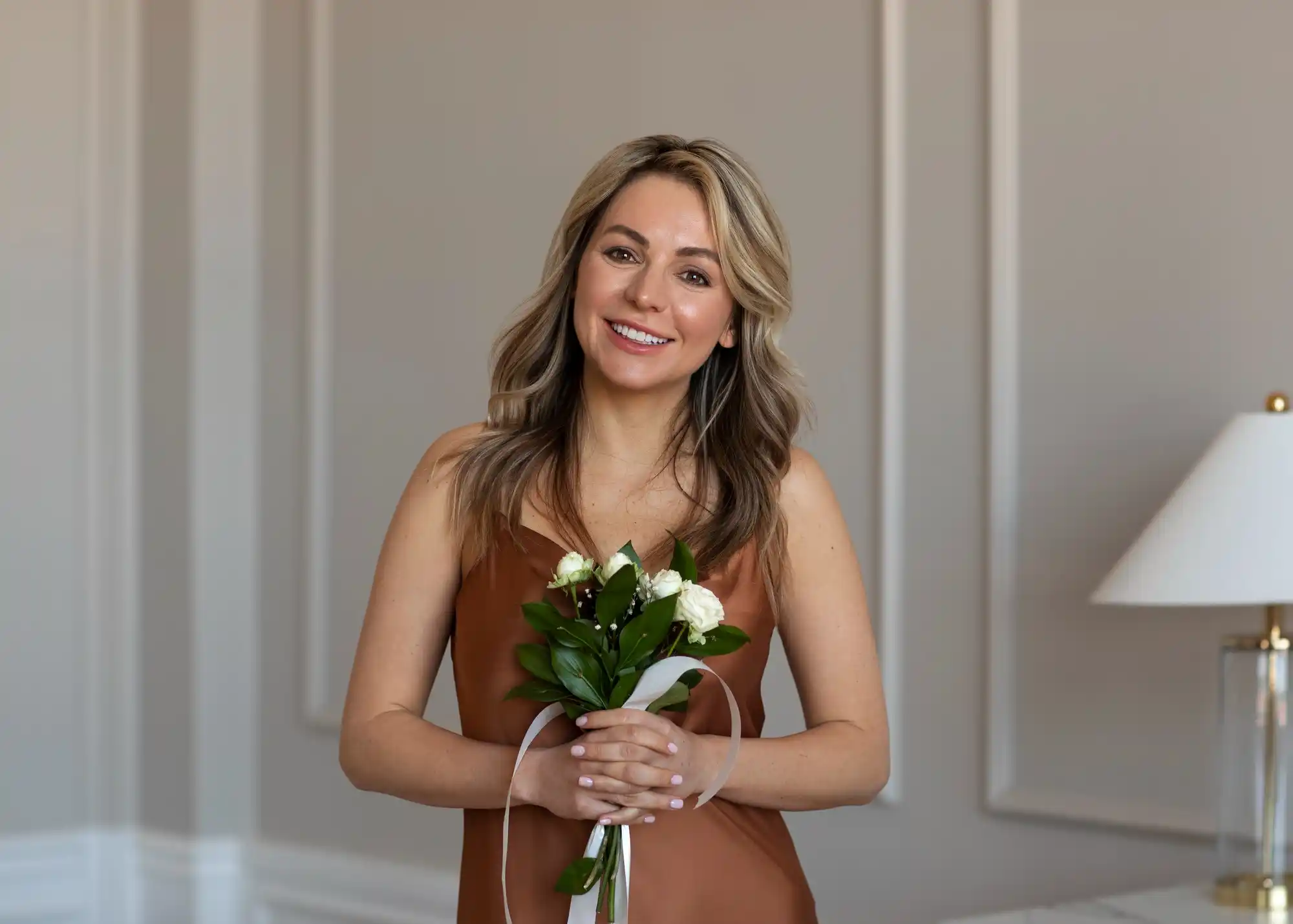
You open the wedding invitation and see one word: semiformal. Then you stand in front of your closet and nothing feels right. That black dress feels too safe.
That bright one feels too young. This happens to almost every woman over 40, and it does not mean your style failed. It just means the old rules changed a little.
Dressing for a wedding after 40 brings new questions. Your body may have changed. Your comfort needs may have changed too, especially if hot flashes or sore feet are part of your life now.
And each year brings a new batch of trends to sort through. Some are worth trying. Some are not.
This guide walks you through all of it. You will learn how to read any dress code, which 2026 trends actually work for women over 40, which fits and fabrics flatter you, and which colors to wear or skip.
You will also get real outfit ideas for every type of wedding, from a beach ceremony to a black tie event. By the end, you will know exactly what to wear to a wedding when you’re over 40, and you will feel good walking in the door.
What Does the Dress Code Actually Mean?
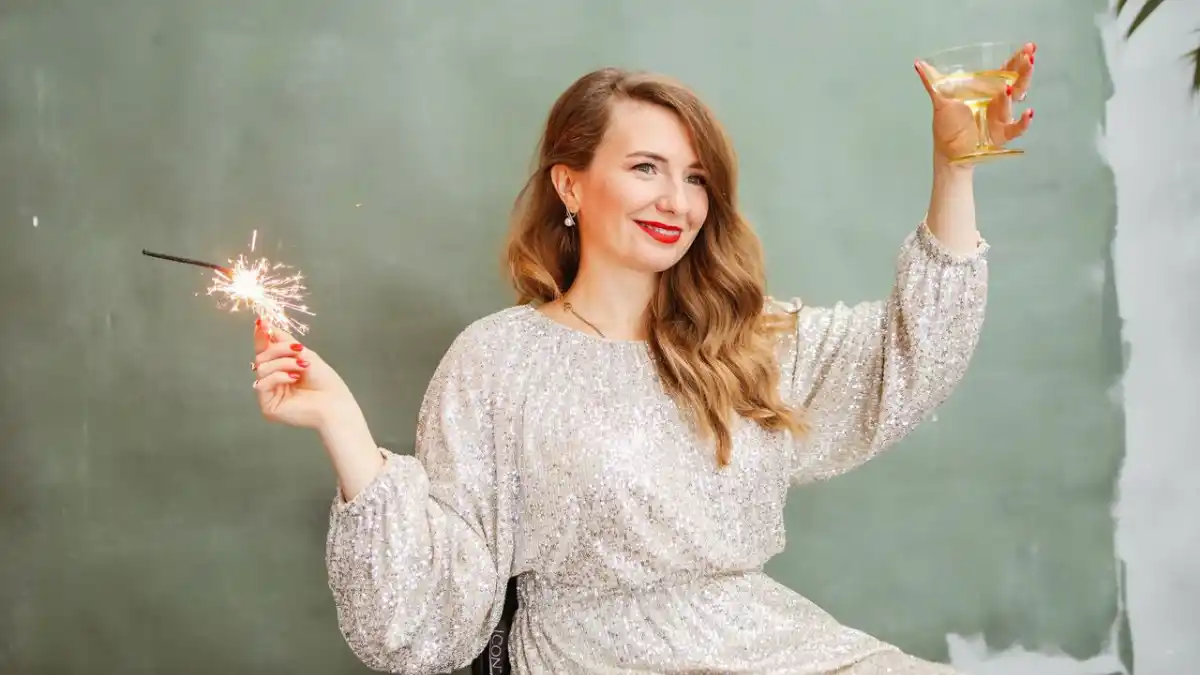
Every invitation has a code word tucked in the corner. Here is what each one really means for you.
| Dress Code | What It Means | Skip This |
|---|---|---|
| White tie | Full length gown, the most formal option | Short dresses, casual shoes |
| Black tie | Floor length gown or a dressy jumpsuit | Sundresses, sandals |
| Black tie optional | Formal dress or an elevated cocktail dress | Anything too casual or too plain |
| Semiformal or cocktail | Knee length or midi dress, dressy separates | Jeans, flip flops, t shirts |
| Beach formal | Light fabric, midi or maxi length, flat sandals | Heels that sink in sand, heavy fabric |
| Casual | Sundress or dressy separates, still put together | Gym clothes, ripped jeans |
A cocktail dress code does not mean club wear. A casual wedding does not mean jeans. Think about the venue too. A barn wedding at noon calls for different shoes than a ballroom at night, even if both say semiformal.
When you are still not sure, ask the couple or a bridesmaid. It is a normal question, and they would rather you ask than guess.
Which Wedding Trends Actually Work After 40?
Not every trend is worth chasing, but a few from this year are worth a real look.
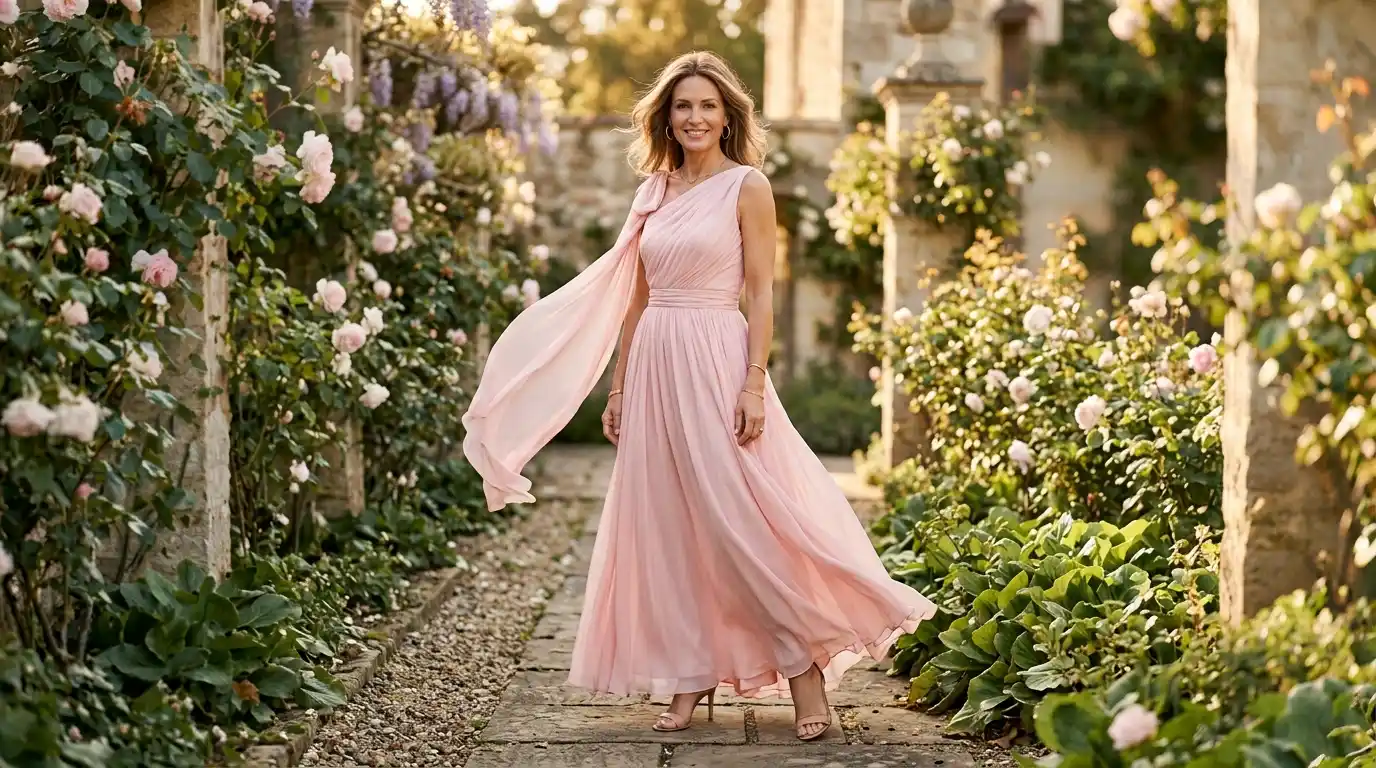
- Scarf detail dresses. Designers are building draped scarves right into the neckline this year. It adds interest without extra jewelry, and you can wear it loose or wrapped for more coverage.
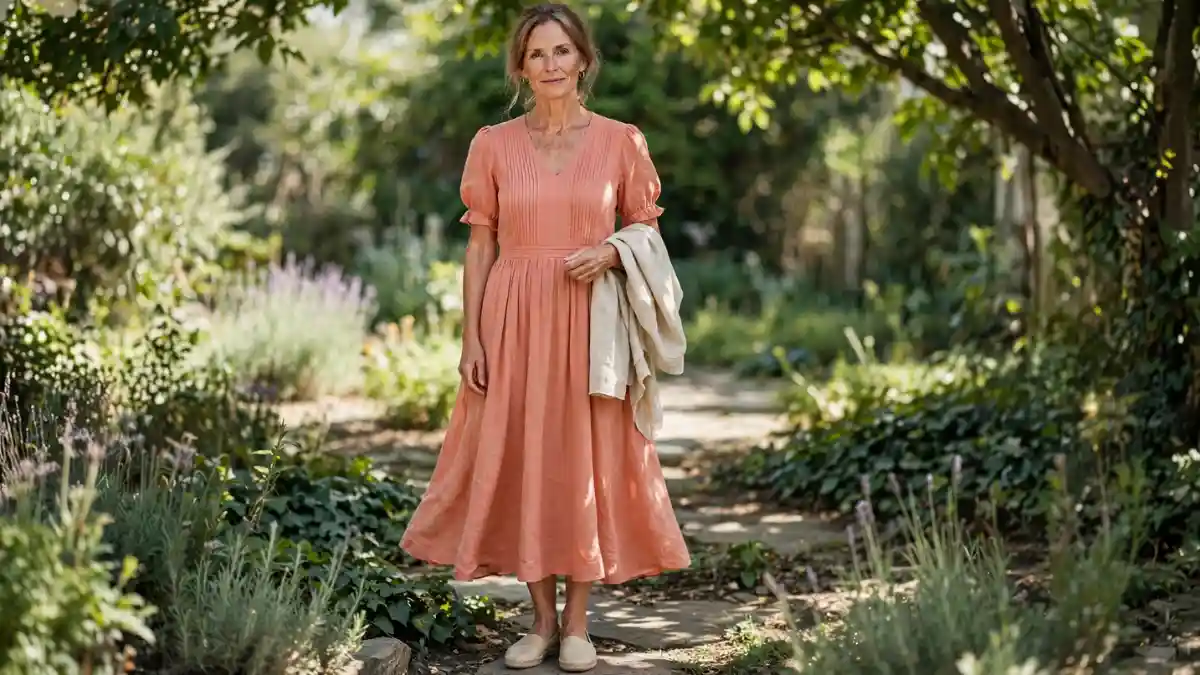
- Pastel and citrus colors. Icy pink, coral, and soft orange are replacing plain black as the safe choice. They photograph well and feel fresh without being loud.
- Renting instead of buying. More guests are renting one time outfits instead of buying them. This is smart, not cheap. You get a designer look without a closet full of dresses worn once.
- Vintage glamour. Think cape sleeves and soft, floating scarves styled the way old Hollywood stars wore them. This look feels elevated rather than flashy.
A few trends are fine to skip. Micro hemlines, fully sheer fabric, and going without a bra under sheer material are not required just because they showed up on a runway. You do not owe anyone a trend you do not want to wear.
How to Pick a Fit and Fabric That Flatters You
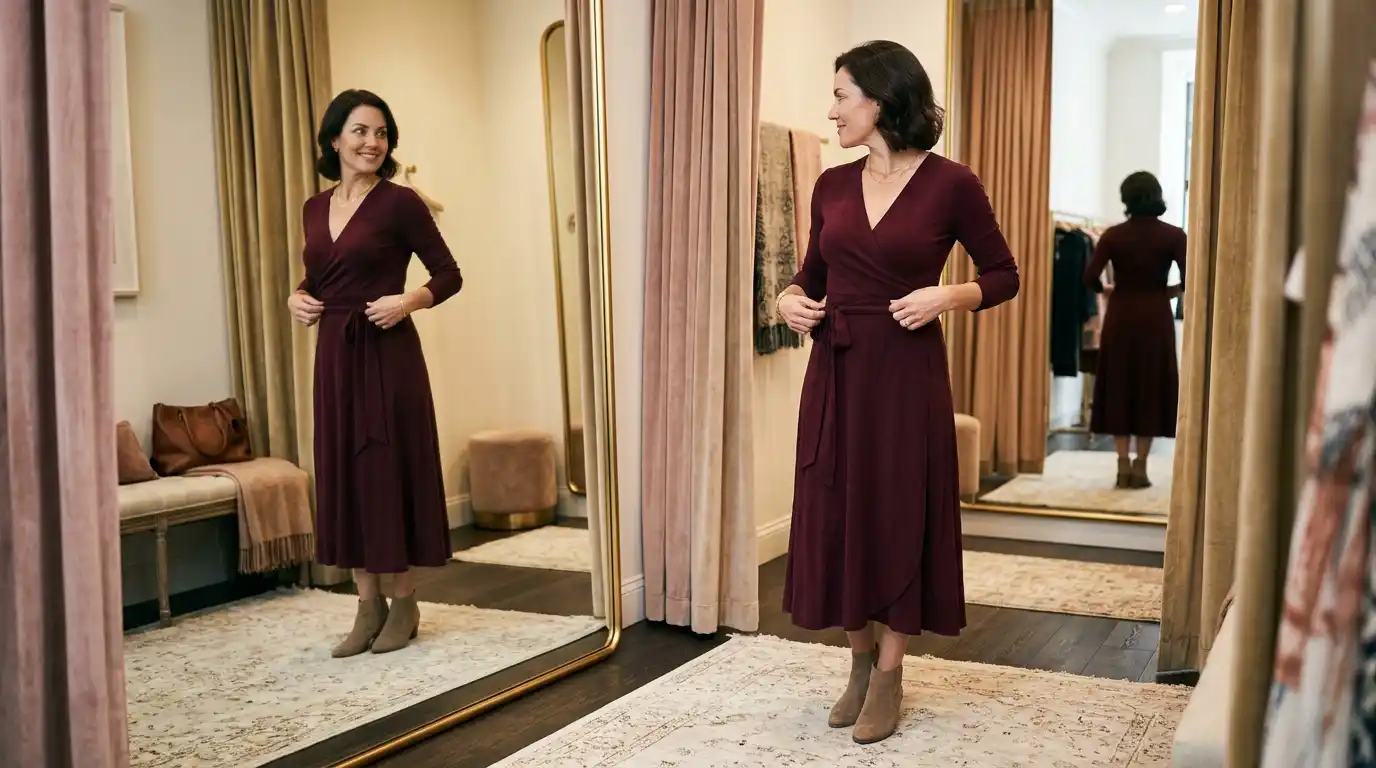
The right shape does more for you than any trend.
Structured fabric like crepe or ponte smooths and holds its shape. Flowy fabric like chiffon skims over the body instead of clinging to it. Both work well. It depends on what you want to highlight and what you want to skim past.
Sleeves are a styling choice, not a rule. Elbow length, a flutter sleeve, or a sheer overlay all add polish.
A wrap style or a V neck flatters almost every body type, which is why you see it recommended again and again in style guides for women over 40.
Pick fabric with care. Crepe, silk, ponte, and structured jersey hold up all night and photograph well. Cheap poly chiffon wrinkles fast and clings in the wrong spots.
A jumpsuit is also a real option now, not a backup choice. It gives you the same formal feel as a dress with a bit more coverage and often more comfort.
Wedding Guest Color Rules (And the One You Can’t Break)
There is one hard rule. Never wear white, ivory, or cream. That color belongs to the bride, full stop.
A recent guest etiquette survey from the wedding planning site Zola backs this up: 95 percent of couples say a guest in white is not okay, while 74 percent say red is fine as long as it fits the setting.
A few softer guidelines:
- Do not match the wedding party’s colors. Ask ahead if you do not know their palette.
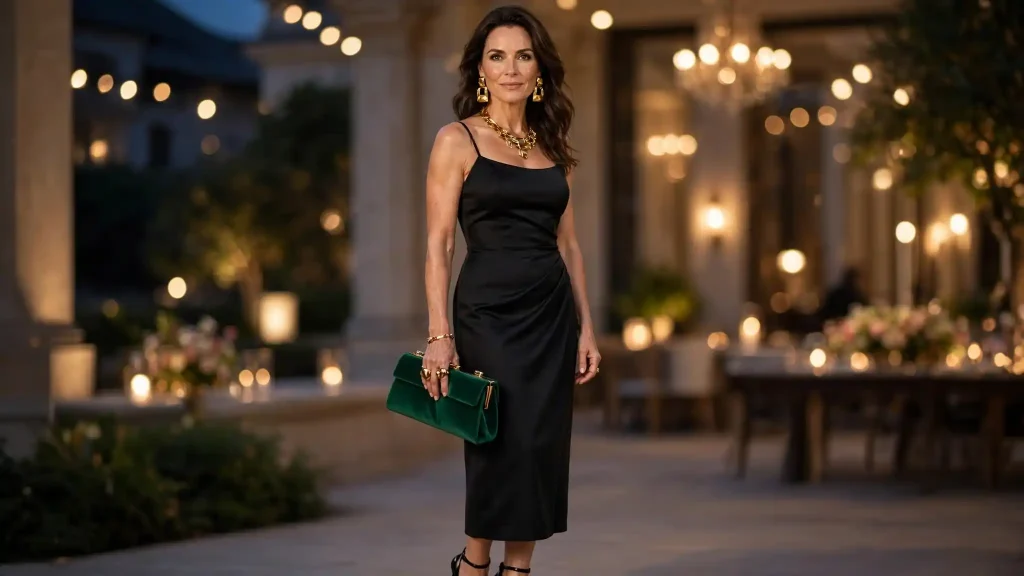
- Black is fine for an evening or formal wedding. Add a bright bag, gold jewelry, or a bold shoe so it reads as festive, not somber.
- For spring and summer, lean toward pastels and citrus tones. For fall and winter formal events, jewel tones like emerald, wine, and sapphire feel right.
Once you have picked a color and a fit you like, the last piece is comfort, and that is where a lot of guides stop short.
How to Stay Cool and Comfortable Through Hot Flashes
Most wedding guest articles skip this part completely, but if you deal with perimenopause or menopause, comfort changes everything about how you dress.
Start with fabric. Natural, breathable options like a cotton blend crepe, linen blend, or tencel beat synthetic satin, which traps heat against your skin. Layer smart. A removable wrap, kimono, or cropped jacket lets you adjust in the moment without ruining the outfit underneath.
Color can shift too. Some women notice their old favorite shades do not read the same way anymore as skin tone changes. If a color that used to work now feels off, try warm neutrals, teal, coral, or raspberry instead.
Footwear matters just as much as fabric. A block heel, wedge, or dressy flat gets you through a full day standing and dancing without the pain a stiletto brings by hour three.
Shoes, Bags, and Jewelry That Last All Day
Comfort and style are not opposites here. You can have both.
For shoes, go in this order: block heel first, wedge second, a structured flat third, and save stilettos for a short indoor event where you know you will be seated most of the night.
Shapewear is optional, not required. Choose it based on the fabric and shape of your outfit, not out of habit. If your dress already has a bold detail like a scarf neckline, keep jewelry simple so the outfit does not compete with itself.
And bring a bag big enough for your actual essentials. Many weddings now run from afternoon into late night, so a tiny clutch that only holds a lipstick will not cut it.
Outfit Ideas for Every Dress Code and Season
Here are real outfit formulas you can copy, grouped by setting.
| Setting | What to Wear | Shoe Pick |
|---|---|---|
| Formal or black tie optional | Floor length crepe gown or an elevated jumpsuit, plus statement earrings | Metallic block heel |
| Semiformal or cocktail | Midi dress in crepe or silk, structured clutch | Block heel or dressy wedge |
| Outdoor daytime | Flowy chiffon midi or maxi, a hat or wrap for sun | Wedge or dressy sandal |
| Beach or destination | Breathable maxi dress, light jewelry | Flat sandal |
| Casual or backyard | Dressy top with a wide leg trouser, or a relaxed shirtdress | Low heel or clean flat |
| Winter or fall formal | Jewel tone dress or a structured suit, tights, a wrap or blazer layer | Closed toe heel |
Save this table for your next invitation. Match the setting to the row, and you already have your outfit half planned before you even open your closet.
Should You Buy, Rent, or Repeat Your Outfit?
If you go to more than two or three weddings a year, buying a new outfit every single time adds up fast, both in cost and in closet space.
Build a small rotation instead: one formal piece, one versatile midi dress, one jumpsuit, and a few accessories you can swap out. Renting is a real option now too.
Market research firms put the online clothing rental business somewhere between 1.7 billion and more than 7 billion dollars in 2026, depending on how they measure it, and formal or occasion wear makes up close to half of that business.
That is not a small trend. That is a normal way to dress for a wedding now.
Repeating an outfit is also completely fine. Most guests will not remember what you wore last time, and changing your shoes or jewelry makes it feel new anyway.
If budget and sustainability both matter to you, resale sites like ThredUp or Poshmark are worth a look too.
5 Mistakes to Avoid When You Dress for a Wedding
- Matching the wedding party’s colors by accident
- Picking comfort or style, as if you have to choose one
- Ignoring the venue, like wearing chiffon outdoors in the fall or velvet at a summer barn wedding
- Wearing something so trend heavy it will look dated in photos in ten years
- Skipping a trial run at home. Sit down, raise your arms, and walk in the shoes before the actual day
Quick Answers
Wedding Guest Style, Solved
Four questions we hear most from guests over 40
Can I wear black to a wedding?
Yes. Black works well for evening and formal weddings. Add a bright bag or gold jewelry so it feels festive, not somber.
What length looks best after 40?
A midi length works for almost every dress code and body type. It is the safest first pick.
Can I repeat an outfit?
Hover to see the answer
Yes, always. Most guests will not remember. Change your shoes or jewelry and it feels brand new.
Best shoes for hot flashes or sore feet?
Pick a block heel or wedge. They give you height without pain, and breathable fabric keeps you cool.
Hover to expand
Final Thoughts
Dressing for a wedding after 40 is not about hiding from trends or playing it safe. It is about picking pieces that respect your comfort, flatter you honestly, and fit the day the couple is celebrating.
Use the dress code table, pick a fit and fabric that works for your body, and build a small rotation you can wear again and again.
Next time an invitation lands in your inbox, you will already know what to wear to a wedding when you’re over 40, and you can spend your energy on the parts of the day that actually matter.