
How to Find Your Personal Style After 40


You open your closet. It is full. You still feel like you have nothing to wear.
Maybe you keep buying the same beige blazer, over and over, because it feels safe. Maybe you get dressed and just feel off, like the clothes belong to someone else. This happens to a lot of people once they hit their 40s, and it is not because your taste got worse.
Your life changed. Your body changed. And nobody ever taught you how to update a wardrobe based on what you actually like now, instead of old trends or made up rules about what is “age appropriate.”
This guide gives you a real process. You will learn how to figure out what actually suits you now, how to dress a body that has changed without hiding it, and how to build a wardrobe that makes getting dressed simple again. No quizzes. No rules. Just a clear plan you can start today.
Why Your Style Feels Lost After 40
First, you are not imagining this.
Your body may genuinely be carrying weight differently than it used to, even if the number on the scale has not changed much. Hormonal shifts in your 40s and 50s often move weight toward the middle of your body.
That is one big reason a top that used to skim your frame now feels tight or clingy in a new spot. This is not about willpower. It is just how bodies change.
Your life has also changed. Maybe you work from home now instead of an office. Maybe your kids need you in different clothes than you needed five years ago. Maybe you travel more, or less, or your job title changed.
Your old wardrobe was built around an old version of your daily life. It makes sense that it does not work anymore.
Then there is the myth that you have to “dress your age.” Ignore it. What actually makes an outfit look good has almost nothing to do with age. It comes down to three things: fit, fabric, and how well pieces go together.
A well fitted outfit in decent fabric will always look more put together than an expensive piece that does not fit right, no matter how old you are.
So here is the reframe. This is not a mourning process for your younger style. It is a practical update. You are not losing your style. You are about to find the current version of it.
The One Week Closet Audit That Actually Works
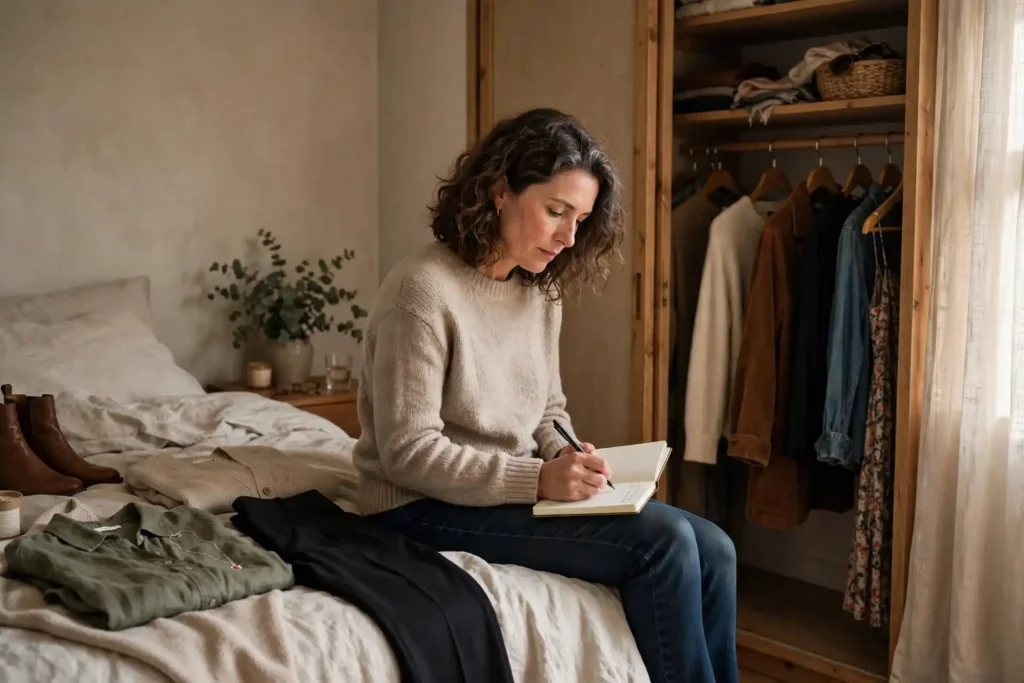
Before you buy a single new item, do this first.
Go through your closet, one piece at a time, and actually wear each item over the next week or two. Not just try it on in front of a mirror. Wear it out into your actual day. Then ask yourself:
- Did I feel comfortable in this all day?
- Did I reach for a layer to cover it up, or did I feel good as is?
- Did anyone give me an unexpected compliment?
- Would I put this on again tomorrow without thinking twice?
Write down your answers, even just a quick note in your phone. Patterns will show up fast. You will start to notice that you always feel best in certain colors, certain fits, certain fabrics.
That pattern is your real style. It is more accurate than any online style quiz, because it comes from your actual body and actual life, not from a list of questions.
While you go through this, sort everything into three piles:
- Does not fit my body right now. These pieces need alterations, or they need to go.
- Does not fit my life right now. Great pieces, wrong season of life. Store them or pass them on.
- I just do not love it anymore. No guilt needed. Let it go.
Take photos of the outfits that felt right. Looking back at photos helps you spot patterns your memory will miss. And if you can, ask a friend for a second opinion. We are often too close to our own closets to see what is obvious to someone else.
Once you know what you actually reach for and feel good in, you are ready to build around it.
How to Build a Capsule Wardrobe After 40

A capsule wardrobe is simply a small, well chosen group of clothes, usually around 30 to 40 pieces, that all mix and match with each other. It is not about owning less for the sake of it. It is about never standing in front of a full closet feeling stuck again.
This approach fits your 40s especially well for three reasons:
- It removes decision fatigue on busy mornings, since everything already works together.
- It handles body changes better than chasing trends does, since you are choosing pieces around your current shape instead of buying blindly.
- It stretches your money further, since you wear each piece more often instead of it sitting unused.
Start with a base, then add color.
Pick four or five neutral colors that work for your skin tone and lifestyle: think navy, cream, soft gray, camel, black. These become your foundation pieces, like trousers, blazers, and simple tops.
Then add two or three colors that you know you love and feel good in, based on your closet audit. These are your signature colors. They show up again and again across your wardrobe, so everything still feels personal instead of plain.
Know Where to Spend More and Where to Spend less.
| Spend more here | Spend less here |
|---|---|
| Outerwear (coats, jackets) | Trend pieces you will wear a season or two |
| Shoes you wear often | Statement tops |
| Denim | Basic tees |
| Anything touching your body closely, like bras | Accessories you are still testing out |
Get things altered.
A quick alteration on a jacket or trousers usually costs around twenty five to forty dollars, and it makes a huge difference. A mid priced piece that has been altered to fit you well will almost always look better than an expensive piece straight off the rack.
Find a local person who does alterations and treat it as a normal part of buying clothes, not a special occasion.
How to Dress Your Body As It Is Right Now
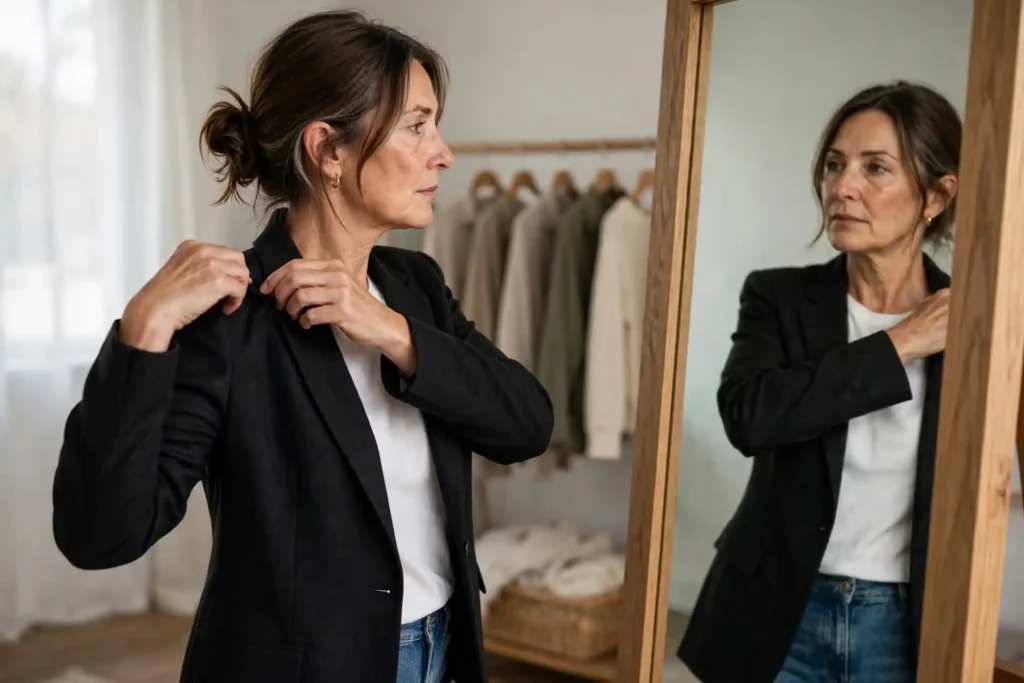
The goal here is not to hide your body. It is to choose fabric and cut that work with the shape you have today.
If your body has changed shape or size, structure will help more than volume. Loose, oversized clothing often adds bulk instead of hiding it. Pieces that gently follow your shape, without clinging tightly, tend to look more put together and feel more comfortable.
Fabric matters more than most people realize. Thin, clingy fabrics show every small change in shape. Fabrics with a bit of weight and structure hold their form and drape more smoothly.
| Fabrics that tend to work well | Fabrics that often cling or crease |
|---|---|
| Ponte knit | Thin jersey |
| Crepe | Very lightweight cotton |
| Structured cotton | Sheer or flimsy fabrics |
| Linen blends | |
| Denim with a bit of stretch | |
| Thicker, soft knits |
One simple trick: if a sweater or top feels tight across your middle, try going up one size instead of switching to something baggy. Going up a size often gives you room without losing the shape of the outfit.
Remember, the fit and fabric choices you make here connect straight back to the capsule pieces from the last section.
The tops and bottoms you choose for your base wardrobe matter more than the exact color you pick, because fit and fabric decide whether an outfit works all day long.
Where to Find Style Inspiration That Fits Your Life

A lot of fashion content online is styled on and for people in their twenties. That is part of why style inspiration can feel so useless after 40. It is not built for your body or your daily life.
The fix is to follow people who are actually building outfits for this stage of life. A few real, active accounts worth checking out:
- Busbee Style on YouTube, run by Erin Busbee, focused entirely on everyday outfits for women over 40, with a large and active following.
- Inside Out Style, a long running blog and podcast that focuses specifically on how bodies change through your 40s and 50s and how to dress through it.
- 40+Style, an online magazine and community built entirely around style after 40, with tools like a style personality quiz.
- Trinny London, run by Trinny Woodall, known for simple, practical styling advice with no fluff.
When you find inspiration, do not copy one outfit exactly. Instead, save thirty to fifty images or outfits that genuinely catch your eye. Then look at them as a group.
What colors keep showing up? What fits? How dressed up or casual are most of them? That pattern tells you more about your real style than any single photo could.
You will also see more style apps and tools that use technology to suggest outfits or track what you wear.
These can be a fun starting point, but they are no replacement for actually trying clothes on your own body and noticing how they feel.
Mistakes to Avoid When You Rebuild Your Style
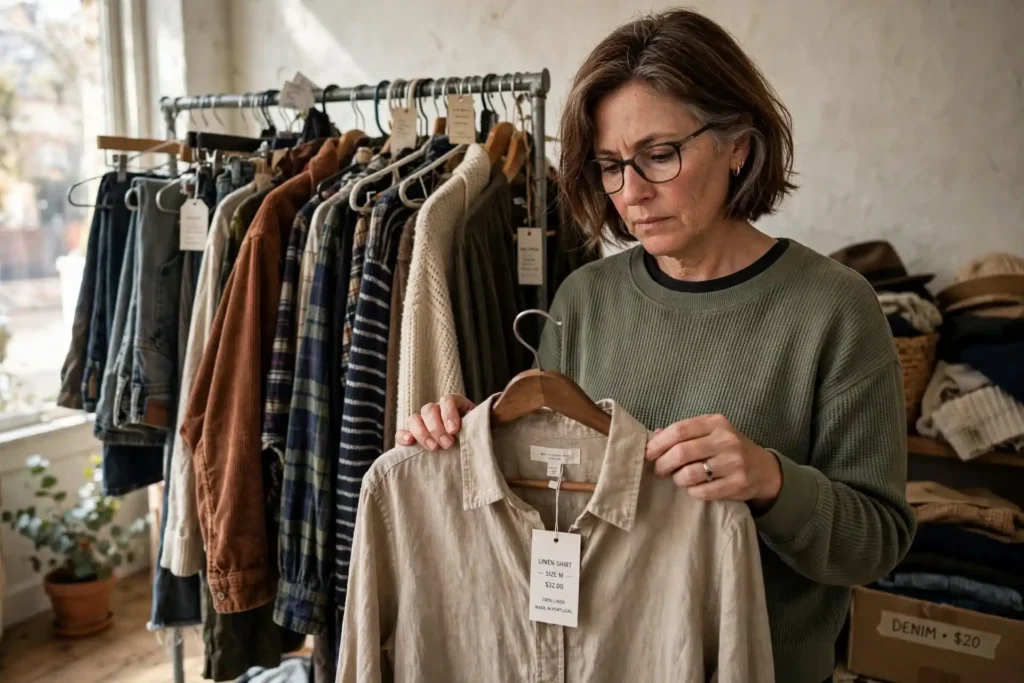
Save yourself some money and some frustration by watching out for these:
- Buying a whole new wardrobe at once. This almost always leads to expensive mistakes and a closet full of pieces that do not actually go together. Build gradually instead.
- Overcorrecting in either direction. Going all in on plain neutral basics, or trying hard to look younger than you feel, are both ways of dressing around your style instead of for it.
- Squeezing into old sizes. If your body has changed, buy for the body you have now, not the one from ten years ago.
- Copying an outfit exactly. Instead of buying the exact same pieces you saw someone else wear, borrow the pattern: the colors, the fit, the overall vibe.
- Treating this like a one time project. Style keeps evolving. Plan to repeat your closet audit every year, or every season if your life changes a lot.
Your Next Step
Finding your personal style after 40 is not about following a new set of rules to replace the old ones.
It is a process: figure out what you actually wear and feel good in, build a small wardrobe around it, dress for the body you have today, and get inspiration from people who actually style for your stage of life.
Do not start by shopping. Start with the one week closet audit from earlier in this guide. It costs nothing, it takes almost no time, and it will tell you more about your personal style after 40 than any quiz ever could.
FAQs
How long does it really take to find your personal style after 40?
Most people notice real patterns within two to three weeks of doing the closet audit and paying attention to what they actually reach for. A full wardrobe rebuild usually takes a few months, done in small steps rather than one big shopping trip.
Do I need to throw out my old clothes to start over?
No. Sort first, then decide. Some pieces just need a small alteration to work again. Others no longer fit your life and can be stored, sold, or donated. You do not need a blank closet to begin.
What if I do not know what colors or styles I even like anymore?
That is normal, and it is exactly what the closet audit is for. Instead of guessing, you will collect real evidence from what you already own and what actually feels good on your body.
Is a capsule wardrobe too restrictive for someone who likes variety?
Not if you build it right. A capsule wardrobe is not about owning fewer clothes for the sake of it. It is about owning pieces that actually work together, so you get more outfit combinations, not fewer.
How often should I update my style after this?
Plan to repeat the closet audit once a year, or any time your body or your daily life changes in a big way. Style is not a one time fix. It shifts as you do.