
How French Women Over 40 Actually Dress


Here’s how French women over 40 actually dress: fewer pieces, better fit, a short list of colors, and the same good outfits worn week after week. There’s usually no beret, and the striped top is optional.
If your closet is packed and you still have nothing to wear, this way of dressing solves that first. It also costs less than most people expect. Much of the polish comes from the tailor and the fabric label, and very little comes from the price tag.
In this guide, you’ll see what the stereotype gets wrong, how to pick a color palette, and how to get clothes altered so they look made for you.
Later sections cover the core pieces, fabrics, shoes, and accessories. You’ll finish with outfit formulas and a 7-day plan you can copy with clothes you probably own already.
How French Women Over 40 Actually Dress (Not the Postcard Version)
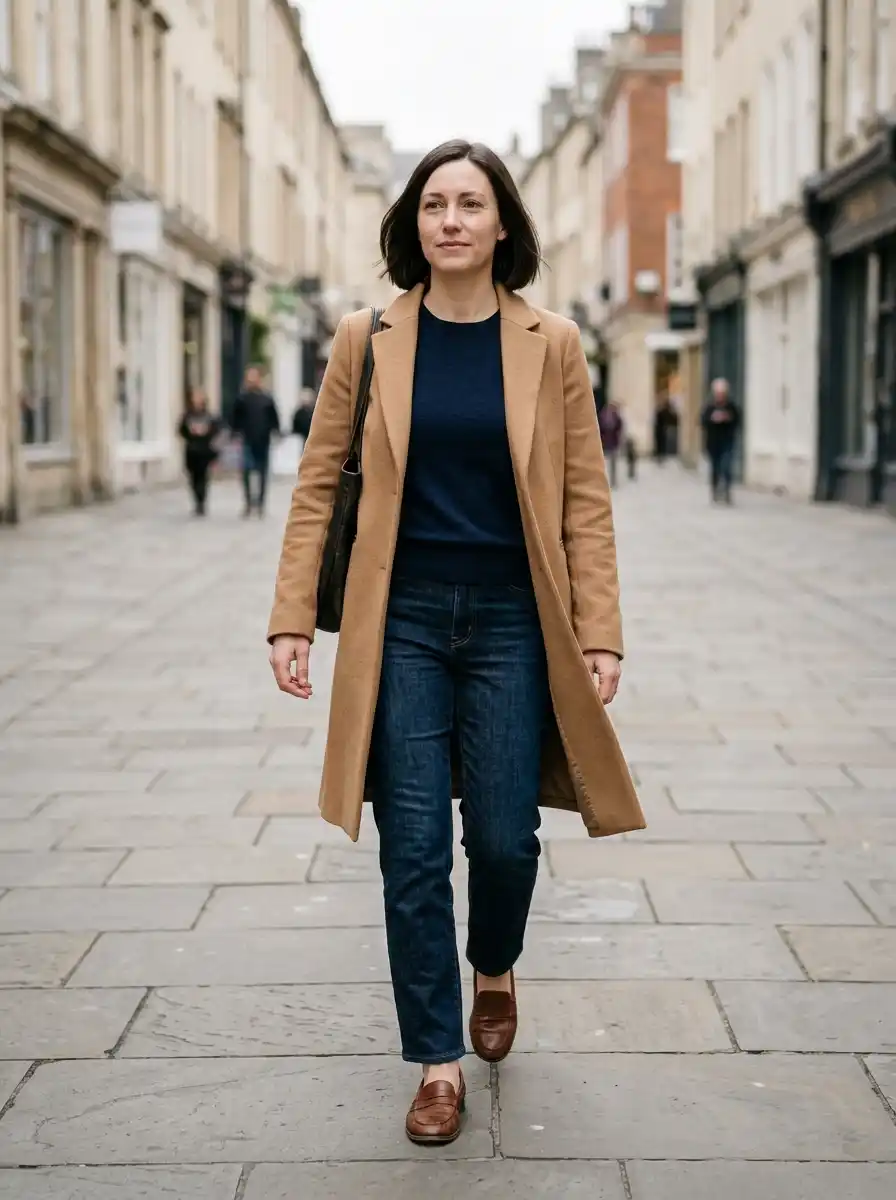
A woman in her early 40s walking to work in Paris or Lyon is often wearing something you’d barely notice. She might have on dark straight-leg jeans, a navy merino sweater, a camel coat, and leather loafers that have been resoled at least once.
Nothing matches too perfectly, and nothing looks brand new. That quiet look is the one worth copying. The postcard version, with a beret, a striped top, and a red lip all at once, reads more like a costume than a wardrobe.
France is a big country, and women there dress in every style you can imagine. When people say “French style,” they usually mean this pared-back city look, so that’s what this guide covers.
The table shows where the cliché and the real closet differ.
| The Myth | What She Actually Wears |
|---|---|
| Breton stripes every day | One striped top, worn with plain pieces |
| A beret | No hat, or a plain wool beanie in winter |
| Head-to-toe designer labels | Mid-price basics plus one or two splurges |
| High heels on cobblestones | Loafers, ballet flats, low ankle boots |
| A new wardrobe each season | The same pieces for years, repaired and resoled |
Every item in the right column is easy to find on any budget. The difference is how few pieces she owns and how well each one fits.
A Short Color Palette Does Most of the Work
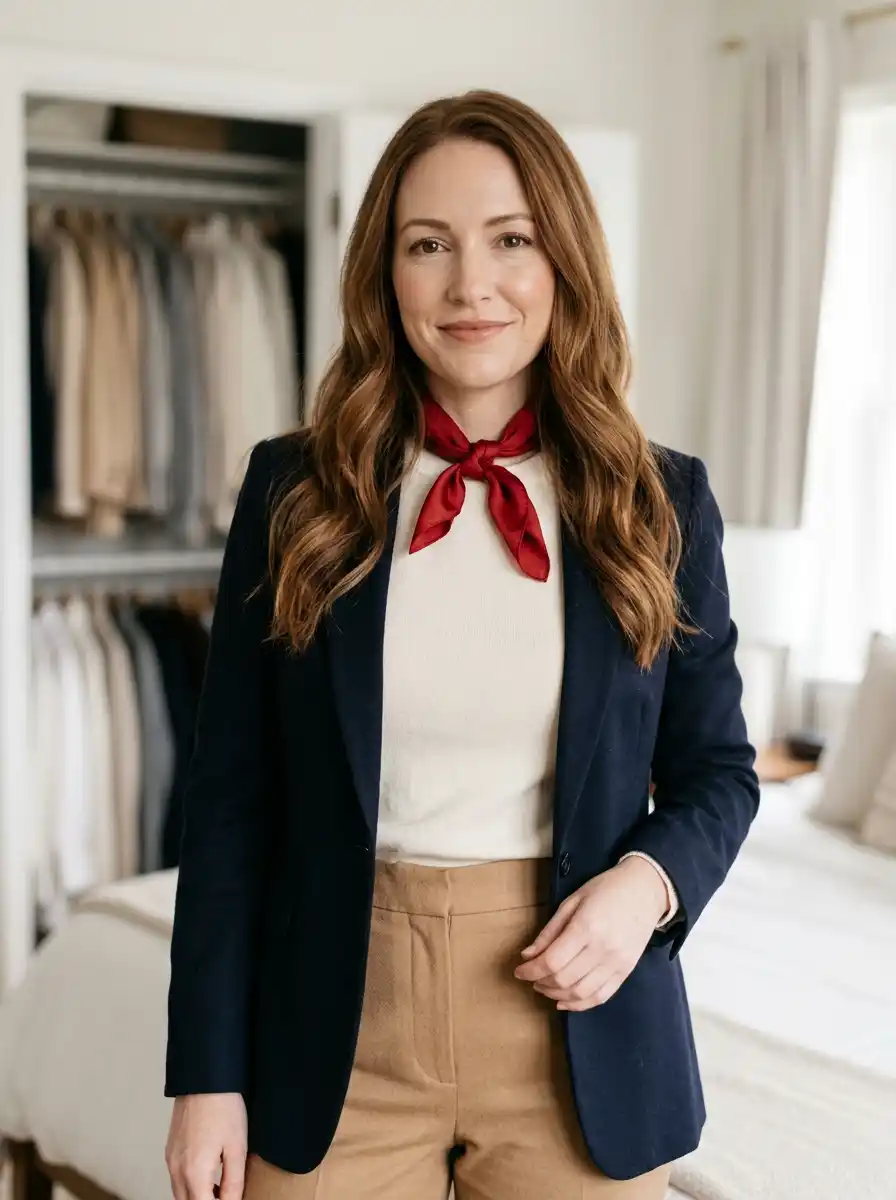
Three neutrals and one accent color is the whole plan. It’s the reason a closet of 20 pieces can make dozens of outfits. When every top goes with every bottom, getting dressed takes two minutes instead of twenty.
Pick a base from combinations like these:
- Navy, camel, and cream, with red as the accent
- Charcoal, black, and white, with olive green
- Chocolate brown, beige, and ivory, with soft blue
- Navy, grey, and white, with pale pink
To find yours, pull out the five pieces you wear most. The neutrals that keep showing up are already your base.
Keep the accent on small or lower-cost pieces, like a scarf, a knit, or a bag. A big accent piece such as a red coat has to go over everything, so everything under it must come from your base colors.
Prints still work if they use your palette, like a navy and cream polka dot blouse.
Fit Comes Before Price

Trousers from a budget store, hemmed to the right length, look more expensive than designer ones dragging on the floor. That’s why so many French women treat a visit to the tailor as part of buying anything with a hem.
For every new pair of trousers, follow the three-alteration rule in this order:
- Waist: Take in any gap at the back so the waistband sits flat.
- Taper: Narrow a straight leg that flares out more than you want. Skip this for wide-leg styles.
- Hem: Do this last, wearing the shoes you’ll wear most. Aim for no break on straight trousers and the ankle bone on cropped ones.
Jackets and coats need a different check before you buy, because some fixes cost more than the garment did.
- Shoulders: The seam should sit at the edge of your shoulder bone.
- Sleeves: They should end at the wrist bone, or cover your sweater cuff on a coat.
- Buttons: The front should close without X-shaped pulls across the bust.
Buy for the shoulders and alter everything else. Shoulder fixes are hard to do well, while sleeves and hems are quick, low-cost jobs at most local tailors.
The Core Pieces That Show Up Week After Week

These wardrobes tend to run on about a dozen core pieces, and very few of them are trendy. Each one works with the others, so nothing sits in the closet waiting for the right outfit.
Knits and Tops
- Fine-gauge sweater: A crew or V-neck in navy or grey, thin enough to tuck.
- White cotton shirt: Slightly oversized, so it works tucked or open over a tee.
- Plain T-shirts: White and black, in thick cotton with a neckline that won’t stretch out.
- One striped long-sleeve top: Worn with solid pieces, never with other prints.
Trousers, Jeans, and Skirts
Dark-wash straight-leg jeans with no rips carry most of the week. Add one pair of tailored wool trousers, straight or wide-leg, and one solid midi skirt.
A bias-cut slip skirt looks good under a chunky sweater with sneakers. Thin ones cling and show every seam underneath, so choose a lined skirt or a heavier satin.
Jackets and Coats
Layers are where she spends the most, because they’re the first thing people see.
- Trench coat in beige or navy
- Single-breasted blazer in navy or black that ends at the hip
- Wool coat in camel or charcoal for winter
No trench? A plain navy rain jacket with a collar does the same job on a wet morning.
Fabric Is Where the Polish Comes From
If a sweater pills after three washes, the cut never stood a chance. Fabric decides how a piece hangs on day one and how it looks a year later.
Read the label before the price tag. I look for natural fibers listed first and a high share of them, because a small amount of wool mixed into acrylic still behaves like acrylic.
Here’s a quick guide to what to buy and what to leave on the rack.
| Look For | Skip | Why |
|---|---|---|
| Merino wool | Acrylic knits | Merino pills less and breathes |
| Cotton poplin | Thin stretch shirting | Poplin keeps a crisp collar |
| Wool trousers | Shiny polyester suiting | Wool drapes; shine looks cheap in daylight |
| Real linen | Linen-look polyester | Linen softens with every wash |
| Heavy silk or crepe | Thin, clingy satin | Heavier weights skim instead of cling |
| Low-stretch denim | Jeggings | Holds its shape all day |
The pattern is clear: natural fibers and heavier weights hang better and last longer. Secondhand shops are the best place to find 100% wool and cashmere without paying full price.
Shoes Built for Walking, Not Posing

A normal day in a French city can mean miles on foot, with cobblestones and metro stairs in between. That’s why heels are rare during the day and good flats are everywhere.
- Leather loafers with a low stacked heel
- Ballet flats with a structured toe and a padded insole
- Ankle boots with a 1.5- to 2-inch block heel
- Slim leather sneakers in white, navy, or black
Before you keep any pair, do the 20-minute walk test. Wear them on a clean hard floor at home so they stay returnable. If your heel slips or your toes pinch by minute 20, it will only get worse on a real day out.
Paper-thin ballet flats are the most common mistake. They look polished but hurt by lunch, so add a cushioned insole or choose a pair with a thicker sole.
One Undone Detail Keeps It From Looking Stiff

A crisp white shirt buttoned to the collar, fully tucked, with matching trousers and shoes, looks like a uniform. French women usually leave one thing a little loose, and that small detail makes the outfit look lived-in rather than planned.
Choose one of these per outfit:
- Half-tuck: Tuck only the front few inches of a sweater, at the center or slightly to one side. If the back puffs out, the top is too long, so try a hip-length knit.
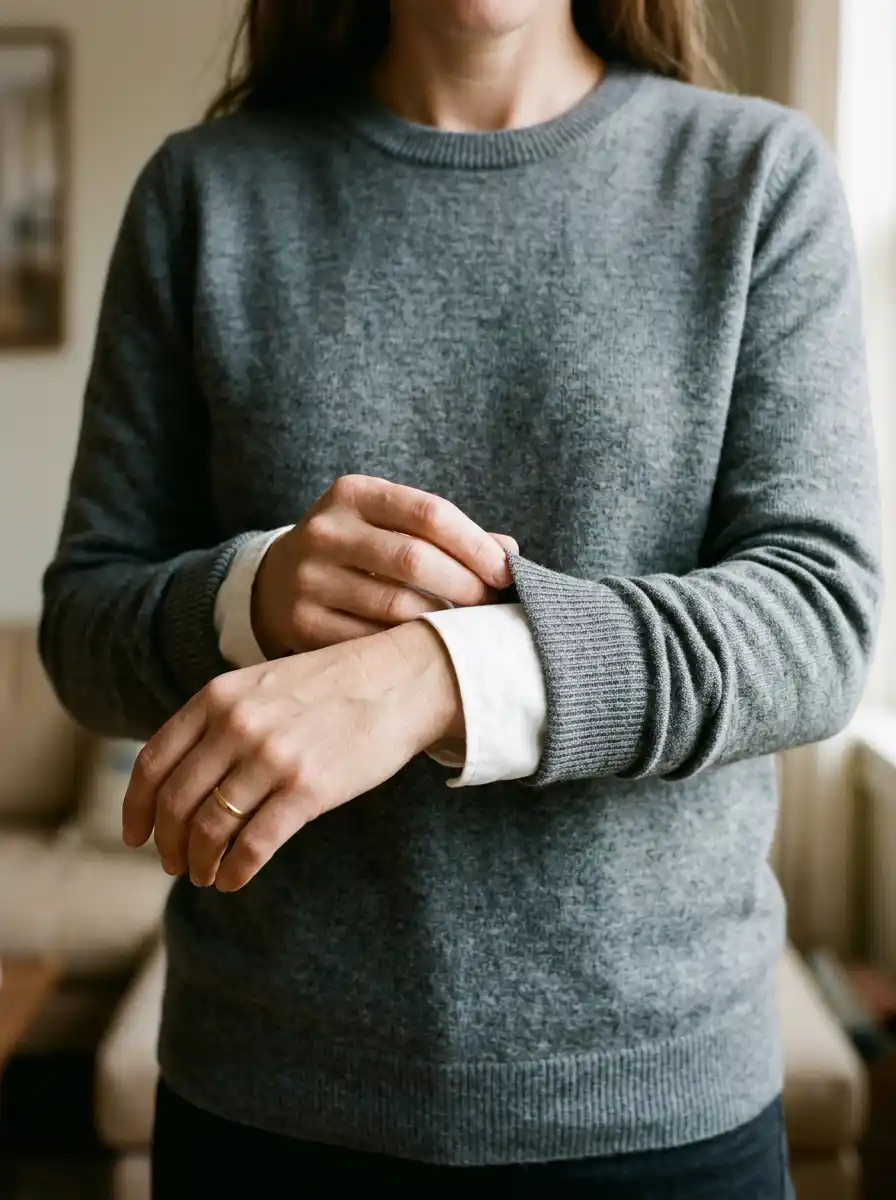
- Pushed sleeves: Push them to mid-forearm. Thick knits slide back down, so roll a shirt cuff twice instead.
- Open collar: Leave the top two buttons undone. If the shirt gapes at the bust, sew a small snap inside the placket.
- Open shirt: Wear a button-down open over a tee, like a light jacket.
Two undone details in one outfit start to look messy. With one, the outfit still looks put together.
Accessories Stay Few, Good, and Repeated

Two or three accessories a day is the usual limit. The same ones show up almost daily, and carrying one good bag every day looks like a choice.
- Structured leather bag in black, tan, or navy, big enough for a phone, wallet, and keys
- Thin gold or silver jewelry: small hoops, a fine chain, a ring you never take off
- Silk or wool scarf in your accent color
- Slim leather belt in a shade close to your bag
Big logos are rare in this kind of wardrobe. A logo pulls every outfit toward one look and dates faster than plain leather. If you already own a logo bag, wear it with plain outfits so it’s the only loud thing you have on.
The Outfit Formulas They Repeat Every Week

At 7 a.m. with a kid hunting for a missing shoe, nobody builds an outfit from scratch. Formulas fix that. Once you know four or five combinations that work, getting dressed stops being a decision.
- Dark jeans + fine knit + trench + loafers
- Wool trousers + white shirt + blazer + ballet flats
- Midi skirt + sweater + leather sneakers
- Jeans + striped top + navy blazer + ankle boots
Each formula uses only core pieces, so you can swap one item and still have a working outfit. Here’s how a full week looks using the same closet.
| Day | Outfit | Shoes |
|---|---|---|
| Monday | Wool trousers, white shirt, navy blazer | Loafers |
| Tuesday | Dark jeans, grey merino crew, trench | Leather sneakers |
| Wednesday | Midi skirt, navy knit with a half-tuck, wool coat | Ankle boots |
| Thursday | Jeans, striped top, navy blazer | Ballet flats |
| Friday | Wool trousers, black tee, trench | Leather sneakers |
| Saturday | Jeans, open white shirt, red scarf | Ballet flats |
| Sunday | Midi skirt, grey merino crew | Leather sneakers |
That’s 12 pieces of clothing and 4 pairs of shoes for seven different outfits. Swap the trench and wool coat based on the weather, and nobody at work will notice the repeats.
The French Wardrobe Formula on One Page
Everything from this guide in one place. Save it for your next closet clean-out or shopping trip.
Start with 3 neutrals and 1 accent
Other bases that work: charcoal, black, and white with olive, or chocolate, beige, and ivory with soft blue.
Own about 12 core pieces
Knits and tops
- Fine-gauge sweaters in navy and grey
- White cotton shirt
- White and black tees
- One striped top
Bottoms
- Dark straight-leg jeans
- Wool trousers
- Solid midi skirt
Layers
- Trench coat
- Single-breasted blazer
- Wool coat for winter
Alter trousers in this order
- Waist: close the gap at the back.
- Taper: narrow the leg if needed.
- Hem: last, wearing your usual shoes.
Buy jackets that fit in the shoulders. Alter everything else.
Choose 4 shoes you can walk in
- Leather loafers
- Structured ballet flats
- Ankle boots, 1.5 to 2 inch block heel
- Slim leather sneakers
Walk test: 20 minutes at home on a clean floor. Pinching or slipping means send them back.
Read the label before the price
| Look for | Skip |
|---|---|
| Merino wool | Acrylic knits |
| Cotton poplin | Thin stretch shirting |
| Wool trousers | Shiny polyester suiting |
| Real linen | Linen-look polyester |
| Low-stretch denim | Jeggings |
Leave one detail undone
- Half-tuck
- Pushed sleeves
- Open collar
- Shirt open over a tee
Pick one per outfit. Two starts to look messy.
Wear 2 or 3 accessories a day
- Structured leather bag
- Thin gold or silver jewelry
- Silk or wool scarf in your accent
- Slim leather belt
Start Your Own Version Without Buying a New Wardrobe
If you bought every piece from this guide in one weekend, you’d end up with a closet that looks like a store display, not like you. The French approach works the other way around. You start with what you own and fill gaps slowly.
- Sort by palette: Pull out everything and hang the pieces in your three neutrals and one accent together. Move the rest to the back for now instead of giving it away.
- Fix before you buy: Take three pieces that almost fit to a tailor. Trouser hems and jacket sleeves are the quickest wins.
- Wear what’s left for two weeks: Use the formulas from the last section. Each time an outfit falls apart because a piece is missing, write it down on your phone.
- Buy from that list, one piece at a time: Start with the gap that came up most often. For most women, that’s shoes or a coat.
Watch out for the costume trap. A striped top, red lip, neck scarf, and ballet flats worn all at once reads like a theme party. Choose one French signal per outfit and keep everything around it plain.
FAQs
Do French women over 40 wear leggings in public?
Not often in the city look this guide covers. Leggings mostly stay at the gym or go under a long knit dress in winter. If you love the comfort, try pull-on ponte trousers with a straight leg. They feel almost as soft but have enough structure to wear with loafers and a blazer.
Can you dress like a French woman on a budget?
Yes, because most of the look comes from fit, fabric, and a short color palette rather than price. Spend your money on the tailor and on shoes you’ll walk in every day. Buy tees and jeans at mid-price stores. Secondhand shops are the best source for wool coats, blazers, and cashmere, and many of those pieces only need a sleeve or hem fix.
Does French style over 40 work if you’re petite?
Yes, and the short palette helps you more than most. Wearing one color from top to bottom creates a longer, unbroken line. Choose trousers that end at the ankle bone, a blazer that ends at the hip or above, and a trench in petite sizing so the belt lands at your waist. Long, heavy maxi coats tend to swallow a smaller frame.
What do French women wear in hot summer weather?
They wear linen and cotton in the same short palette, shifted lighter. Think wide-leg linen trousers, a loose linen shirt or white cotton tee, a cotton midi dress, and flat leather sandals. Cream, white, and pale blue take the place of navy and charcoal. Thin light linen can show what’s underneath, so choose lined trousers or wear underwear that matches your skin tone.
Do French women really wear black every day?
No. Black is common, but navy, grey, camel, and cream show up as often. Navy looks softer next to the face in daylight and still works with every neutral. If black is your base color, pair it with white and one warm accent, like a camel coat or red scarf, so the outfit doesn’t feel heavy.