
Bootcut vs Straight Leg Jeans Over 40

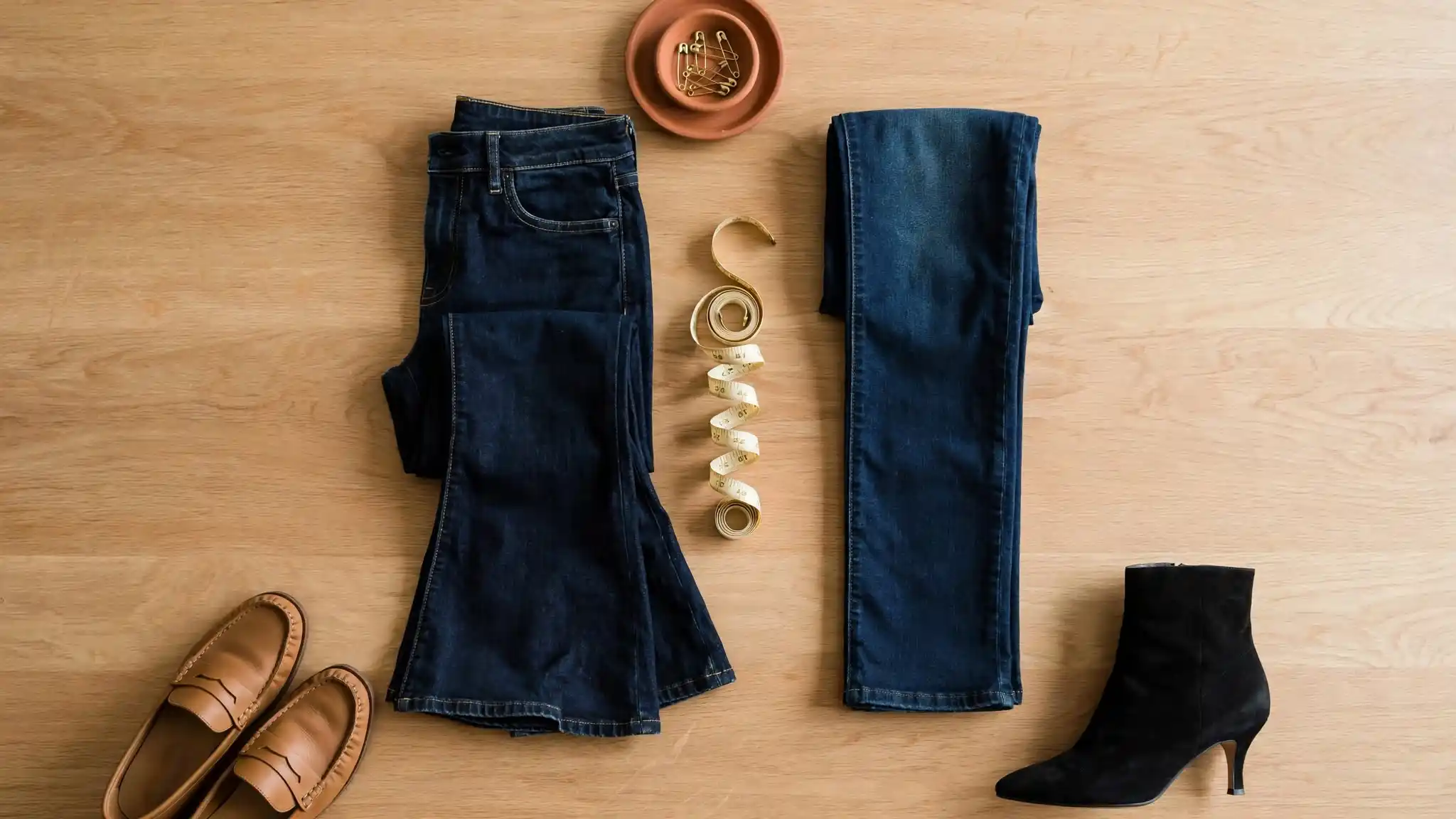
You pull on a pair of jeans you loved five years ago, and something is off. The waist gaps in the back. The hem drags on the floor or stops at an odd spot on your ankle.
Your body has shifted a little, your shoes have changed a lot, and now you’re stuck on the bootcut vs straight leg jeans over 40 question with no clear answer.
The answer is not about age rules. It comes down to three things: where your body is widest, which shoes you wear most days, and one small number on the size chart called the leg opening. Get those three right and either cut can look sharp on you.
This guide walks you through measuring yourself, matching each cut to your shoes, testing both styles at home, and pinning the hem so the pair you keep looks tailored.
The hands-on part takes about 45 minutes. Shipping and returns add a few days. Grab a soft tape measure and your favorite shoes, and let’s find your pair.
| Bootcut | Straight Leg | |
|---|---|---|
| Leg shape | Slim at the knee, small flare below | Same width from knee to ankle |
| Leg opening | 18–21 inches | 15–17 inches |
| Best for | Fuller hips or thighs | Straight hip-to-ankle shape, or a fuller middle |
| Best shoes | Heels, wedges, heeled boots | Sneakers, loafers, flats, mules |
| With ankle boots | Slides over the boot | Stops at the top of the boot |
| Petite (under 5’4″) | Slim bootcut, always with a heel | Ankle length works best |
| Overall look | Dressier, longer leg line | Clean and relaxed for every day |
| Buying only one pair? | Pick it if you wear heels most days | Pick it if you wear flats most days |
Measure your waist, hips, and inseam with a soft tape
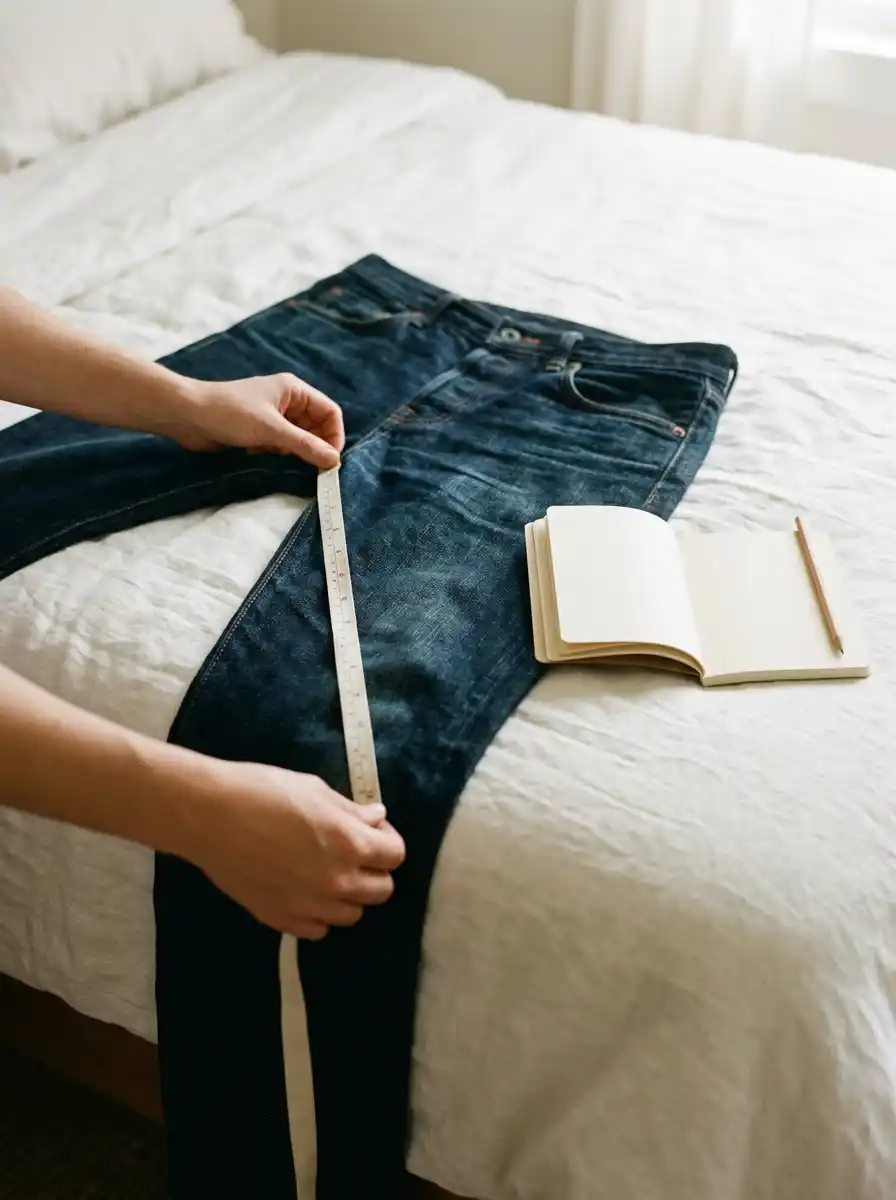
Size labels change from brand to brand, but inches stay the same. Stand with your feet together and take three numbers:
- Waist: around the narrowest part of your middle, about 1 inch above your belly button
- Hips: around the fullest part of your seat
- Inseam: on your best-fitting jeans, from the crotch seam down to the hem
Keep the tape snug, not tight. One finger should slide under it. No soft tape? Wrap a piece of string around yourself, then lay it flat along a ruler.
Find where your lower half is widest

A photo shows your outline better than a mirror, because you can’t stand still and stare at yourself without shifting.
Put on leggings and have someone take one front photo from 4 feet away, or use a timer. Are your hips or thighs the widest part? A bootcut’s small flare at the hem balances them.
Are you fairly straight from hip to ankle, or fuller through the middle? A straight leg keeps the line clean. Write your answer next to your measurements.
Pull out the three pairs of shoes you wear most
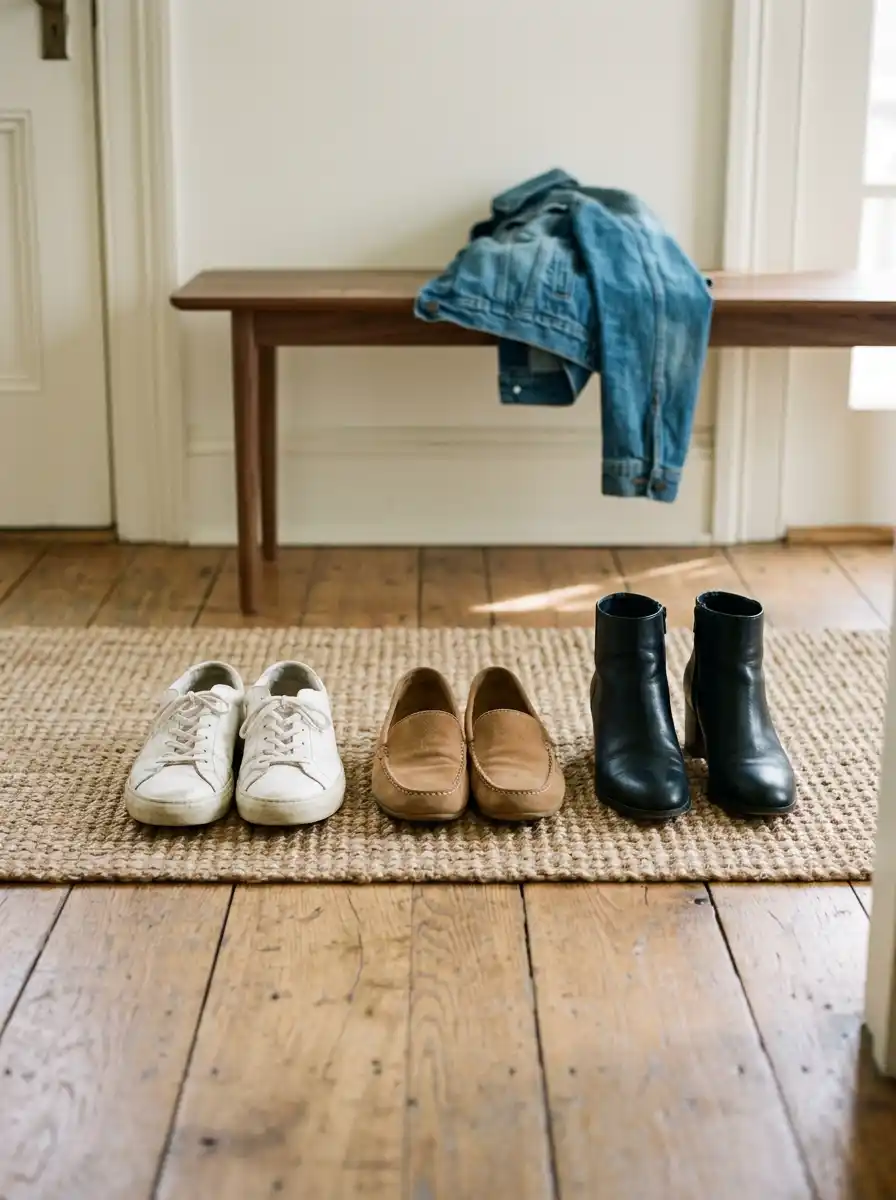
Three pairs of shoes cover most of your week. Those are the shoes your jeans have to work with, not the tall heeled boots that come out twice a year.
Set your three most-worn pairs by the mirror and line them up. Count the flat ones (sneakers, loafers, ballet flats) against the ones with a heel.
That split already leans you toward one cut before you try anything on.
Stand each shoe on a table and measure the heel height in inches. Write it down. You’ll use that number in Step 11 to set your hem length.
Match each pair of shoes to a cut
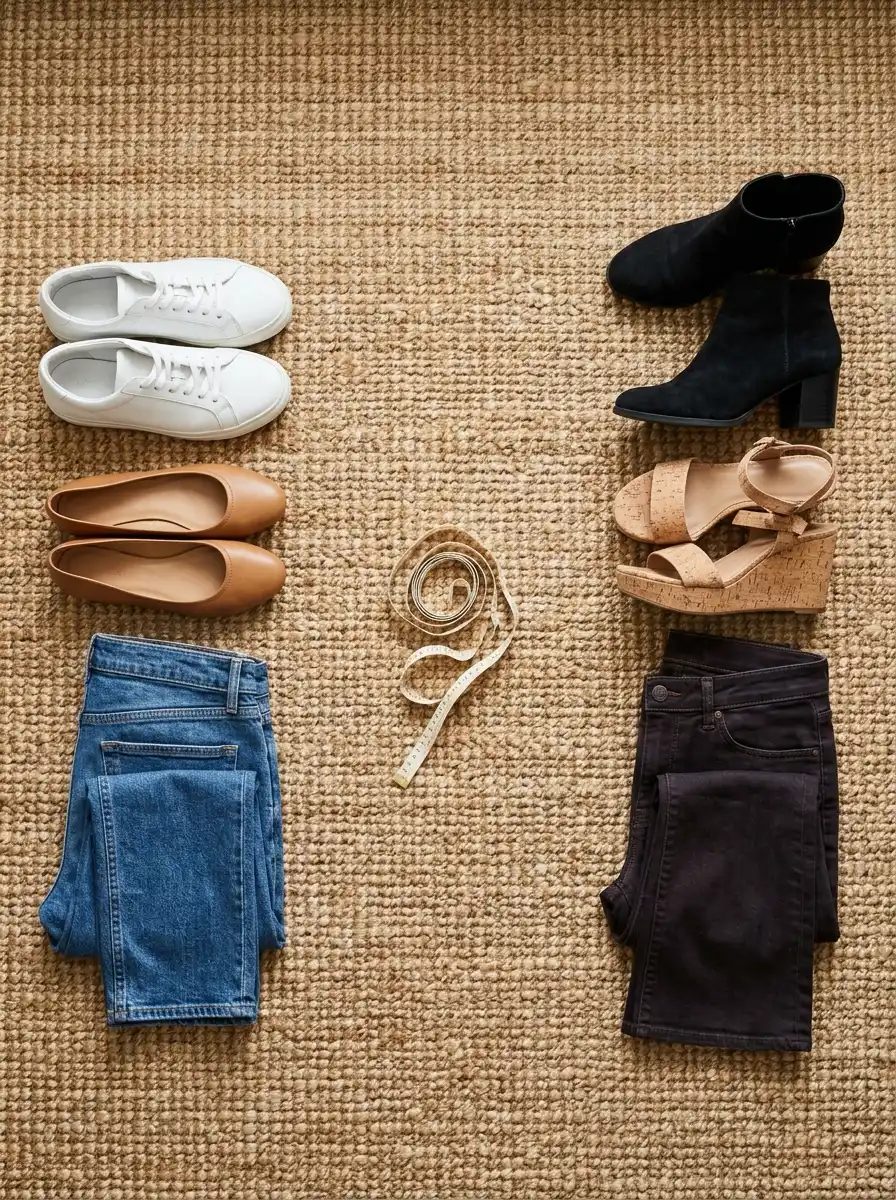
If most of your shoes sit flat on the ground, a straight leg is usually your cut. Heels need the extra room a bootcut gives at the hem. Sort your three pairs like this:
- Sneakers, loafers, ballet flats: straight leg
- Mules and flat sandals: straight leg, ankle length
- Ankle boots: either one. A bootcut slides over them, and a straight leg should stop right at the boot top
- Heels, wedges, heeled boots: bootcut
Two or three pairs in one group gives you your answer. A tie means you test both in Step 9.
Check the leg opening number on the size chart
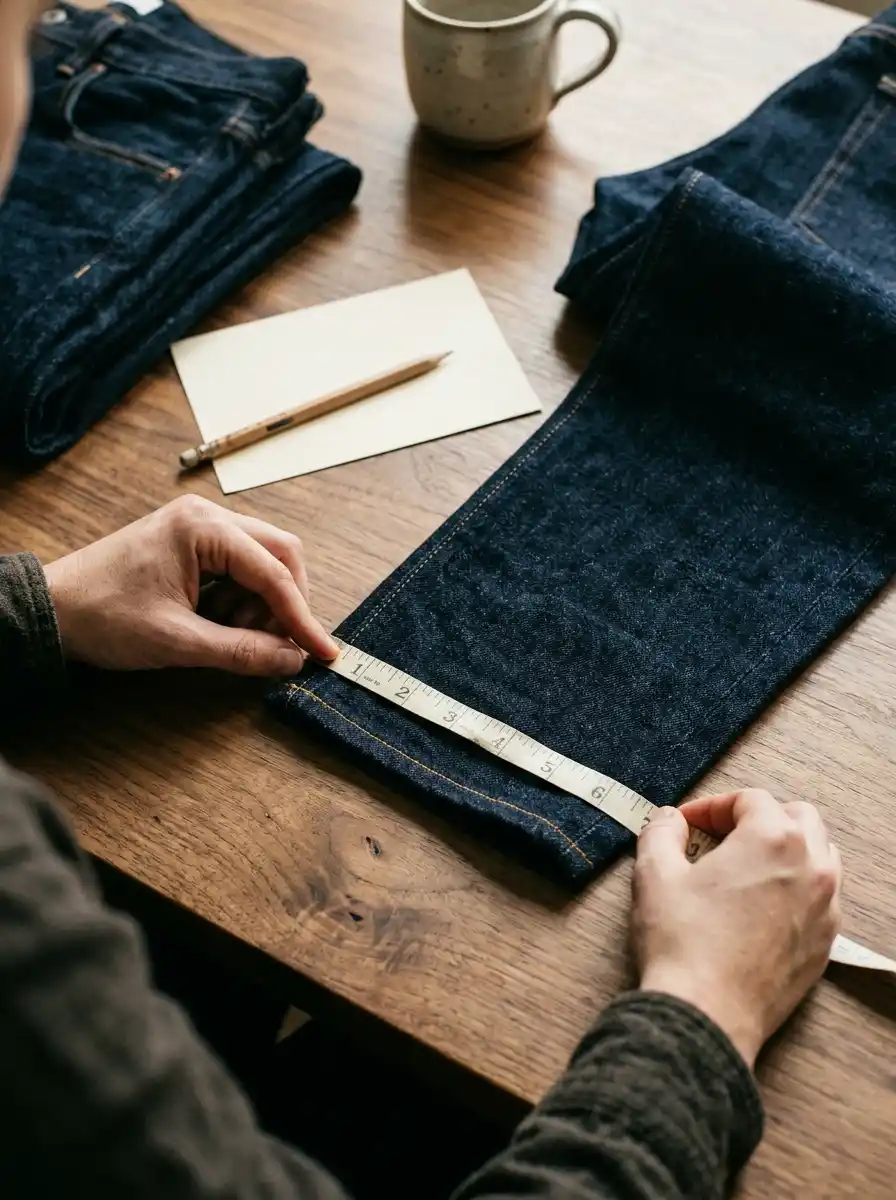
15 to 17 inches around is where most straight legs land. Most bootcuts sit at 18 to 21 inches. That number, the leg opening, tells you more about a pair than the style name does.
Some “bootcuts” barely flare at all, and some “straight legs” taper so much they act like skinnies. Find “leg opening” on the brand’s size chart for your size.
Then lay your current jeans flat, measure across the hem, and double it. You now know whether a new pair will be wider or narrower than what you already own.
Some brands list the leg opening measured flat, and some list the full circle. If the number is under 11 inches, it’s the flat width. Double it before you compare.
Choose a mid or high rise that sits at your natural waist
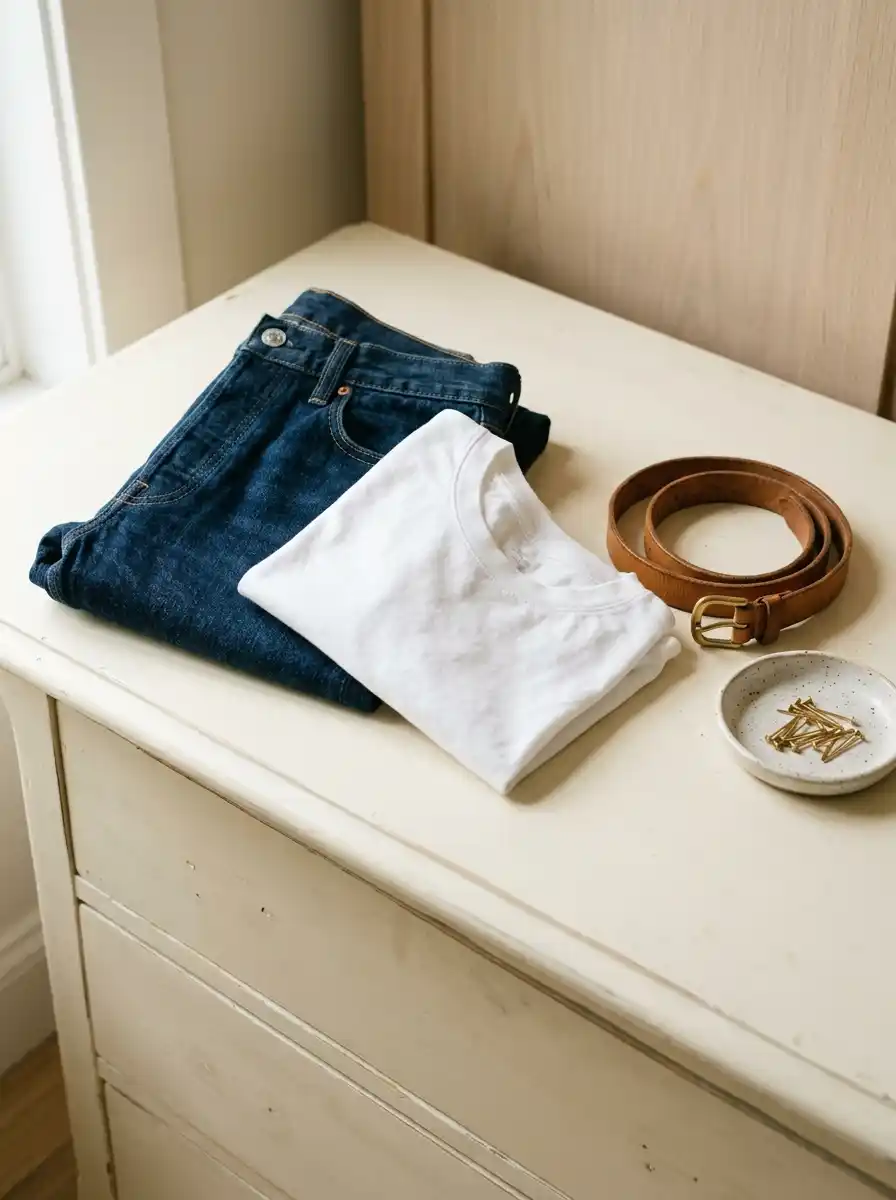
Low-rise jeans slip down when you sit and push your tummy up over the waistband. Look for a rise of 10 to 11 inches on the size chart.
It covers your middle and holds a tucked shirt in place. Short through the body? A 9 to 10 inch mid rise keeps the waistband from hitting your ribs.
Pick a dark wash with 1–2% stretch
Ever notice your jeans fit great at 8 a.m. and sag by 3 p.m.? The fabric is usually the cause.
Turn to the fabric tag and look for about 98% cotton and 2% elastane (sometimes called spandex). That small amount moves with you and still snaps back.
At 3% or more, the knees and seat bag out by afternoon. Pick a dark indigo wash, too. It hides creases at the hips and looks dressed up enough for both flats and heels.
Order one pair of each cut in the same brand and size
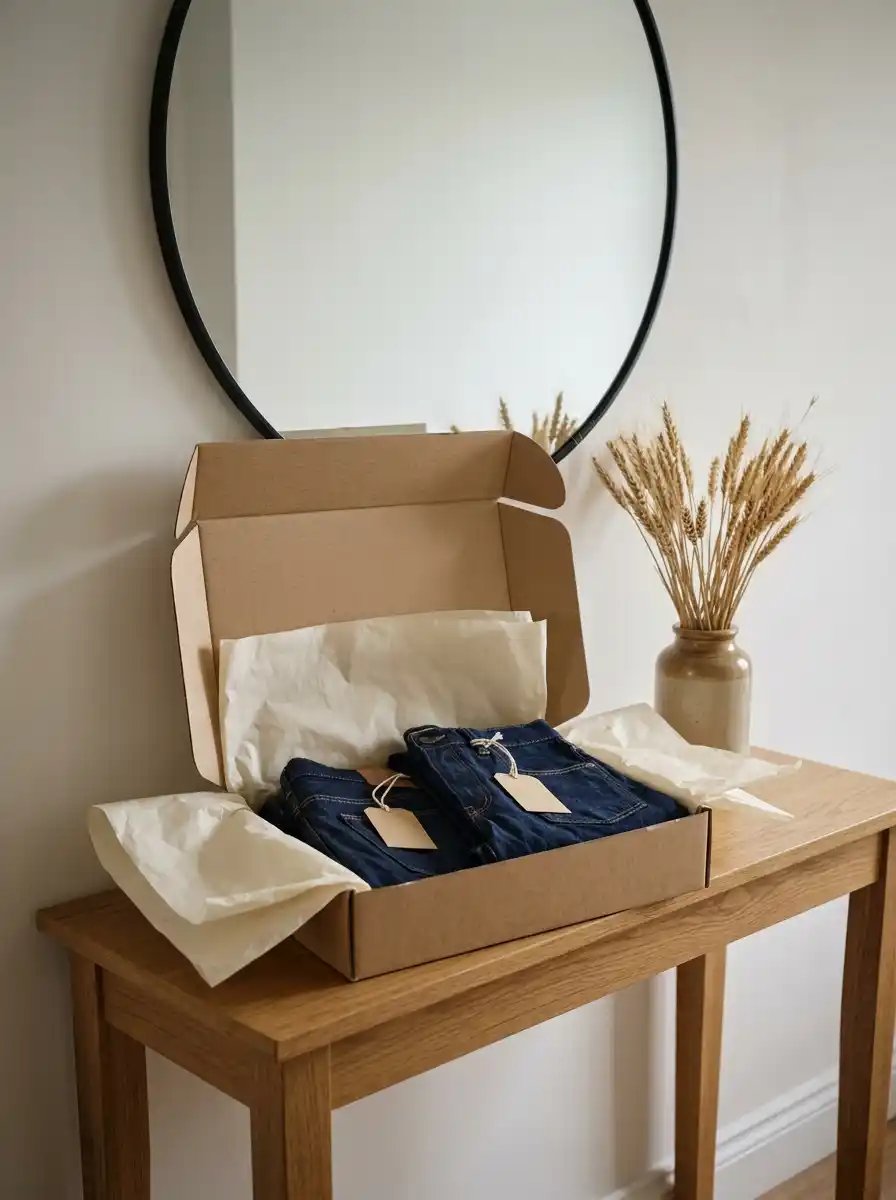
Same brand, same size, same wash. That way the cut is the only thing that changes, and you’re comparing fairly.
Before you check out, find the return policy and make sure you get at least 30 days. Leave the tags on both pairs until Step 11.
Test bootcut vs straight leg jeans over 40 in your real shoes
Give each pair about 10 minutes, wearing the shoes you lined up in Step 3. Unhemmed jeans often run long, so fold the extra fabric under before you judge anything. A bootcut puddling on the floor will look sloppy for no good reason. Then stand at the mirror and check:
- Front: the leg falls in a straight line with no twist toward your shin
- Side: a bootcut covers most of a heeled shoe. A straight leg hits the top of a flat shoe or your ankle bone
- Back: no gap at the waistband, and the pockets sit centered on each side of your seat
Take a front and side photo in each pair. Put them side by side on your phone. Notice which photo makes you look at the whole outfit first.
Sit, squat, and walk in each pair before deciding
Most fit problems stay hidden until you sit down. Sit in a hard chair for 2 minutes and notice the waistband. It shouldn’t dig into your stomach or pull away from your back.
Next, squat like you’re picking up a bag from the floor. The seat should stretch with you, not strain. Finish by walking 20 steps and climbing a few stairs.
A bootcut hem shouldn’t catch on your heel. A straight leg shouldn’t ride up and stay stuck above your ankle. The keeper is the pair you forget you have on.
Pin the hem to the right length for your shoes
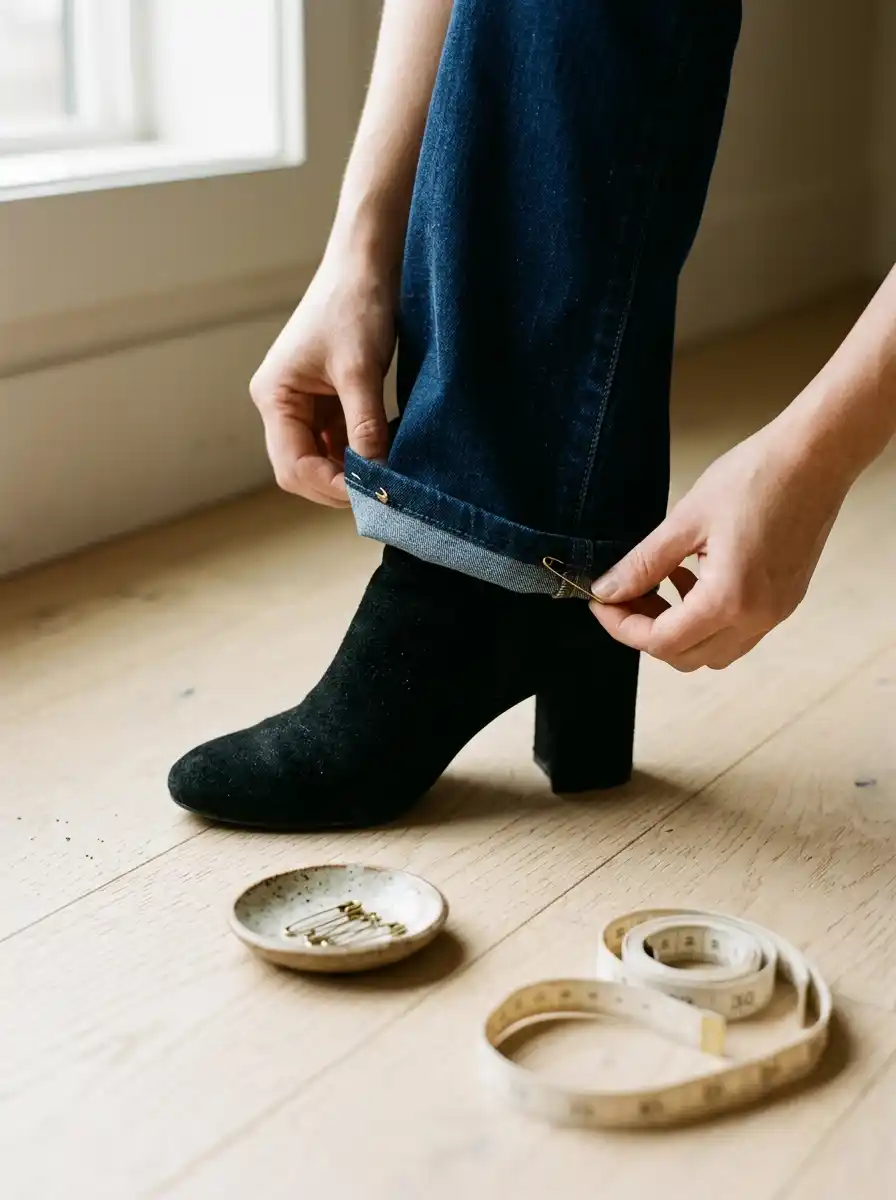
If you skip this step, even the right cut can look wrong. Put on the shoes you’ll wear most with this pair, using the heel height you wrote down in Step 3.
Fold the extra fabric up inside the leg and hold it with 2 safety pins per leg, one at the inside seam and one at the outside. Aim for:
- Bootcut with heels: about ½ inch above the floor at the back of the shoe
- Straight leg with flats or sneakers: touching the top of the shoe, with little or no fold
- Straight leg, ankle length: stopping right at your ankle bone
| Shoe Type | Best Cut | Pin the Hem |
|---|---|---|
| Sneakers | Straight leg | Touching the top of the shoe |
| Loafers and ballet flats | Straight leg | Top of the shoe, with little or no fold |
| Flat sandals and mules | Straight leg, ankle length | Right at your ankle bone |
| Ankle boots | Either | Bootcut covers most of the boot. Straight leg stops at the boot top |
| Heels, wedges, heeled boots | Bootcut | About ½ inch above the floor at the back |
Wear the pinned jeans to a tailor and ask for an “original hem.” It keeps the faded factory edge so the jeans don’t look cut short. Send the other pair back while the tags are still on.
Never pin a bootcut while barefoot. A hem set without shoes ends up about 2 inches too short once your heels go on, and a tailor can’t add length back.
You Found Your Pair
You measured, matched, tested, and pinned. That’s how you settle bootcut vs straight leg jeans over 40: with your own body and your own shoes, not a size label.
Once the hem comes back from the tailor, try the jeans with a tucked-in tee and a blazer to see how far one good pair can stretch your closet.
Save this pin so the leg opening numbers are on hand the next time you shop for jeans.
No. Bootcuts move in and out of trend reports, but a dark-wash bootcut with a slim knee has stayed a classic for decades. Fit matters far more than the trend.
An ankle-length straight leg is the safer pick, since it shows a little ankle and doesn’t swallow your shoes. A slim bootcut works too if you wear a heel most days.
The rise matters more than the cut here. Choose a high rise of 10–11 inches in a dark wash. Then pick the leg shape based on your hips and shoes.
Yes. The hem should stop right at the top of the boot. If the fabric bunches on top of the boot, the jeans are too long for that pairing.
If you wear flats most days, get the straight leg, since it goes with more shoes. If heels or heeled boots are your everyday shoes, get the bootcut.