
How to Transition Your Wardrobe From Summer to Fall Over 40

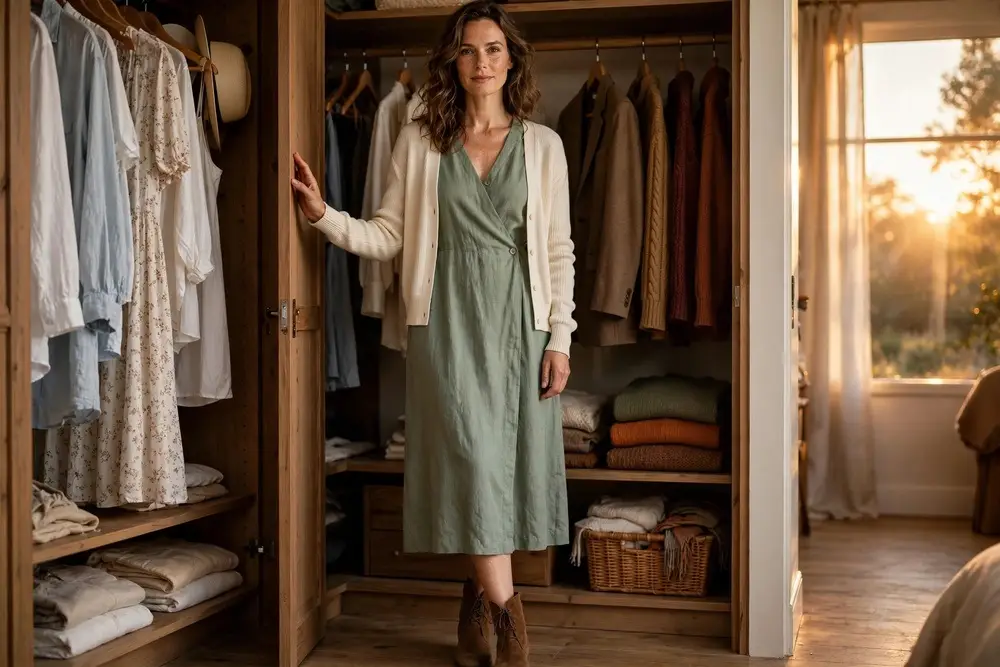
You open the closet on a 75-degree September morning. By 6pm, it is 55 degrees. You are standing outside in a sundress with goosebumps, wondering how this keeps happening every single year.
This is the real problem. Your closet is split into two seasons that do not talk to each other. So every fall, you feel pressure to buy a whole new set of clothes.
That gets expensive. It also fills your closet with pieces you will barely wear. And not every trend on the rack this year is going to look or feel like you, especially once you are past 40 and know what actually works on your body.
Here is the good news. You do not need a new wardrobe. You need a plan.
In this guide, you will learn how to transition your wardrobe from summer to fall over 40 in five simple steps: audit what you own, master one layering formula, add five key fall wardrobe essentials, use three outfit formulas that reuse what you already have, and know what to store versus skip buying this year.
Let’s start with why this season is different once you are over 40.
Fall Wardrobe Guide · Over 40
Summer to Fall, Without the Overhaul
You don’t need a new closet this season. You need a plan. Here’s the four step process that carries your summer wardrobe straight into fall.
base layer → mid layer → topper
Audit Your Closet
Pull what you’ve actually worn in the last 8 weeks. That pile is your core. Everything else gets sorted into keep, needs a layer, or donate.
Master the Layering Formula
Base layer stays the same. Add a knit or cardigan mid layer. Finish with a blazer or trench on top. Addition, not replacement.
Add 5 Fall Essentials
A structured blazer, a plum or chocolate knit, ankle boots, a trench, and one metallic accessory worn like a neutral.
Reuse With Outfit Formulas
Sundress + turtleneck + boots. Linen shirt + blazer + loafers. Tee + cardigan + denim. Same closet, new season.
Why the Summer to Fall Transition Is Different After 40
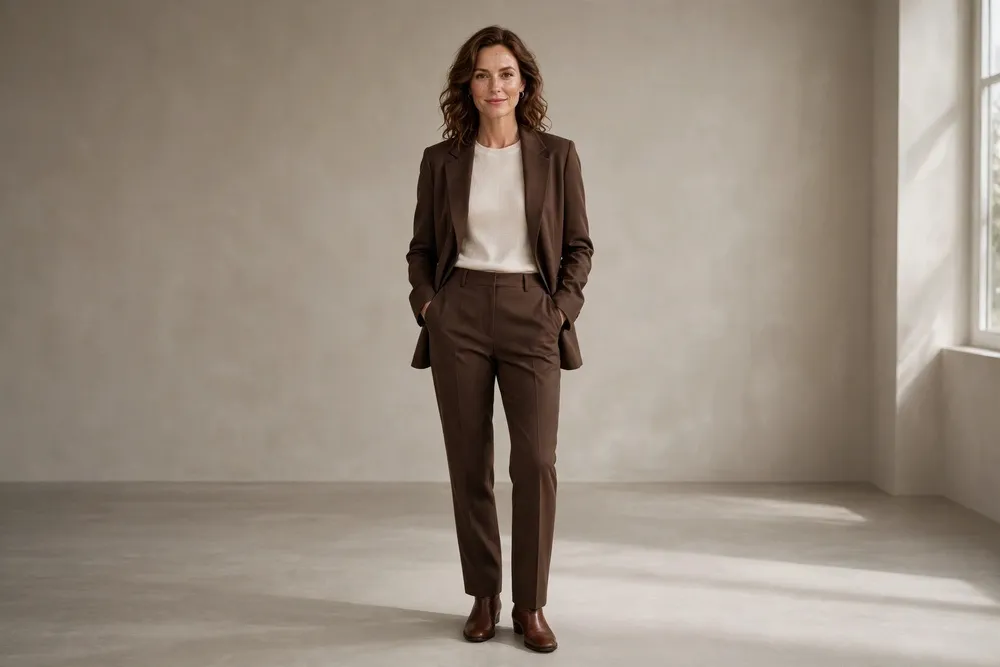
The in between weeks trip everyone up. Warm mornings. Cold nights. A closet full of clothes that only work for one or the other. That part is universal.
But dressing after 40 adds two more things to think about. First, comfort and fit matter more.
Most women this age want less clingy fabric and more structure that still feels soft, not stiff. Second, the goal shifts from chasing every new trend to buying fewer, better pieces that actually get worn.
This is not about hiding your age. It is about editing on purpose. Stylist Cynthia Kennedy, who works with women over 40, points to the 2026 shift away from strict minimalism and toward pieces with real intention behind them, like a single metallic bag or shoe used the way you would use a neutral.
Fashion writers are also calling out a broader move toward what is known as quiet luxury this fall: good fabric, good tailoring, and nothing flashy. That approach works especially well for a wardrobe built to last more than one season.
There is also a simple money argument here. Pieces you can wear in both August and November earn their spot in your closet twice. Pieces that only work for six weeks do not.
Step 1: Audit Before You Shop

Before you add anything new, take fifteen minutes to look at what you already have.
Pull everything you have actually worn in the last eight weeks. Not what you own. What you reached for. That pile is your core. It tells you more about your real style than any trend list ever will.
Now sort your closet into three piles:
| Pile | What goes here |
|---|---|
| Keep as is | You wore it recently and it still works alone |
| Keep, but needs a layer | Good piece, just too light or too bare for cooler days |
| Donate or mend | You have not touched it since spring, or it needs repair |
Be honest with pile three. If you have not worn it since spring, it is not going to magically become a fall favorite now. Donate it or sell it and free up the space.
Once you have sorted the piles, look for gaps, not extras. You are not shopping for a new wardrobe.
You are looking for three to five missing pieces that will bridge your summer clothes into fall. This is the start of a small capsule wardrobe for fall, built around what you already own instead of replacing it.
Once you know your gaps, the next lever is layering.
Step 2: Master the Layering Formula

If you only take one thing from this guide, take this.
Layering is the whole game during this stretch of the year. It lets you add warmth in the morning and remove it by afternoon, without changing your entire outfit. Here is the formula, in order.
- Base layer. This is what you already own. A summer tee, a tank, a slip dress, a linen shirt. It does not change. It just becomes the foundation instead of the whole outfit.
- Mid layer. Add a lightweight knit, a turtleneck, or a cardigan. If you only buy one new piece this fall, make it this one. It works over almost everything you already wear.
- Topper. A blazer, a denim jacket, a trench, or a utility jacket goes on top. This one piece can turn a summer outfit into a fall outfit in seconds, even if nothing underneath has changed.
A few small tricks make this even easier. Try wearing a cardigan backward over a spaghetti strap dress so the higher neckline sits in front and feels cozier.
Tie a sweater around your waist when the afternoon warms up, then put it on when it cools off again.
Add tights under shorts or a mini dress to stretch them a few more weeks.
Stylist Jasmine Snow, speaking on TODAY in August 2026, called out the windbreaker as an easy transitional layer this year.
It is light enough for late summer but gives you coverage once the temperature drops, and she styles it zipped all the way up, almost like a top, over jeans or leggings.
The rule across nearly every 2026 style source is the same.
This is addition, not replacement. You are not swapping out your closet. You are adding three or four layering pieces around what is already there.
Now that you know how to layer, here is exactly what to add.
Step 3: Five Pieces Worth Adding to Your Fall Capsule

Five pieces. Not fifty. Each one earns its place because it works with clothes you already own, not because it is trendy this month.
- A structured blazer. Throw it over jeans and a tee and the whole outfit looks finished. This piece shows up again and again in 2026 trend coverage, described as relaxed rather than stiff, which makes it easy to wear all day.
- A midweight knit in a good color. Fall 2026 color reports keep naming deep plum, aubergine, and chocolate brown as the standout shades of the season. Both read almost like neutrals, so they pair easily with what you already own.
- Ankle boots or loafers. This is the fastest way to turn a summer dress or skirt into a fall outfit. Swap out the sandals, keep everything else the same, and the whole look shifts.
- A trench or a light utility jacket. It bridges warm afternoons and cold mornings without forcing you into a heavy winter coat before you need one.
- One metallic or refined accessory. A bag, belt, or shoe in a soft gold or silver finish. Cynthia Kennedy’s advice for 2026 is to treat metallics like a neutral, one piece at a time, not head to toe.
That is the full list. Five pieces, built around a closet you already have.
Here is how those pieces actually come together in real outfits.
Step 4: Three Outfit Formulas That Reuse Your Summer Pieces
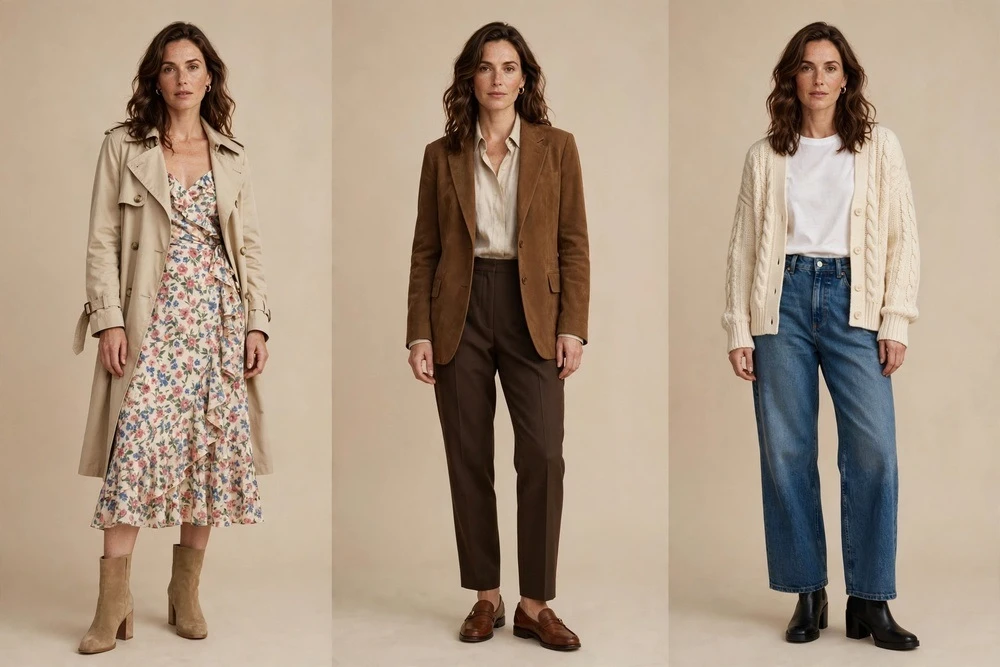
Theory only goes so far. Here is what this actually looks like, in three formulas you can copy this week.
- Summer dress becomes fall dress. Take your sundress. Layer a fine knit turtleneck underneath it. Add ankle boots and a trench on top. Same dress, completely different season.
- Summer separates become work ready. Take the linen shirt you already own. Add a blazer, trousers or dark denim, and loafers. Nothing new except the blazer and shoes.
- Weekend staple. Take a t shirt or tank you already own. Add a midweight cardigan, worn open or tied at the waist. Pair with wide leg denim and sneakers or ankle boots.
One more tip that shows up across almost every 2026 style guide: keep your color palette cohesive.
Let one bright summer color act as the accent, like coral or yellow, and ground the rest of the outfit in warm fall tones such as camel, chocolate, burgundy, or olive. That single move makes a mixed season outfit look planned instead of accidental.
And if you are wondering what to leave out of the rotation for now, that is next.
What to Store, and What to Skip Buying This Year
You do not have to pack everything summer away at once. It is okay to keep wearing some of it a little longer.
Once nights are consistently cool, start packing away pieces that only work in real heat, like strapless tops, sheer fabric, and very thin straps.
Most stylists agree this should happen gradually, over several weeks, not in one big closet swap on a single weekend.
On the buying side, be careful about restocking basics you already own just because they showed up in a new fall color.
If your existing neutral wardrobe already covers a plain black sweater or a pair of dark jeans, you probably do not need a second version in this year’s trend shade.
Fewer, well used pieces beat a closet full of things worn once or twice.
For storage, vacuum sealed bags work well for bulky out of season items like heavy coats and thick sweaters. They free up real closet space and keep those pieces ready for when you actually need them.
The Bottom Line
You do not need a new wardrobe this fall. You need a few smart layers, five well chosen pieces, and a couple of outfit formulas that reuse what is already hanging in your closet.
Start today. Pick one drawer, or one outfit formula from this guide, and try it before you buy anything new.
That is really all it takes to transition your wardrobe from summer to fall over 40: a few thoughtful layers, not a whole new closet